11 May 2023
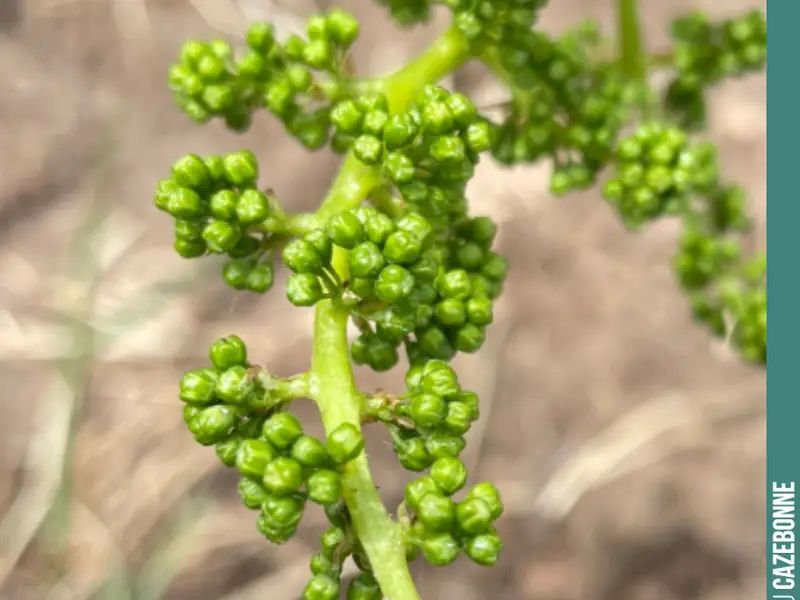
On this bunch of Cabernet Franc, you can clearly see that flowering is not far off!
By Jean-Baptiste Duquesne

Cycles
At Château Cazebonne, we are the privileged witnesses of an immutable spectacle, that of the perpetual cycle of the vine. Each year, as the seasons pass, nature orchestrates a symphony of transformations, a delicate and powerful ballet that reminds us of the vital force of our Bordeaux terroir. From winter dormancy to the excitement of the harvest, every stage is a promise, a step towards the unique expression of our wines. This ancestral rhythm is the very soul of our estate, a source of endless wonder.
The cycle of the vine, or vegetative cycle, represents all the biological and physiological transformations that the vine experiences over the course of a year. From bud break to fruit production, and then vegetative rest, this process is completely linked to the seasons and climatic conditions. It is the pillar of viticulture and determines the quality and quantity of the annual harvest.
The vine cycle is divided into several distinct phases, each influenced by environmental factors such as sunlight, temperature, and humidity. This complex mechanism allows the plant to draw on its reserves, grow, flower, bear fruit, and finally prepare for the cold season. Understanding these mechanisms is essential for the winegrower to intervene at the right time and support the vine throughout the year.
The vegetative cycle of the vine follows a precise calendar, although variable according to regions and vintages. In Bordeaux, pruning is generally carried out in winter, prefiguring bud burst in spring, followed by flowering and fruit set. Summer is marked by veraison and the ripening of the berries, culminating in the autumn harvest. Each season brings its share of specific viticultural tasks, adapted to the needs of the vine.
The vine offers many observable signs at each stage of its cycle. The weeping of the vine in spring indicates the restart of sap circulation. Young shoots, the appearance of leaves, and then inflorescences are all indicators of the cycle's progression. The colour change of the berries during veraison, the accumulation of sugars, and the development of aromas are carefully monitored by our teams to determine the optimal harvest date.
At Château Cazebonne, we place the observation and respect of natural cycles at the heart of our practices. Our commitment to biodynamics reinforces this approach, considering the vine as part of a global ecosystem. We adapt our interventions (pruning, leaf pulling, trellising) to support the vine without constraining it, thereby fostering its natural balance and the pure expression of our terroir. This meticulous work is fundamental for the quality of our wines and the sustainability of our vineyard, particularly with the rediscovery of forgotten grape varieties.
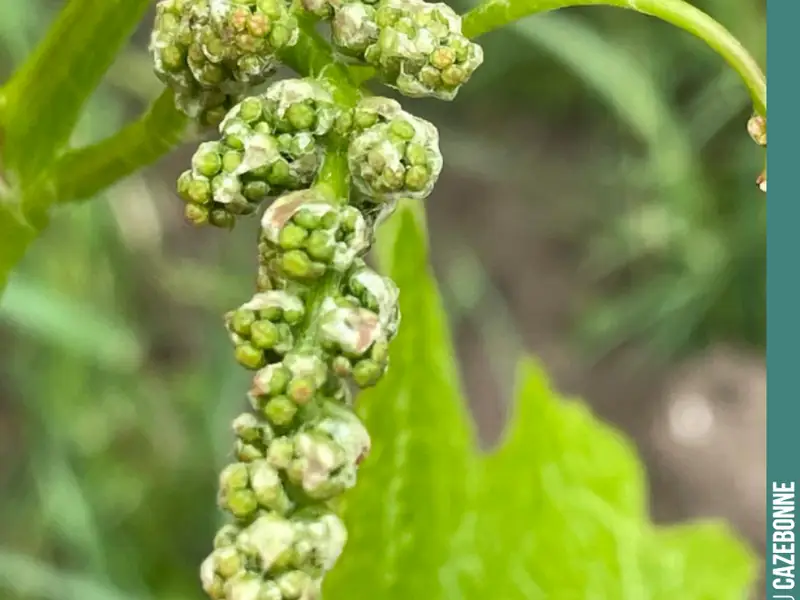
With the first frosts of winter, the vine goes to sleep, accumulating the reserves necessary for its spring awakening. The canes, bare and silent, are already preparing for bud break. When spring arrives, after pruning, the "weeping" announces the rising of the sap, the prelude to a new growing season. Then, the buds transform into young shoots, green and tender, carrying within them the potential of future grapes. It is the flowering season, a key moment when each small flower is a promise of fruit, under the watchful eye of our winegrowers.
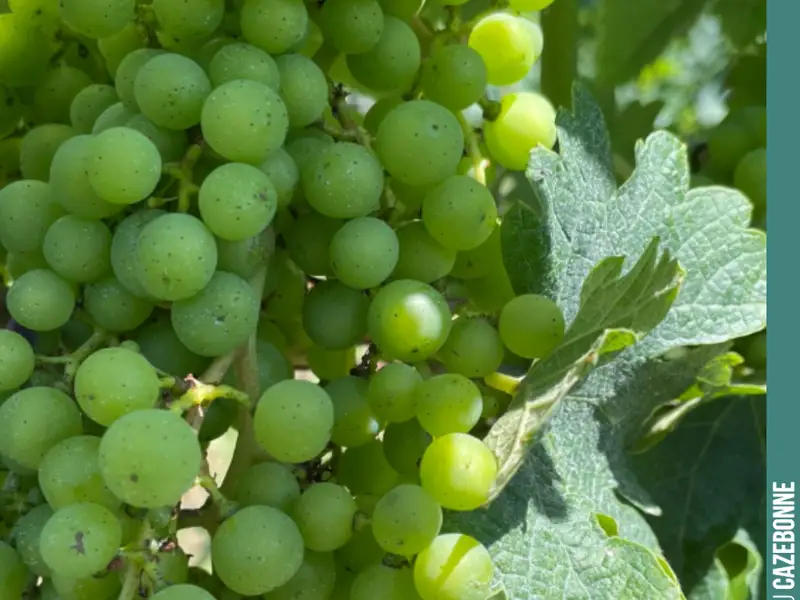
Summer brings with it veraison, when the berries change colour, turning from green to red or golden yellow depending on the grape varieties, a sign of their progressive ripening. It is then that the sugars accumulate, the aromas develop, and the vine soaks up the sun, tirelessly preparing for the harvest. This crucial period requires special attention to ensure the optimal quality of our future wines, in particular by monitoring when the vine hardens off (lignification) or by observing bunch closure.
Finally, autumn marks the peak of this cycle: the harvest. The result of a year of work and passion, it is the culmination of our efforts, the moment to carefully pick these bunches bursting with flavour. After the harvest, the vine enters its dormancy phase once again, ready to begin this fascinating journey anew the following year. This meticulous work, in tune with nature, takes on a special dimension at Château Cazebonne.
Pioneers in rediscovery, we passionately replant the old grape varieties that had marked the viticultural history of Bordeaux, but which, little by little, had been forgotten. As Jean-Baptiste Duquesne points out so well in his book "Bordeaux, une histoire de cépages", these varieties made the wealth and diversity of our vineyard in the past. It is thanks to the unwavering support of the many enthusiasts who have adopted our wines that this bold approach is possible, allowing these forgotten flavours to reclaim their place in the Bordeaux landscape.
To discover our cuvées from this terroir and these resurrected grape varieties, we invite you to visit the Cazebonne shop. And to delve deeper into the fascinating history of Bordeaux grape varieties, the book "Bordeaux, une histoire de cépages" by Jean-Baptiste Duquesne, published by Éditions BBD, offers valuable insights. You can receive the digital version of this book by visiting our website.
At Château Cazebonne, we are proud to perpetuate respect for these seasons in the vines that forge the character of our terroir and our wines. This long-term endeavour, including the replanting of grape varieties that had disappeared, is only possible thanks to the enthusiasm of the wine lovers who adopt our wines. We invite you to learn more about this historical wealth by downloading our book on the history of Bordeaux grape varieties, to test your knowledge with our oenological quizzes, and of course, to discover the fruit of our passion by visiting our online shop.
Sources
11 May 2023
By Jean-Baptiste Duquesne
28 April 2023
By Jean-Baptiste Duquesne
08 July 2022
By Jean-Baptiste Duquesne
The cellar, forgotten grape varieties and our cuvées, twice a month. 5% off your first order with the code BIENVENUE.