
 The essential
6 × Entre Amis red
6 bottles — Graves red 2022
The best price of the cellar: €12 per bottle delivered.
The everyday red: generous and straight to the point.
I want itVine Nurseryman
The profession of a vine nurseryman is a cornerstone of the wine world, a subtle and demanding art that precedes the work of the winemaker. Far from being limited to the simple production of plants, the nurseryman is an expert whose skills shape the vineyard for decades to come. Their role is to select, graft, and rear young vines, thus guaranteeing the quality, longevity, and typicity of future wines.
The process begins with the careful selection of rootstocks, chosen for their ability to adapt to different soil types and resist diseases, notably phylloxera, the pest that devastated European vineyards in the 19th century. Next comes grafting, an ancestral technique that involves uniting a grape variety shoot (the scion, which will bear the fruit) to a rootstock. This step is crucial: the precision of the nurseryman's technique ensures the successful take of the plant and its future vigour.
After grafting, the young plants are reared in the nursery, receiving attentive care: irrigation, and protection against diseases and pests. Every step is designed to produce robust and healthy plants, ready to be transplanted into the vineyard. It is a job that requires patience, observation, and a profound knowledge of botany and pedology. The nurseryman is, in a way, the "genetic pantry" of the vineyard, preserving and transmitting the diversity of grape varieties.
At Château Cazebonne, we recognise the paramount importance of this expertise. It is thanks to our collaboration with passionate and competent vine nurserymen that we manage to reintroduce ancient and forgotten grape varieties to Bordeaux, representing the true genetic heritage of our region. This long-term endeavour, a genuine renaissance of our viticultural history, is made possible through the commitment and support of the many enthusiasts who have adopted our wines and share our vision of a viticulture that respects its history and environment.
Discover the unique expression of our work by exploring our different cuvées at the Cazebonne shop. To deepen your knowledge of the history of Bordeaux grape varieties, we also invite you to receive the digital version of the book "Bordeaux, une histoire de cépages" by Jean-Baptiste Duquesne, published by Éditions BBD.
The vine nurseryman is an essential link in the wine production chain. Their role goes beyond the simple propagation of vine plants. They are the guarantors of the genetic and sanitary quality of the vines which, once planted, will produce grapes for decades. By selecting rootstocks adapted to the soils and climate, and by performing precise grafting, they ensure the longevity of the vineyard in the face of challenges like phylloxera or climate change. Their work is a harmonious alliance of traditional know-how and scientific advancement, offering winemakers robust and well-adapted plants.
The nurseryman's main objective is to provide healthy and high-performing vine plants. This requires profound knowledge of ampelography, plant biology, and the specificities of the terroirs. A vine plant that is well-formed from its youth will better resist diseases, adapt more easily to environmental constraints, and fully express the potential of its grape variety. It is a long-term investment for the winemaker, as the quality of the plant directly impacts the productivity and longevity of the plot.
The work of the vine nurseryman follows a precise calendar, often linked to the natural rhythms of the vine. The harvesting of vine shoots takes place in winter, while grafting can extend from winter to spring. Rearing in the nursery takes place predominantly in spring and summer, allowing the young plants to develop a robust root system before the final planting in autumn or the following spring. Each step must be carried out with perfect timing to maximise the success rate.
Everything begins with the rigorous selection of rootstock shoots and scions. The rootstocks are chosen for their agronomic qualities (resistance to phylloxera, soil adaptation) and the scions for their varietal characteristics (grape varieties). The shoots are then prepared and pruned for grafting.
Grafting is a delicate operation that involves fusing the scion onto the rootstock. This technique ensures the transmission of the grape variety's characteristics while benefiting from the root advantages of the rootstock. The omega graft is one of the most widely used methods due to its reliability.
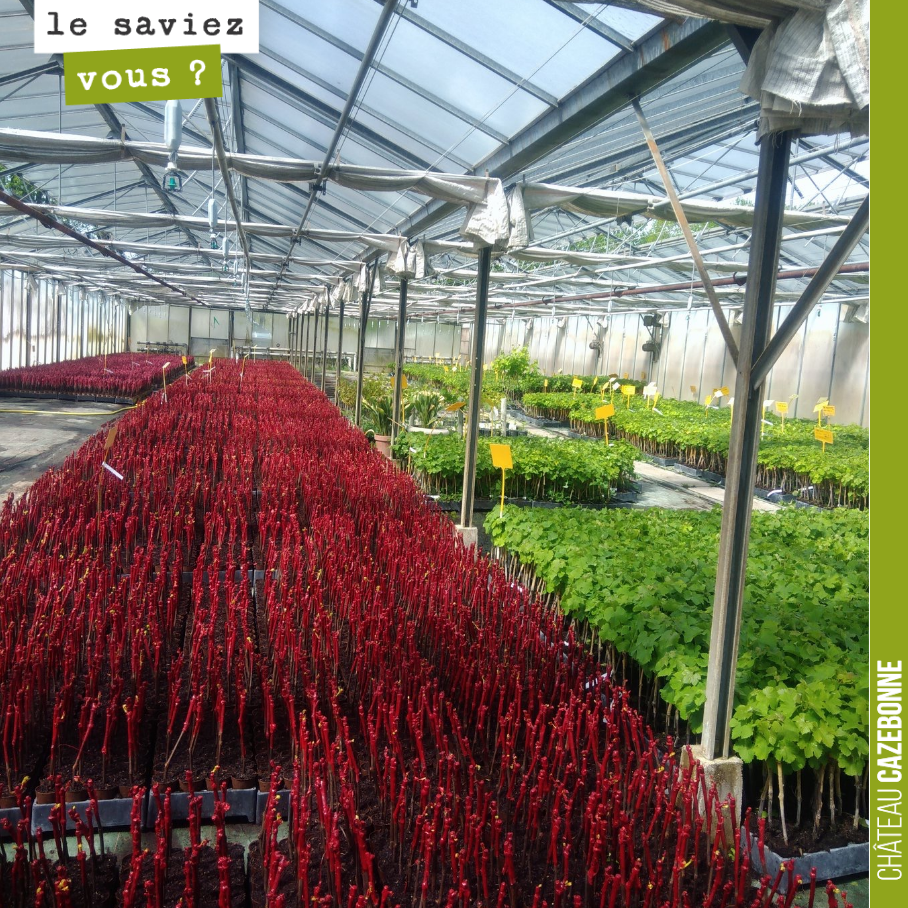
After assembly, the grafts are placed under controlled conditions (temperature, humidity) to promote fusion and the development of the first roots and buds. This is the dipping phase. They are then planted in the nursery, where they are carefully cultivated until they reach the size and vigour necessary to be planted in a vineyard. Finally, the plants are packaged for transport and planting.
The nurseryman uses a variety of specialised tools and equipment. Mechanical grafting machines, callusing rooms, precise irrigation systems, and adapted soil cultivation tools are essential. Not forgetting, of course, the manual skills of the artisans, particularly for pruning and the quality control of each plant.
In the face of climate and environmental challenges, the profession of the nurseryman is constantly evolving. Research and development are geared towards creating and selecting disease-resistant grape varieties, thus reducing the need for phytosanitary treatments. The use of environmentally friendly cultivation techniques, such as preserving biodiversity around the plots, is also at the heart of concerns for more resilient plants. Collaboration between nurserymen and winemakers is crucial for exploring these new paths towards more sustainable viticulture.
At Château Cazebonne, we value the fundamental role of vine nurserymen. Our approach to reintroducing forgotten Bordeaux grape varieties, such as Castets or Saint-Macaire, is directly linked to their expertise. It is through partnerships with passionate nurserymen, the true guardians of plant heritage, that we are able to diversify our vine plantings and explore ancestral varieties adapted to our terroir. This joint effort of preservation and innovation constitutes an essential part of our commitment to respectful viticulture, reflecting both the history and the future of Bordeaux.
The work of Château Cazebonne, committed to sustainable viticulture and the reintroduction of forgotten grape varieties, is only possible thanks to players like nurserymen. You can discover and learn more about this rich plant and viticultural heritage by downloading the digital version of the book "Bordeaux, une histoire de cépages". To test your knowledge, feel free to take part in our oenological quizzes. Finally, to taste the fruits of this commitment, discover our wines online, which reflect our terroir and our history.
Sources
Our suggestions
-5%on your 1st order with code BIENVENUE
The essential6 bottles — Graves red 2022
The best price of the cellar: €12 per bottle delivered.
The everyday red: generous and straight to the point.
I want it Our recommendation92/100 RVF
6 bottles — Graves red 2022, 92/100 RVF
Rated 92/100 by La Revue du vin de France: a solid 10-year ageing potential.
Our Graves for ageing, the finest gateway to the estate.
I want it Go further
12 bottles — the whole range
12 bottles, the whole range tasted: the best discovery-to-price ratio.
The complete tour of the estate, in a single case.
I want it
20 December 2019
10 November 2019

27 October 2019
26 April 2019
The cellar, forgotten grape varieties and our cuvées, twice a month. 5% off your first order with the code BIENVENUE.