
 The essential92/100 RVF
Comme en 1900 red 2022
Vin de France — heritage grapes, 92/100 RVF
The pre-phylloxera Bordeaux blend, revived at the estate.
Castets, Mancin, Pardotte: the Bordeaux before Bordeaux.
I want itCereals
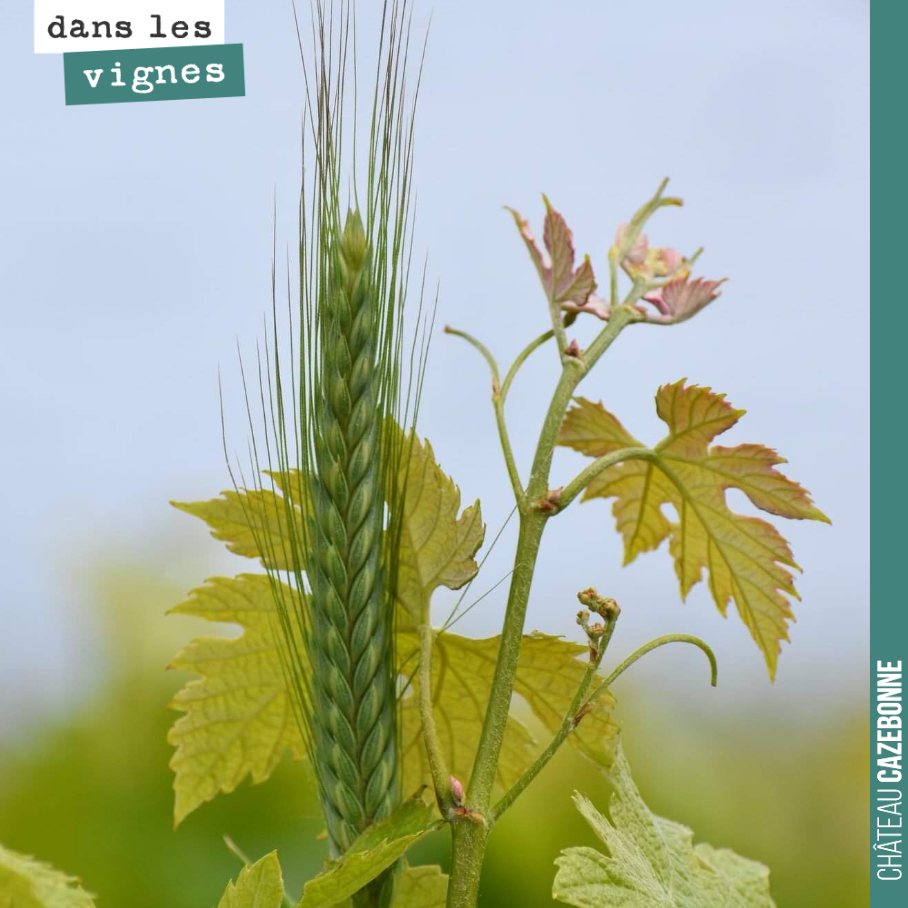
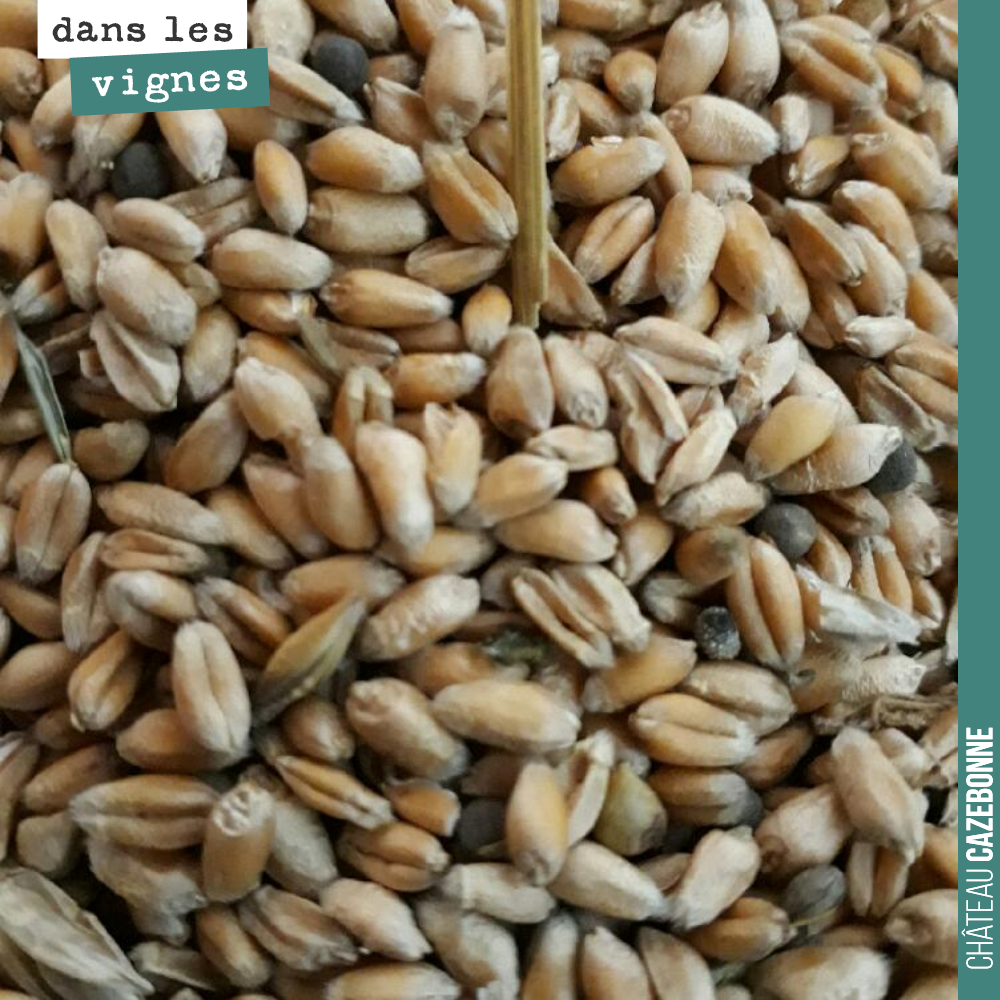
Ancient cereals refer to varieties of grain cultivated for millennia, often before the era of industrial agriculture and intensive genetic breeding. They include spelt, einkorn, barley, rye, millet and sorghum. Unlike modern varieties optimised for yield, these cereals are prized for their genetic biodiversity, their robustness and their intrinsic agronomic qualities. They are a key element of cover crops, practices widely adopted in organic and biodynamic viticulture to maintain living soils.
Integrating ancient cereals into cover crops aims to achieve several fundamental objectives for the health of the vineyard and the sustainability of our practices.
Their deep and branching root system is essential to restructure the soil, loosen the earth and improve water infiltration, thereby limiting erosion. They also contribute to the aeration of soil horizons and encourage microbial activity, which are crucial factors for the vitality of the terroir.
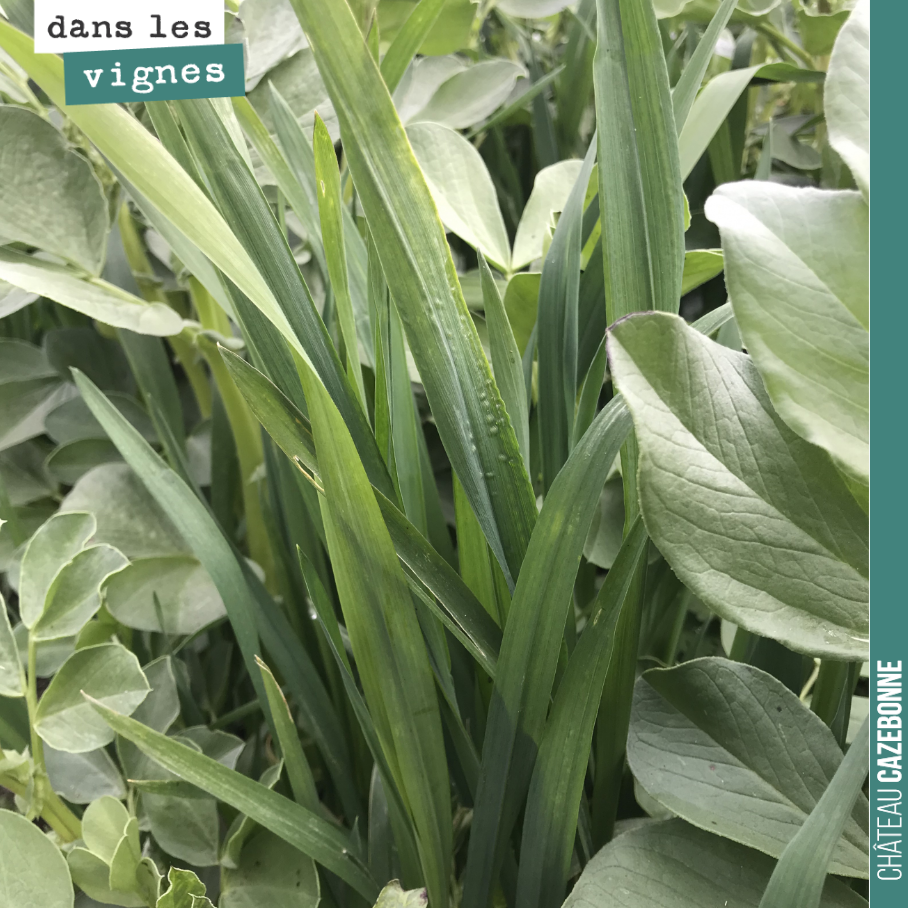
Furthermore, the biomass produced by these cereals, once mown and left in place, enriches the soil with organic matter, nitrogen, carbon and trace elements. This reduces reliance on external inputs and strengthens the plots' resilience against climatic hazards. The diversity of species used also contributes to better weed management and the establishment of favourable ecological balances, which are essential for sustainable viticulture and for fostering biodiversity. To delve deeper into these practices, also discover vetches, another plant of agronomic interest.
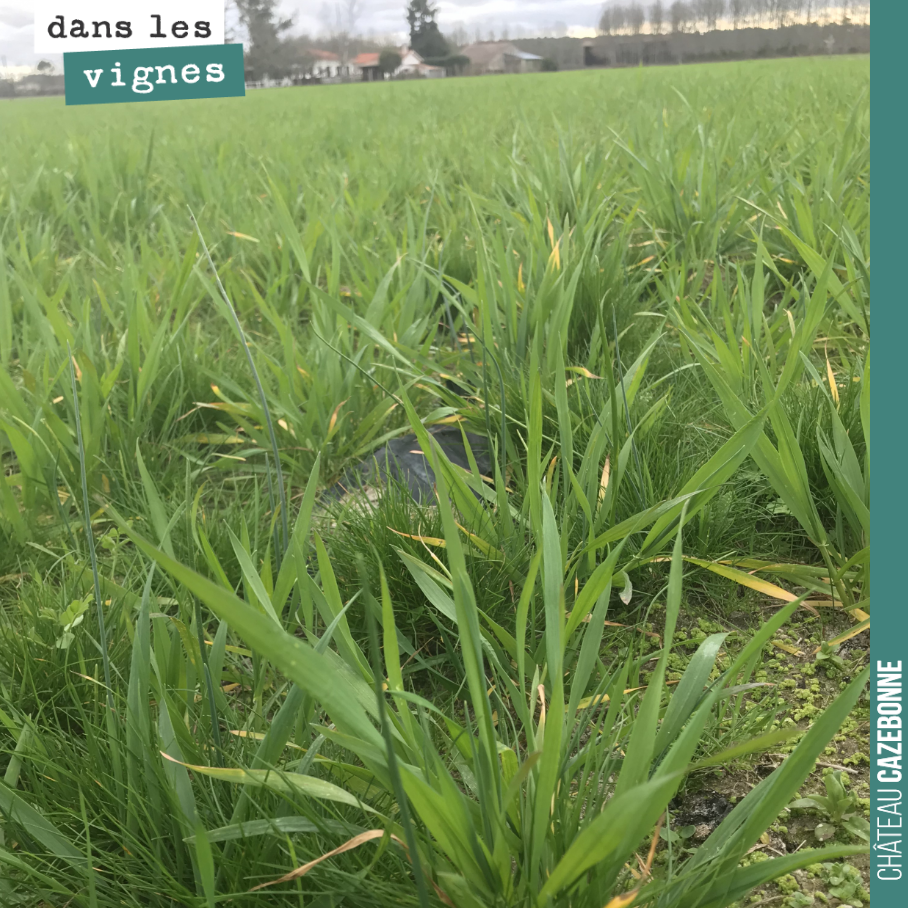
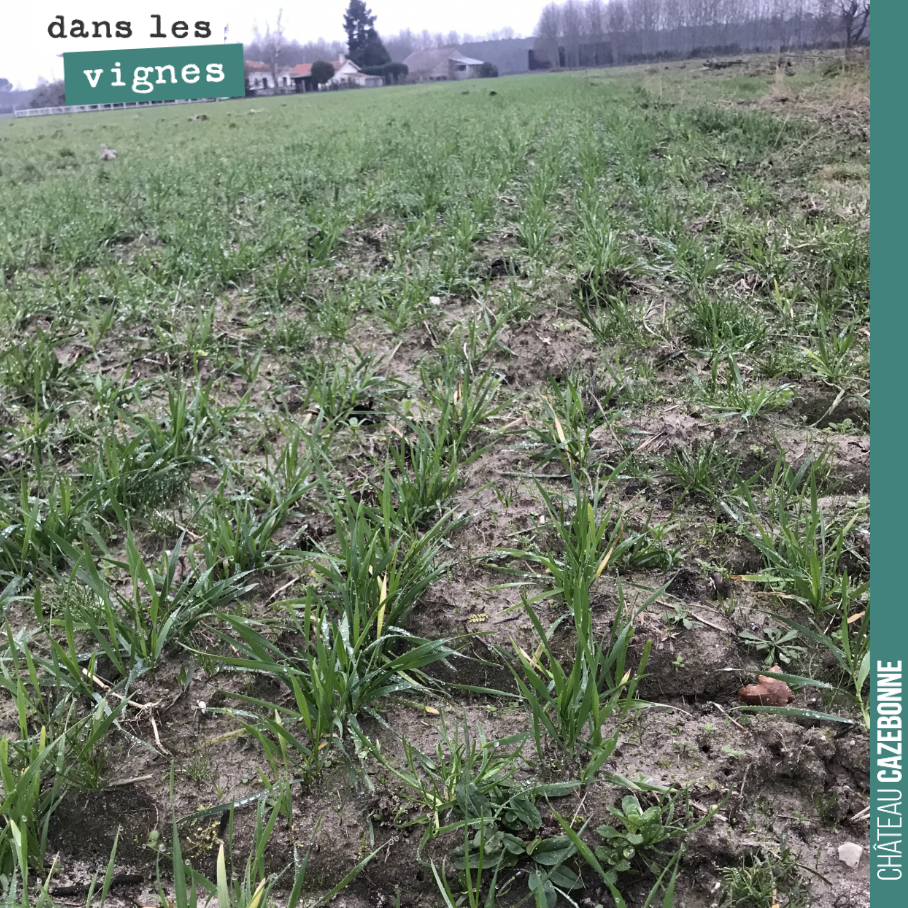
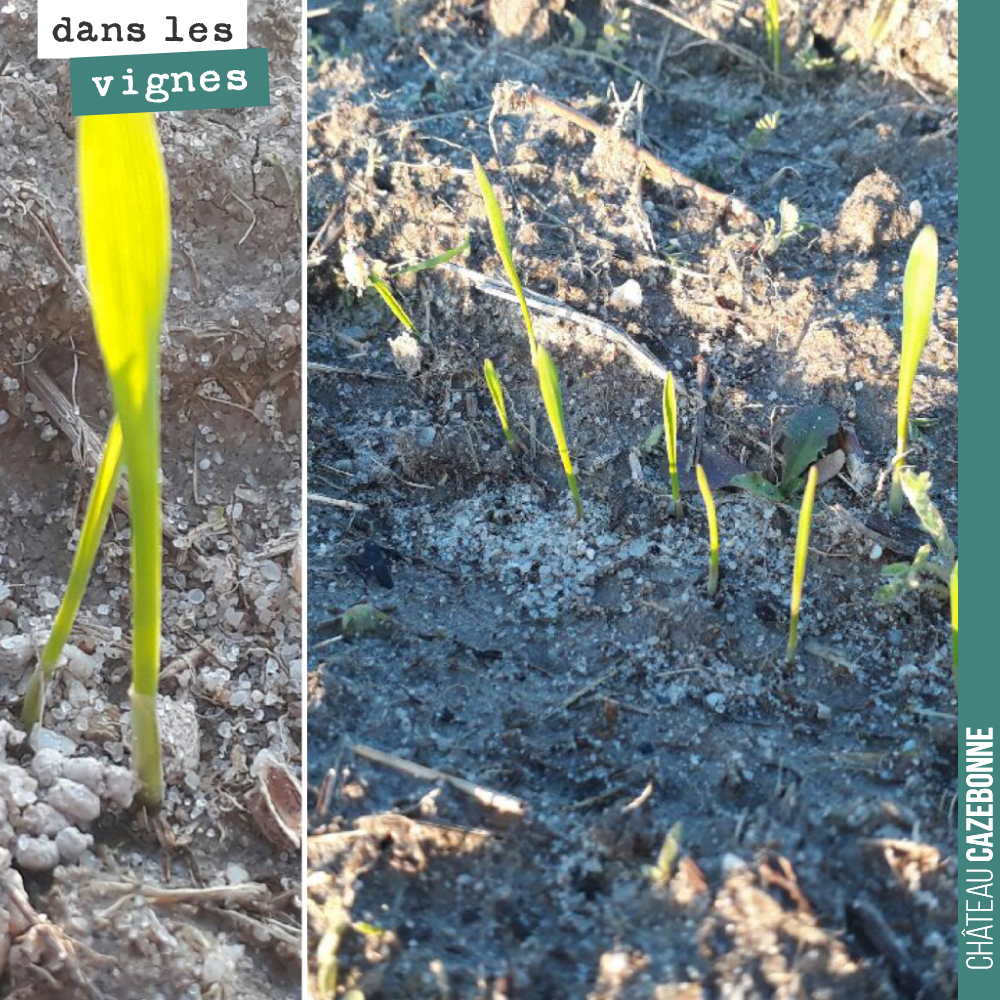
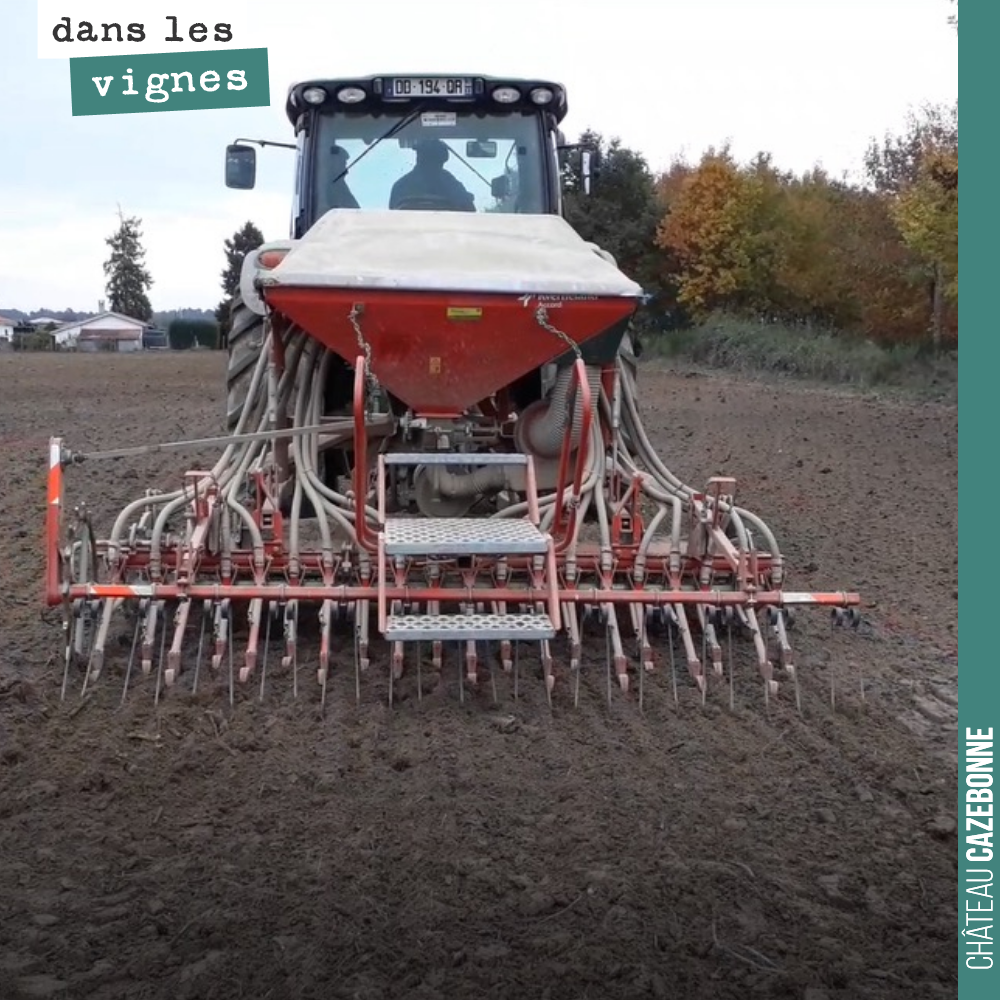
The sowing of ancient cereals is generally carried out in autumn, after the harvest, to allow them to establish before winter. The slow but steady growth of these plants enables them to develop a substantial root system before the cold winter weather. In spring, before the vines develop too much, they are mown (or rolled) and left on the ground to decompose. The precise choice of species may vary depending on the climatic and pedological specifics of each plot.
Planting ancient cereal cover crops does not require complex equipment. A suitable seed drill ensures an even distribution of seeds between the vine rows. For mowing, a flail mower or a roller crimper is commonly used. The absence of deep tillage is preferred in order to preserve the soil's structure and microfauna.
At Château Cazebonne, ancient cereals are fully in line with our agro-ecological and biodynamic approach. We sow them carefully between our vine rows to maximise the benefits on the fertility and structure of our soils. This practice is part of our constant desire to promote biodiversity and minimise our environmental impact. By favouring spelt, einkorn or rye, we take concrete action to regenerate our Bordeaux terroir and encourage a healthier, more resilient viticultural ecosystem.
This philosophy of returning to our roots and promoting our heritage is inseparable from our overall approach. In Bordeaux, we are passionately committed to replanting the forgotten grape varieties of Bordeaux, which can be discovered in detail by downloading the digital version of the book entitled "Bordeaux, une histoire de cépages", a work we had the pleasure of publishing. This meticulous work is made possible by the unwavering support of the many wine lovers who adopt our wines and share our vision of respectful and innovative viticulture. To learn more about weeds and test your knowledge, feel free to explore our oenological quizzes. By choosing our wines, available directly on our online shop, you also contribute to the preservation of this precious biodiversity and the regeneration of our terroirs. To deepen your understanding of the viticultural ecosystem, please consult our section dedicated to flora in the vineyards.
Sources
Our suggestions
-5%on your 1st order with code BIENVENUE
The essential92/100 RVFVin de France — heritage grapes, 92/100 RVF
The pre-phylloxera Bordeaux blend, revived at the estate.
Castets, Mancin, Pardotte: the Bordeaux before Bordeaux.
I want it Our recommendation
IGP Atlantique — rare grape variety
A forgotten grape brought back: dense colour, wild fruit.
For the curious about lost grape varieties.
I want it Go further
12 bottles — the whole range
12 bottles, the whole range tasted: the best discovery-to-price ratio.
The complete tour of the estate, in a single case.
I want it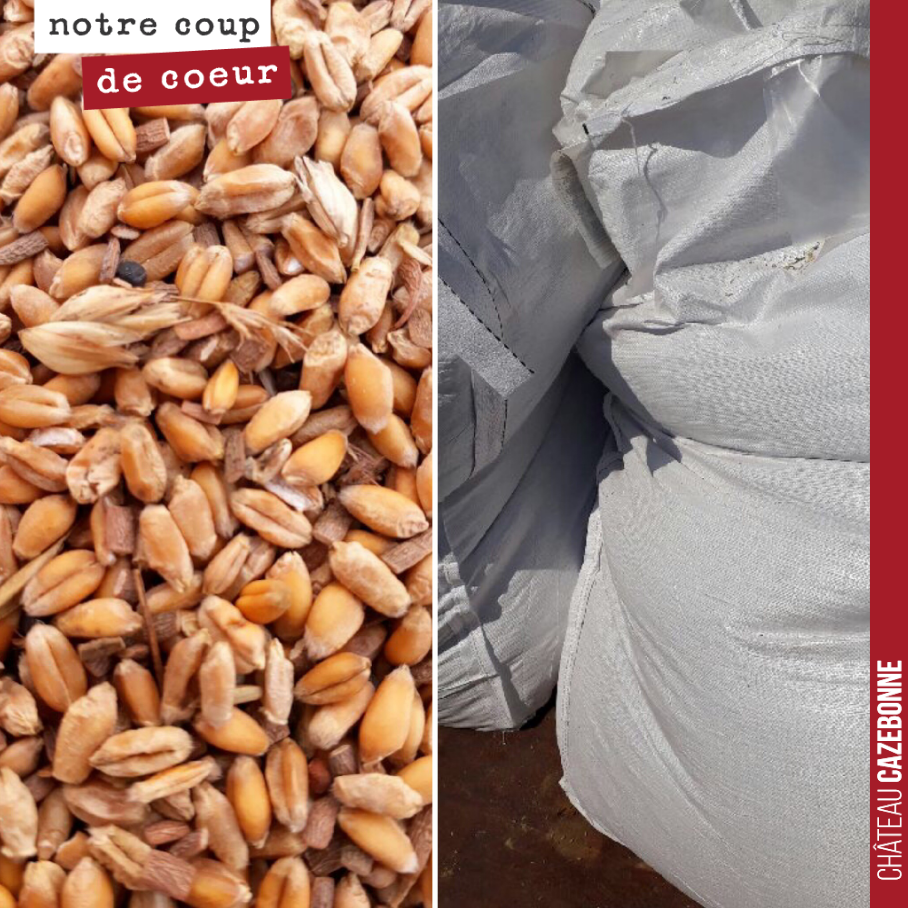
28 July 2019
13 May 2019
08 March 2019
04 March 2019
02 January 2019

29 November 2018
19 November 2018
05 November 2018
26 September 2018
The cellar, forgotten grape varieties and our cuvées, twice a month. 5% off your first order with the code BIENVENUE.