
 The essential
6 × Entre Amis red
6 bottles — Graves red 2022
The best price of the cellar: €12 per bottle delivered.
The everyday red: generous and straight to the point.
I want itCopper
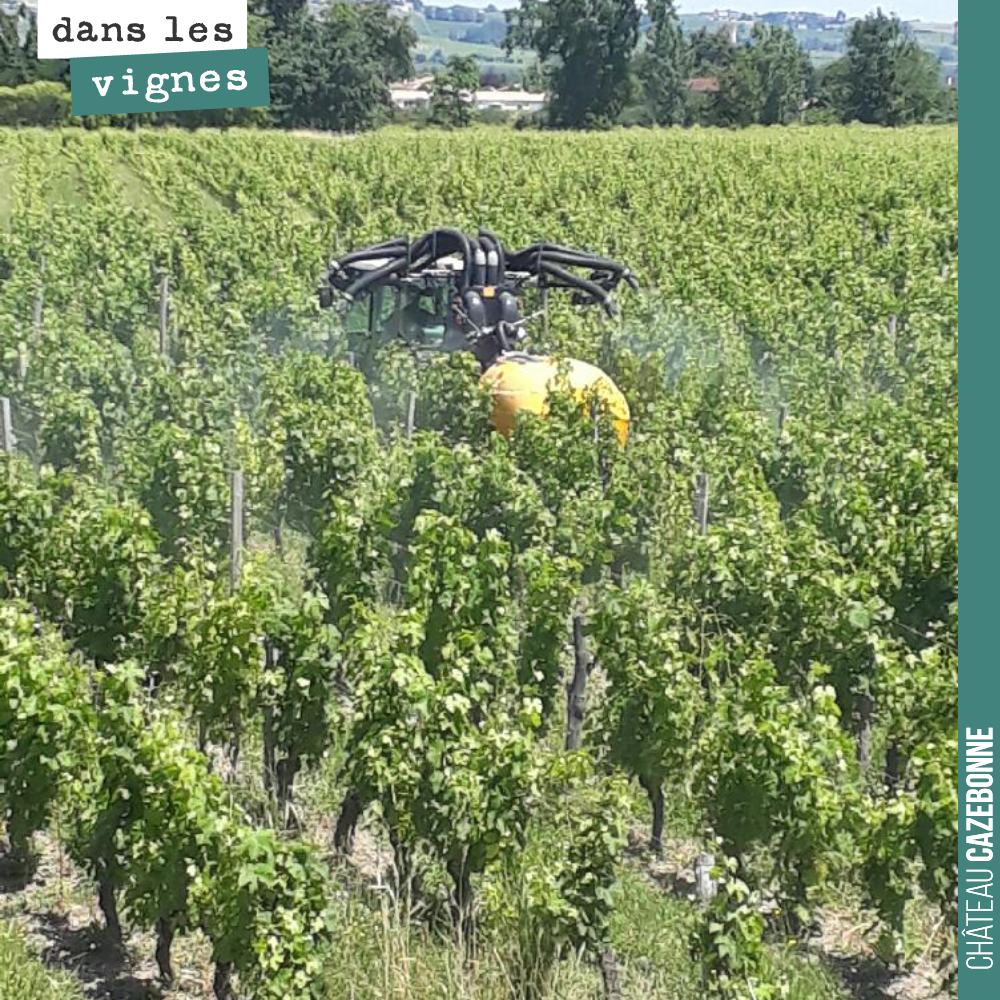
Copper, a cornerstone of organic vine protection, is frequently the subject of lively debate. While its efficacy against fungal diseases, particularly downy mildew, is beyond doubt, its persistence in soils at high concentrations raises legitimate concerns. At Château Cazebonne, we are committed to a transparent and responsible approach, aiming to minimise its impact whilst safeguarding the health of our vines.
Our approach is rooted in reasoned and innovative management. Far from any form of excess, we work every day to drastically reduce the doses of copper applied. To achieve this, we explore alternative and complementary methods: the use of herbal teas with protective properties, and in-depth work on the vitality of our soils. A living soil, rich in microbial biodiversity, nurtures more robust vines capable of developing their own natural defences and better withstanding disease pressure.
In practice, our efforts allow us to keep our copper use to a very low level, not exceeding 2 kilograms per hectare per year. This dose is well below the thresholds permitted in biodynamics (3 kg/ha/year) and organic viticulture (4 kg/ha averaged over 7 years), reflecting our steadfast commitment to preserving the balance of our ecosystem.
This fundamental work, combining tradition and innovation, enables us to cultivate vines in complete harmony with their environment. It is also thanks to this philosophy that Château Cazebonne can dedicate itself to an essential project: the replanting in Bordeaux of forgotten historical grape varieties, a true genetic heritage of our region. This bold initiative, which breathes new life into varieties adapted to our terroirs and climate challenges, is made possible thanks to the unwavering support of the many wine enthusiasts who have chosen to adopt our wines.
Discover the expression of this work and our terroir by exploring the Cazebonne shop. To deepen your knowledge of the fascinating history of Bordeaux grape varieties, we invite you to receive the digital edition of the book "Bordeaux, une histoire de cépages" by Jean-Baptiste Duquesne, published by Éditions BBD.
The use of copper in viticulture dates back to the 19th century, with the accidental discovery of Bordeaux mixture. This blend of copper sulphate and lime revolutionised the fight against downy mildew, a devastating fungal disease introduced to Europe from the Americas. Prior to its introduction, downy mildew could wipe out entire harvests, threatening the very survival of the vineyard. Copper acts as a contact fungicide, inhibiting the germination of fungal spores and thereby preventing their development on vine leaves and grape bunches. It is therefore used primarily as a preventive measure.
The primary objective of copper applications is to protect the vine against fungal diseases, most notably downy mildew (Plasmopara viticola). By forming a protective barrier on plant tissue, copper prevents downy mildew spores from penetrating the plant and developing. It also offers some efficacy against other diseases such as powdery mildew and black rot, although specific treatments are often required for the latter. In organic and biodynamic viticulture, copper is one of the few permitted products for this purpose, but its use is strictly regulated due to its potential environmental impact.
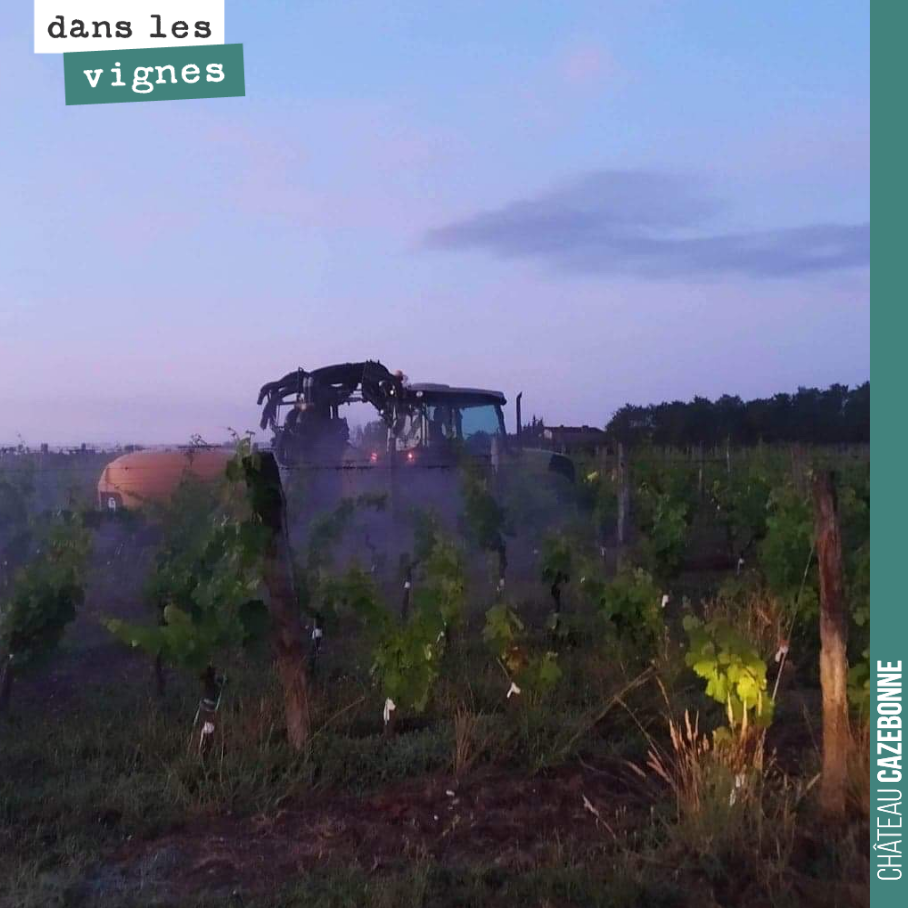
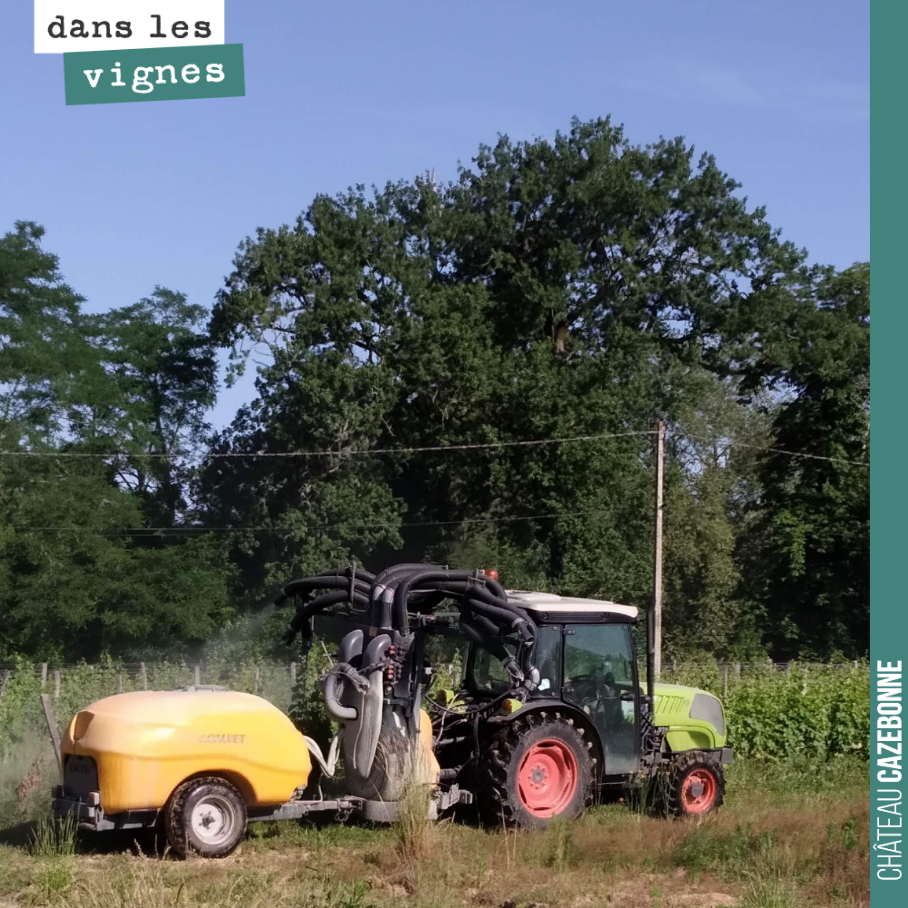
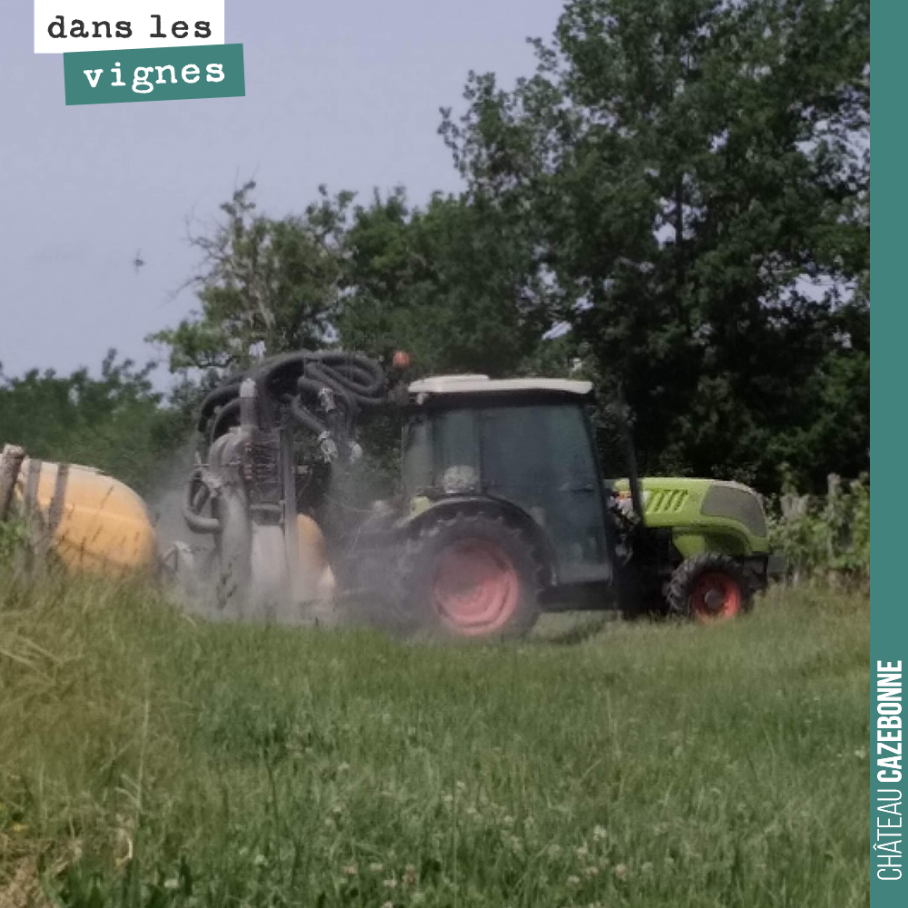
Copper applications are generally carried out in spring and early summer, during the vegetative growth phases of the vine and bunch development, periods when the vine is most susceptible to downy mildew. The precise schedule depends heavily on weather conditions and disease pressure. Close meteorological monitoring and regular vineyard inspections (vine diseases) are essential to trigger treatments at the right moment and with the correct dose. Numerous strategies aim to optimise copper efficacy whilst reducing applied quantities, such as the use of natural plant defence stimulators or the role of horsetail in dusting plant extracts.
The use of copper, whilst necessary in organic viticulture, is not without environmental consequences. Copper is a heavy metal that can accumulate in soils, affecting microbial biodiversity and long-term fertility. This is why Château Cazebonne strives to reduce the applied doses as much as possible, well below statutory limits. We favour a holistic, preventive approach, enhancing the vitality of both soil and vine. This strategy includes agroecological practices such as maintaining living soils, applying compost, and using biodynamic preparations, which help the vine develop its own natural defences. To learn more about different vine protection strategies, feel free to read our article on organic treatments.
This fundamental work, combining tradition and innovation, enables us to cultivate vines in complete harmony with their environment. It is thanks to this philosophy that Château Cazebonne can dedicate itself to the replanting in Bordeaux of historical grape varieties that had disappeared, an endeavour made possible thanks to the support of the many enthusiasts who choose to adopt our wines. To find out more about this fascinating history, you can download our book "Bordeaux, une histoire de cépages" and test your knowledge with our wine quizzes, or simply discover our wines online.
Our suggestions
-5%on your 1st order with code BIENVENUE
The essential6 bottles — Graves red 2022
The best price of the cellar: €12 per bottle delivered.
The everyday red: generous and straight to the point.
I want it Our recommendation92/100 RVF
6 bottles — Graves red 2022, 92/100 RVF
Rated 92/100 by La Revue du vin de France: a solid 10-year ageing potential.
Our Graves for ageing, the finest gateway to the estate.
I want it Go further
12 bottles — the whole range
12 bottles, the whole range tasted: the best discovery-to-price ratio.
The complete tour of the estate, in a single case.
I want it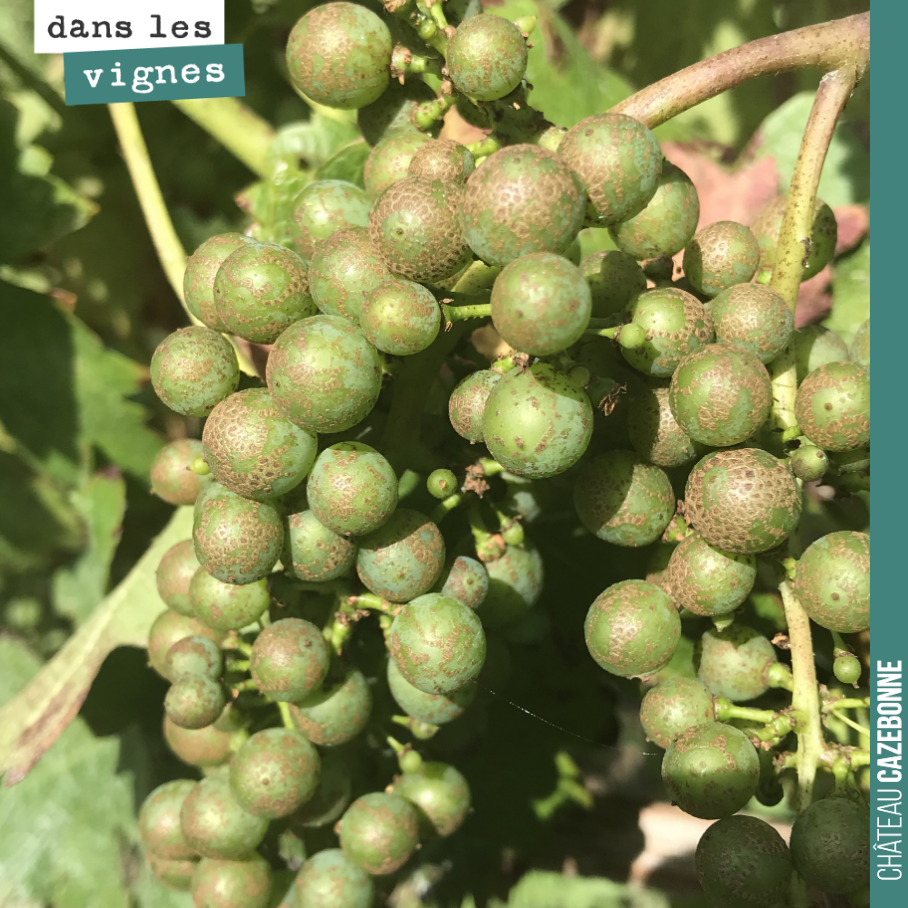
16 July 2020

17 April 2020
31 July 2019
17 June 2019

08 June 2019
05 June 2019
23 May 2019
17 May 2019
16 May 2019
30 April 2019
19 April 2019
19 April 2019
06 July 2018
03 July 2018
21 June 2018
The cellar, forgotten grape varieties and our cuvées, twice a month. 5% off your first order with the code BIENVENUE.