The essential
6 × Entre Amis red
6 bottles — Graves red 2022
The best price of the cellar: €12 per bottle delivered.
The everyday red: generous and straight to the point.
I want itFrog
At Château Cazebonne, the wildlife is carefully observed, and among it, the green frog (Pelophylax ridibundus) holds a special place. This amphibian, far from being a mere occupant of the wetlands, is a precious indicator of the quality of our environment. Its slender, elongated body, its often moist skin, and its ability to perform spectacular leaps make it a remarkable inhabitant of our ecosystem.
The green frog is present in a wide variety of environments, from lush tropical forests to urban areas, including, of course, our aquatic plots in Bordeaux. It is distinguished by its generally green, sometimes brownish colour, and its two well-marked dorsolateral folds. Its size can reach about ten centimetres, with females often being larger than males. Its prominent eyes and horizontal pupils give it vision perfectly adapted for hunting.
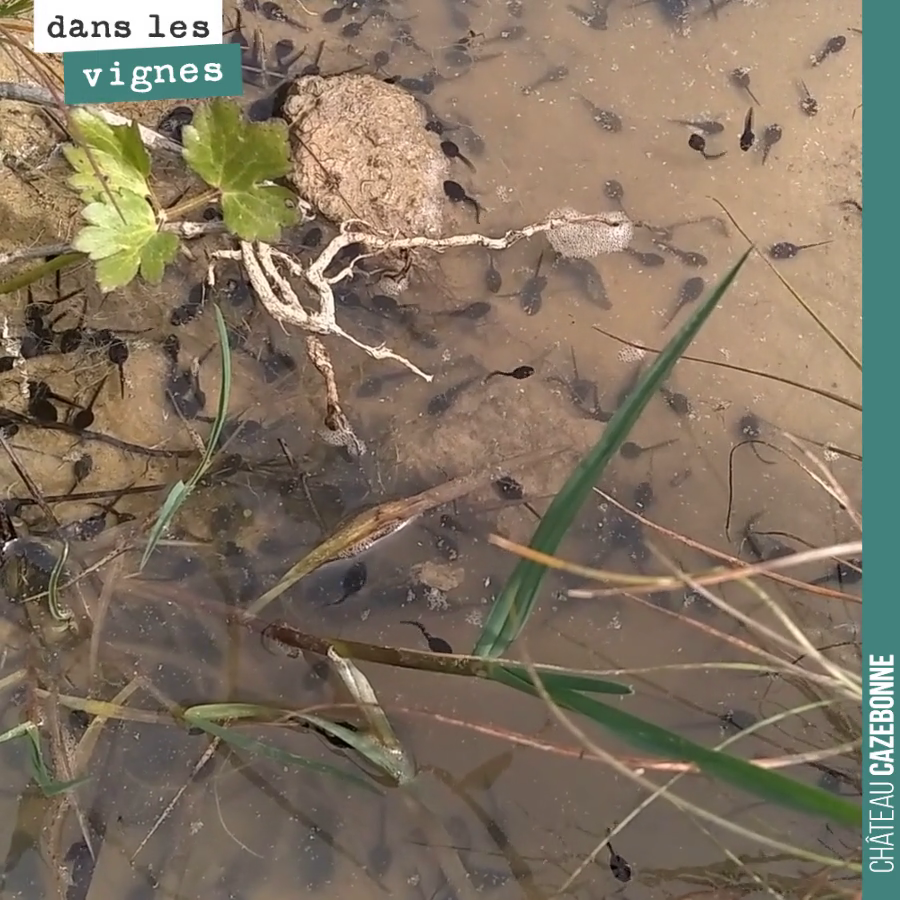
The life cycle of the green frog is intimately linked to the presence of water. After overwintering, adults reproduce in the spring and summer in the ponds and ditches of Cazebonne. The males attract females with their powerful calls, amplified by their two lateral vocal sacs. The frog eggs, known as spawn, are deposited in floating masses that hatch in a few days, giving birth to tadpoles. The latter lead an aquatic life, feeding on algae and plant debris, before metamorphosing into froglets and then adults, a process that can take from a few weeks to several months depending on the conditions.
At Cazebonne, the grassed ditches, ponds, and the banks of the Saucats constitute privileged habitats for these amphibians. These areas offer a favourable microclimate and an abundance of insects, essential elements for their survival. Their presence and vitality are good indicators of rich biodiversity and management that respects natural balances.
The frog plays a major ecological role as a central link in the food chain. Larvae and adults are active predators of insects, worms, slugs, and sometimes even small rodents. They are in turn the prey of herons, snakes, and birds, thus contributing to the regulation of populations of numerous species. By catching insects with their long, sticky tongues, frogs specifically regulate populations of insects harmful to the vines, acting as precious natural allies in our sustainable viticulture. Their presence is a testament to the efforts made towards a pesticide-free vineyard.
The observation of frogs in large numbers in our plots is concrete proof of the benefits of a viticulture that bans herbicides and pesticides. The preservation of their natural habitats, such as wetlands and the hedges that border our vineyards, is a priority. The chorus of frogs that enlivens our spring and summer evenings is a natural symphony, the soothing rhythm of nature reclaiming its rights. It is the very illustration of our commitment to an agroecological approach to the vines.
This commitment to biodiversity and respect for nature is also reflected in our project to replant historic grape varieties in Bordeaux, which had fallen into oblivion. This meticulous work of preservation and rebirth is made possible thanks to the invaluable support of all the wine lovers who have embraced our wines. Discover the fruits of this labour and the unique character of our cuvées resulting from this approach on the Cazebonne shop. It is thanks to your loyalty that we can breathe new life into these genetic treasures and build a future for Bordeaux viticulture, rich in its past and resolutely focused on respecting nature. To go further in learning about these grape varieties that have shaped the history of Bordeaux, we invite you to receive the digital version of the book "Bordeaux, une histoire de cépages" and to test your knowledge via our oenological quizzes, an enlightening work on the richness of our region's viticultural heritage.
Sources
Our suggestions
-5%on your 1st order with code BIENVENUE
The essential6 bottles — Graves red 2022
The best price of the cellar: €12 per bottle delivered.
The everyday red: generous and straight to the point.
I want it Our recommendation92/100 RVF
6 bottles — Graves red 2022, 92/100 RVF
Rated 92/100 by La Revue du vin de France: a solid 10-year ageing potential.
Our Graves for ageing, the finest gateway to the estate.
I want it Go further
12 bottles — the whole range
12 bottles, the whole range tasted: the best discovery-to-price ratio.
The complete tour of the estate, in a single case.
I want itThe cellar, forgotten grape varieties and our cuvées, twice a month. 5% off your first order with the code BIENVENUE.