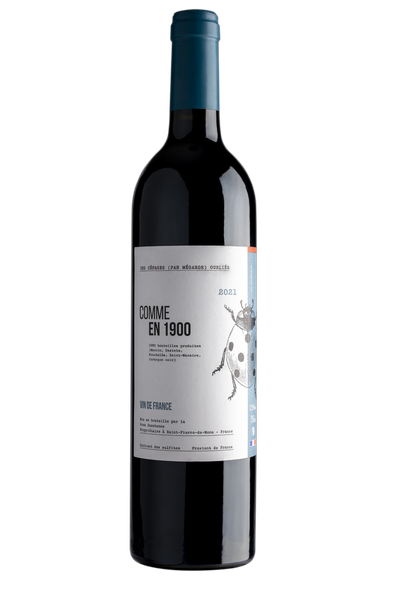
 The essential92/100 RVF
Comme en 1900 red 2022
Vin de France — heritage grapes, 92/100 RVF
The pre-phylloxera Bordeaux blend, revived at the estate.
Castets, Mancin, Pardotte: the Bordeaux before Bordeaux.
I want it
Bordeaux's forgotten grape varieties are varieties once grown in the Bordeaux region, abandoned after phylloxera, the 1956 frost and the setting of the AOC rules. Since 2017, Château Cazebonne has been replanting them in Saint-Pierre-de-Mons: more than 45 varieties grown biodynamically and a conservatory of 30 white and 30 red grape varieties.
A historic grape variety is one that was once grown on a significant scale in Bordeaux, then abandoned in favour of Merlot and Cabernet Sauvignon. The crises of the 19th century (powdery mildew from 1851, phylloxera, downy mildew) forced growers to replant; the 1935 AOC then fixed the list of permitted varieties, and the secondary varieties disappeared at the end of the 1960s.
To understand this history: the lost grape varieties of Bordeaux, Bordeaux ampelography, Viala and Vermorel, Pierre Galet, the modest grape varieties gatherings and our call for 5% total freedom for winegrowers.
As early as 1937, the Grande Ferrade research station held nearly 400 varieties, before it was neglected. Since 2017, Cazebonne has been replanting the grape varieties that once existed in Bordeaux; lacking room for all 60 identified varieties, Jean-Baptiste Duquesne created a grape variety conservatory on a single plot.
It brings together thirty white and thirty red varieties side by side, on the same rootstock planted in 2023, to compare disease, drought resistance and vigour. The whites were grafted with winegrowers from the Bordeaux Pirate collective; the first grapes will be harvested in 2027 for micro-vinifications. All the estate's varieties are presented on our Cépages d'antan page.
The forgotten red varieties include once-common grapes such as Saint-Macaire, Castets and Bouchalès, and curiosities such as Cabernet-Malbec, created in the 19th century by Jean Élie. DNA has also shown that Magdeleine noire des Charentes is a parent of Merlot and Malbec.
The pages: Béquignol, Béquignol gris, Bouchalès, Cabernet Goudable, Cabernet-Malbec, Castets, Chauché gris, Chauché noir, Faux Petit Verdot, Fer Servadou, Gascon, Gros Cabernet, Gros Verdot, Jurançon noir, Machouquet, Magdeleine noire des Charentes, Mancin, Mauzac rose, Mérille, Nanot, Pardotte, Penouille, Petit Péjac, Pignon, Prunelas, Saint-Macaire, Sauvignon rouge, Syrah in Bordeaux, Txakoli.
The forgotten white varieties once complemented the trio of Sémillon, Sauvignon and Muscadelle. Sauvignonasse, also called Sauvignon à gros grains, Béquignol blanc, Meslier Saint-François and Ondenc are among them.
The pages: Baroque, Béquignol blanc, Blanc Auba, Blanc Verdet, Bouysselet, Clairette, Colombard, Crouchen, Folle blanche, Gouais, Jurançon blanc, Lauzet, Len de l'El, Mauzac, Melon, Merlot blanc, Meslier Saint-François, Monbadon, Montils, Ondenc, Petit Manseng, Prueras, Riesling, Sauternes, Sauvignonasse, Savagnin, Ugni blanc.
Some varieties only passed through Bordeaux, or are Pyrenean parents of Bordeaux varieties: Abouriou, Balzac, Camaraou, Cinsaut, Manseng noir, Touriga Nacional. Others, more recent, are authorised for climate adaptation: Arinarnoa, Marselan, Liliorila.
After phylloxera, American hybrids such as Isabella, a direct producer that bears fruit without grafting, served as stopgap vines before being banned from the appellations: Baco noir, Clinton, Herbemont, Isabella, Jacquez, Noah, Othello.
Resistant grape varieties, or PIWI, have been authorised on a trial basis since 2021 in the Bordeaux and Bordeaux Supérieur AOCs, up to 10% of the vineyard area and 5% of a blend. See the PIWI glossary, hybrid or vinifera, Muscadinia rotundifolia, tolerant varieties, the Bouquet varieties, Oscar Oc, the variety namer's role, classification in the official catalogue and the pages 3176-21-11 N, 3179-90-7 N, 3196-57 B, 3160-27-4 N, 3159-2-12 B.
Since phylloxera, every grape variety has been grafted onto a rootstock of American origin, chosen according to the soil and the vigour sought. In the conservatory, a single rootstock makes it possible to compare the varieties on an equal footing; our 31 rootstock pages start from this page.
Six years of work on forgotten grape varieties in one bottle: 45% Mancin, 25% Castets, 10% Saint-Macaire and 10% Petit Verdot, with Bouchalès and Jurançon noir. Hand-harvested from 22 September to 13 October, 12 months in amphora and barrel, certified organic (FR-BIO-16) and Demeter. 92/100 in the April 2024 RVF and the 2025 Guide. Discover Comme en 1900 (€30)
In red, Castets, Mancin, Saint-Macaire, Bouchalès, Mérille and Jurançon noir; in white, Sauvignonasse, Blanc Auba, Béquignol blanc and Ondenc. The estate grows more than 45 historic varieties.
A collection of grape varieties planted to preserve, identify and compare them. In Saint-Pierre-de-Mons, 60 old Bordeaux varieties are gathered on a single plot and a single rootstock.
An American hybrid planted after phylloxera, it was excluded from French appellations for its so-called "foxy" taste and for a methanol level deemed excessive, a claim that is widely disputed.
A variety bred from crosses between the European vine and wild vines, selected to resist downy and powdery mildew in order to reduce treatments, copper and sulphur included.
Our suggestions
-5%on your 1st order with code BIENVENUE
The essential92/100 RVFVin de France — heritage grapes, 92/100 RVF
The pre-phylloxera Bordeaux blend, revived at the estate.
Castets, Mancin, Pardotte: the Bordeaux before Bordeaux.
I want it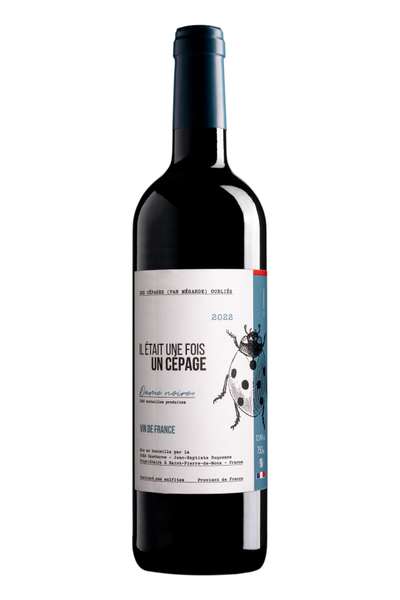 Our recommendation
IGP Atlantique — rare grape variety
A forgotten grape brought back: dense colour, wild fruit.
For the curious about lost grape varieties.
I want it Go further
12 bottles — the whole range
12 bottles, the whole range tasted: the best discovery-to-price ratio.
The complete tour of the estate, in a single case.
I want itThe cellar, forgotten grape varieties and our cuvées, twice a month. 5% off your first order with the code BIENVENUE.