
 The essential
6 × Entre Amis red
6 bottles — Graves red 2022
The best price of the cellar: €12 per bottle delivered.
The everyday red: generous and straight to the point.
I want itBunch Downy Mildew
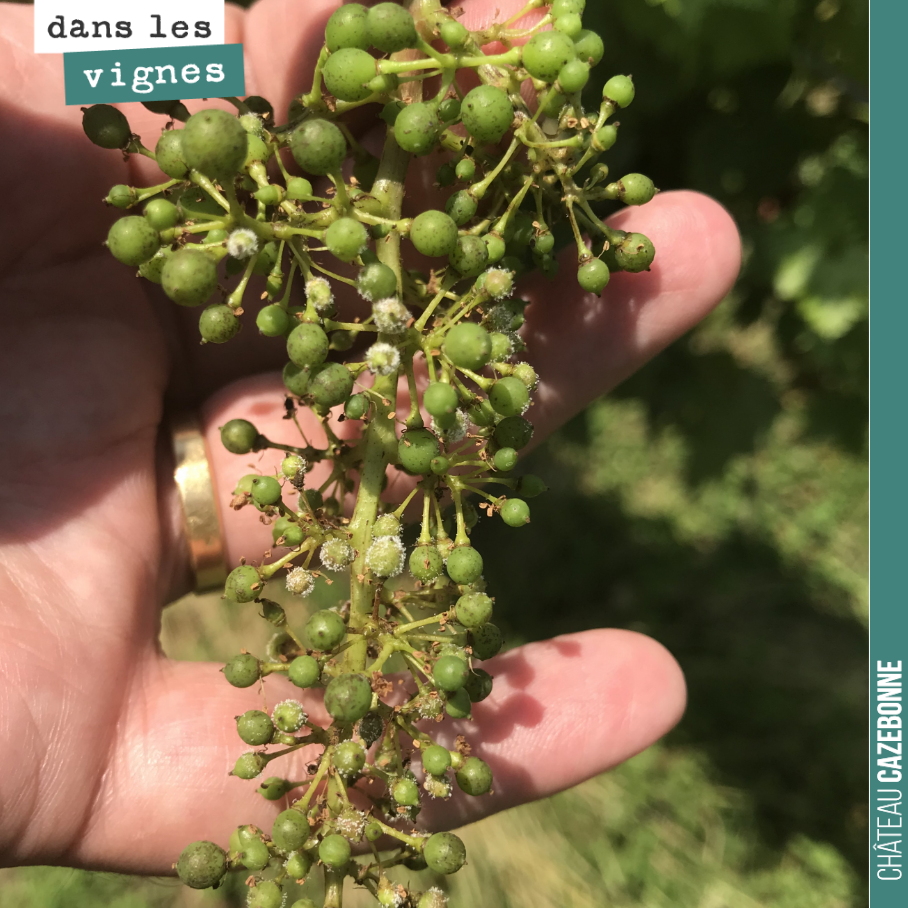
Downy mildew, scientifically known as Plasmopara viticola, is one of the fungal diseases most dreaded by winegrowers. This microscopic fungus, introduced from North America in the 19th century, caused significant devastation in European vineyards, leaving an indelible mark on viticultural history and threatening the very survival of numerous estates. Its attacks can wipe out an entire harvest if left unchecked.
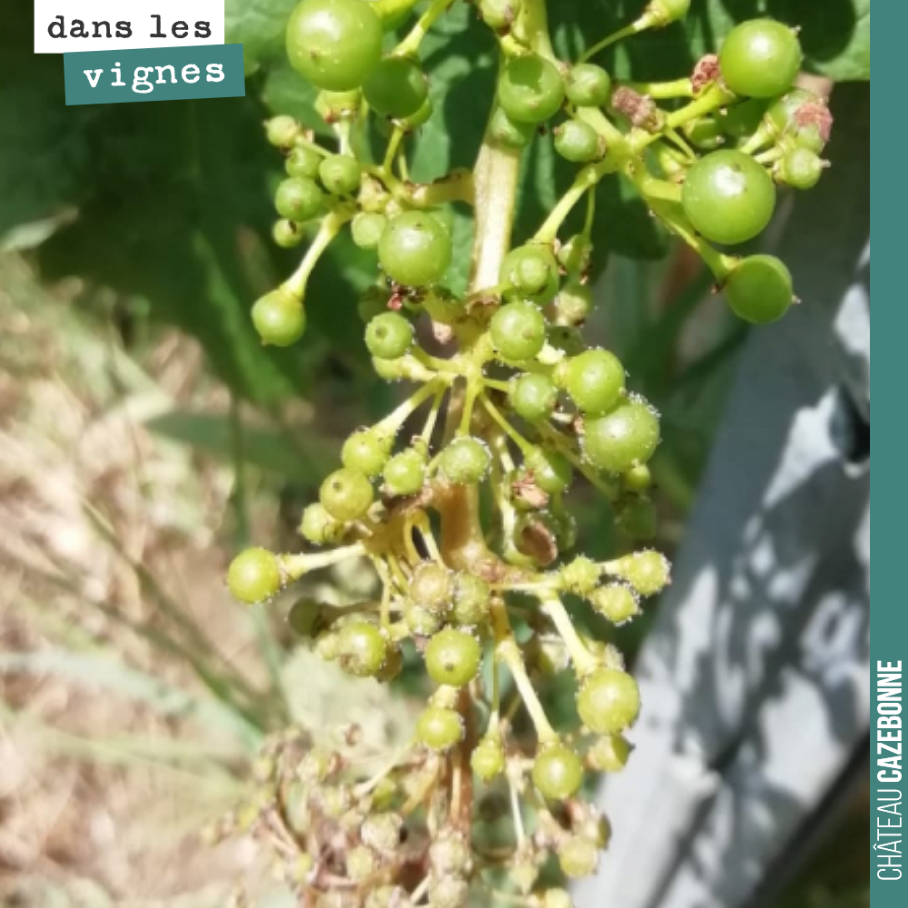
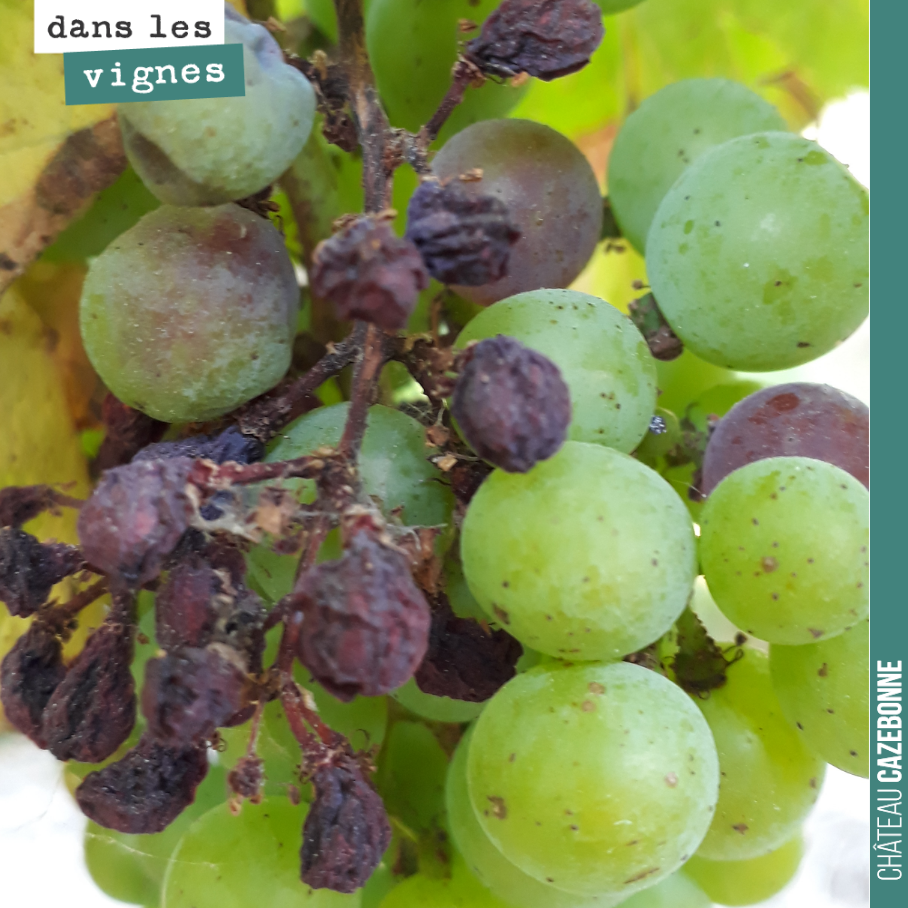
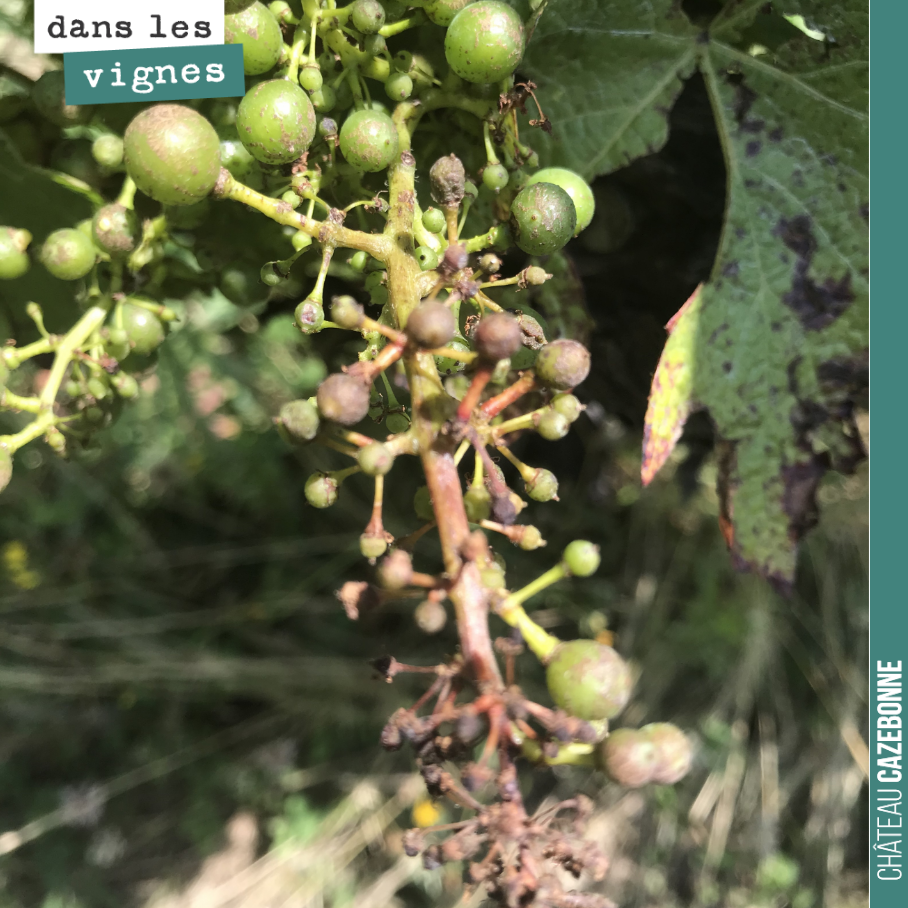
Downy mildew manifests as translucent patches, known as "oil spots", on the upper surface of leaves, followed by a white, downy growth on their underside. However, its effects are most devastating on the bunch. Inflorescences can turn brown and dry out, while young berries—which are particularly vulnerable—become covered in white mycelium before shrivelling and dropping. Once the berries are formed, the infection leads to a hard, brown rot that turns the bunch into a leathery mass, unfit for vinification. Warmth and humidity create ideal conditions for this pathogen to proliferate rapidly, making constant monitoring essential.
Faced with this threat, prevention is paramount. In organic viticulture, as practised at Château Cazebonne, we favour methods that respect both the environment and the vine. The judicious use of copper-based treatments, renowned for their fungicidal properties, remains a pillar of our strategy. Yet beyond treatments, attentive observation in the vineyard, cover crop management to ensure good airflow, and the vine's natural vigour are our best allies. A healthy vine grown in living soil is far better equipped to withstand attacks. Indeed, a book such as "Bordeaux, une histoire de cépages" by Jean-Baptiste Duquesne recalls how grape varieties had to evolve following disease crises like powdery mildew (oïdium) and phylloxera in the 19th century, highlighting the importance of adapting to plant health threats. These challenges also echo current concerns regarding diseases such as esca, a subject of serious concern for many winegrowers, and black rot.
The future resilience of our vineyards also relies on diversity. As highlighted in Jean-Baptiste Duquesne's book "Bordeaux, une histoire de cépages", monoculture and standardisation have at times weakened viticultural heritage. At Château Cazebonne, we are committed to replanting the ancient and forgotten grape varieties that once made Bordeaux terroirs so rich. This painstaking work of promoting and reintroducing ampelographic diversity aims to revive varieties that are more resilient and better suited to our environment, offering a promising path towards sustainable viticulture in the face of escalating climatic and disease pressures. Learn more about protecting our vines through innovative approaches such as mosaic downy mildew.
Downy mildew on bunches is therefore caused by the fungus Plasmopara viticola. It thrives particularly in conditions of high humidity and mild temperatures. Young berries are the most vulnerable, becoming coated in a characteristic white mycelium before drying out and falling off. Once the berry is formed, the infection leads to brown rot, turning the cluster into a dry, leathery structure useless for winemaking. Vigilance is essential right from spring, during flowering and fruit set, critical stages when the bunches are particularly exposed.
Your support, dear wine enthusiasts, is vital to the success of this endeavour. By tasting our cuvées crafted from these rare grape varieties, you actively participate in the revival of this viticultural heritage and the preservation of an entire chapter of Bordeaux history. To deepen your knowledge of the fascinating history of Bordeaux grape varieties and support our project, we invite you to download the digital edition of the book "Bordeaux, une histoire de cépages" by Jean-Baptiste Duquesne. You can also test your knowledge of oenology and viticulture with our wine quizzes, or directly discover our wines and experience Château Cazebonne for yourself.
Sources
Our suggestions
-5%on your 1st order with code BIENVENUE
The essential6 bottles — Graves red 2022
The best price of the cellar: €12 per bottle delivered.
The everyday red: generous and straight to the point.
I want it Our recommendation92/100 RVF
6 bottles — Graves red 2022, 92/100 RVF
Rated 92/100 by La Revue du vin de France: a solid 10-year ageing potential.
Our Graves for ageing, the finest gateway to the estate.
I want it Go further
12 bottles — the whole range
12 bottles, the whole range tasted: the best discovery-to-price ratio.
The complete tour of the estate, in a single case.
I want it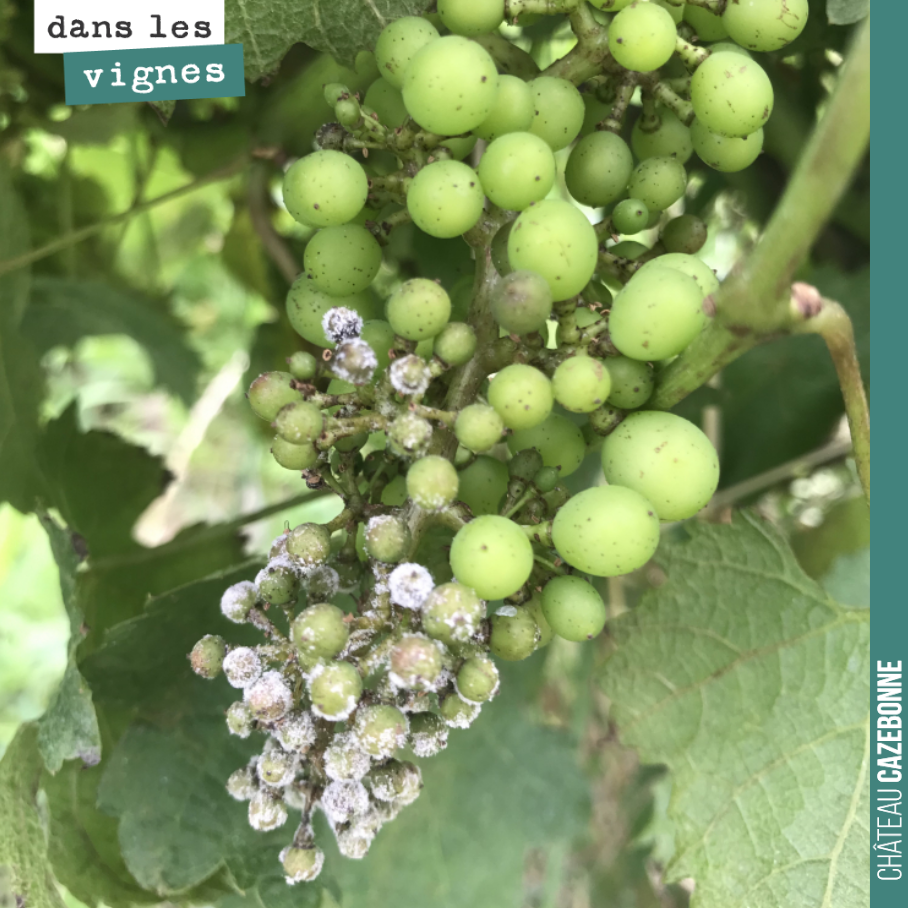
19 July 2021
02 July 2021
29 July 2020
03 July 2020
28 June 2020
The cellar, forgotten grape varieties and our cuvées, twice a month. 5% off your first order with the code BIENVENUE.