
 The essential
6 × Entre Amis red
6 bottles — Graves red 2022
The best price of the cellar: €12 per bottle delivered.
The everyday red: generous and straight to the point.
I want itVineyard spraying
Since the creation of Château Cazebonne, we have chosen transparency. It is essential for us to enlighten you on each of our interventions, whether it is the treatments implemented or the reasons that drive us to apply them. This approach is all the more important as it allows us to answer questions, and even criticisms, formulated against organic farming, particularly concerning the use of copper.
Through these pages, you will discover our reasoned approach and our constant commitment to respectful viticulture. We strive to minimise the use of any inputs, favouring alternative and preventive methods. Copper, for example, whose use is regulated in organic farming, is subject to increasingly moderate use on our estate. It is a strong choice, guided by our deep respect for the richness of our soils and the surrounding biodiversity. We believe in a resilient vine, capable of blossoming in harmony with its environment.
Our commitment goes beyond the absence of synthetic chemicals. It is a global philosophy, aiming to create a balanced ecosystem where the vine draws its strength from a living and healthy soil. We promote cover cropping, the biodiversity of hedges and parcel borders, the presence of beneficial insects... Every action is designed to strengthen the vine's natural defences and limit its need for external interventions. Careful observation of our vineyard guides our decisions, allowing us to act only when necessary and with the greatest precision.
At Château Cazebonne, this commitment to sustainable viticulture is combined with a passion for the history of Bordeaux grape varieties. Our work is not limited to producing exceptional wines; it also includes an innovative approach to replanting forgotten grape varieties, those that made the richness and diversity of Bordeaux wines before their standardisation. This ambitious project, which you can discover in detail in the book "Bordeaux, une histoire de cépages" by Jean-Baptiste Duquesne, published by Éditions BBD, is made possible thanks to the enthusiasm and unwavering support of all the wine lovers who adopt our wines and share our vision.
We invite you to discover the unique expression of our terroir through our different cuvées, available now on the Cazebonne boutique. To deepen your knowledge of Bordeaux's winemaking history and our approach, do not hesitate to download the digital version of the book "Bordeaux, une histoire de cépages".
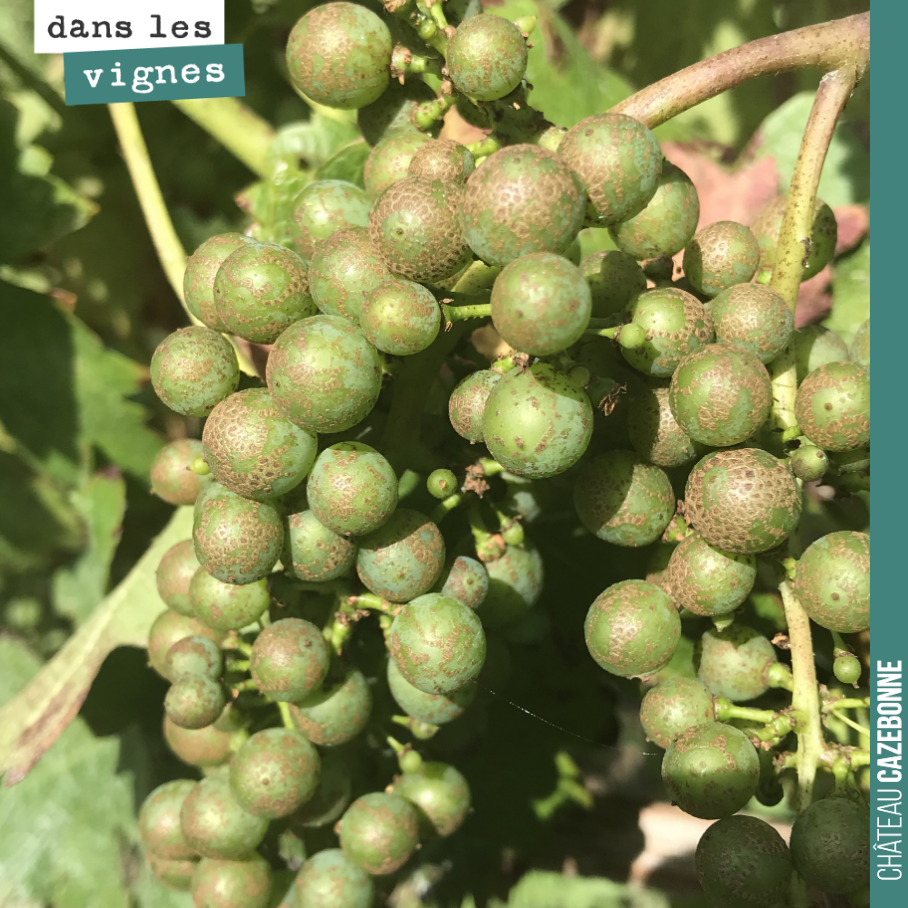
Treatment in organic farming primarily aims to prevent the appearance of diseases and pests, by strengthening the vine's natural resistance and fostering a balanced ecosystem. Unlike conventional methods, it prohibits the use of synthetic chemicals, such as systemic pesticides, herbicides, and fungicides.
The main objective is to protect the vine from external attacks without disrupting the biodiversity of the soil and the environment. It is about maintaining the plant's optimal health so that it can fully express the terroir, while ensuring quality production and sufficient yields.
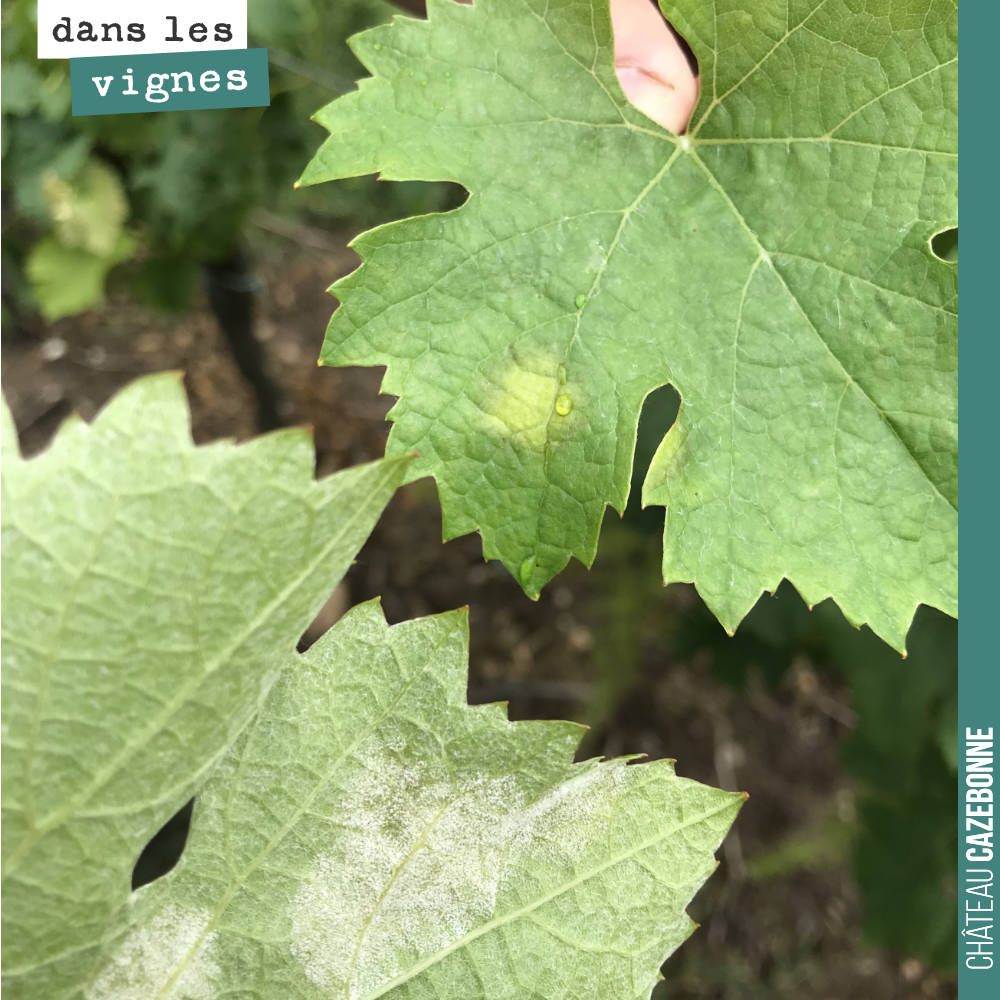
Interventions are dictated by careful observation of the vineyard and the vine's cycles. They mainly take place in spring and early summer, periods when the vine is most vulnerable to diseases such as downy mildew and powdery mildew (oïdium). Phenological stages, such as budburst, flowering, and bunch closure, are key moments for applications.
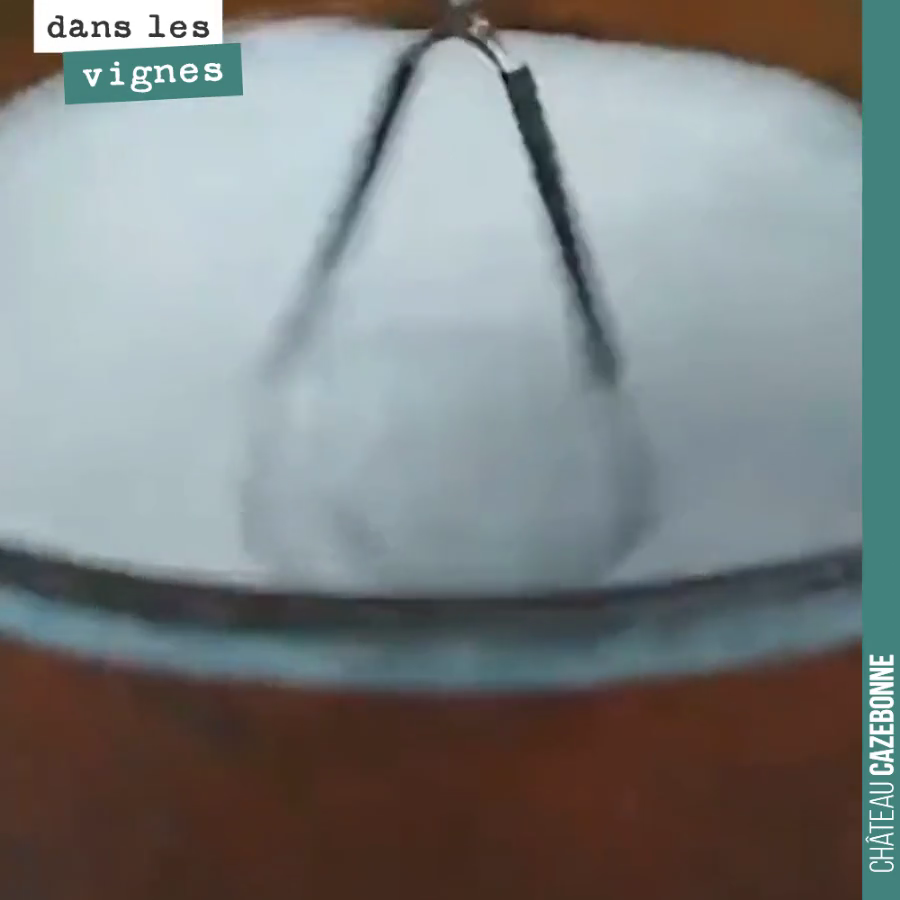
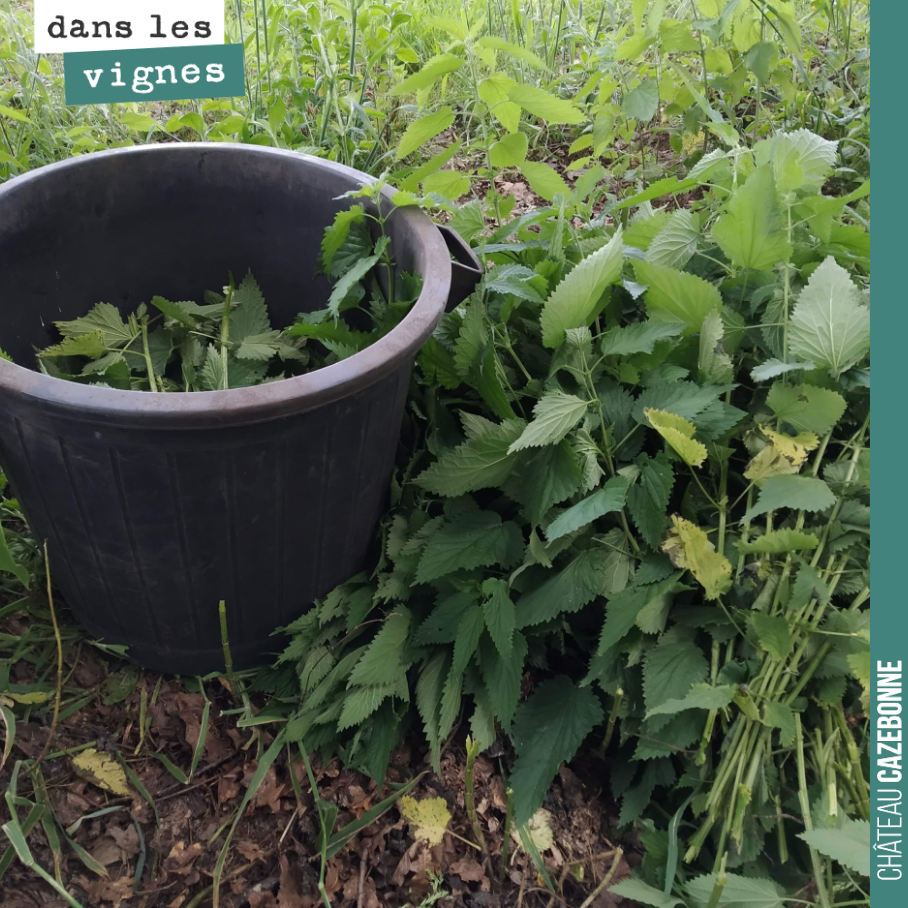
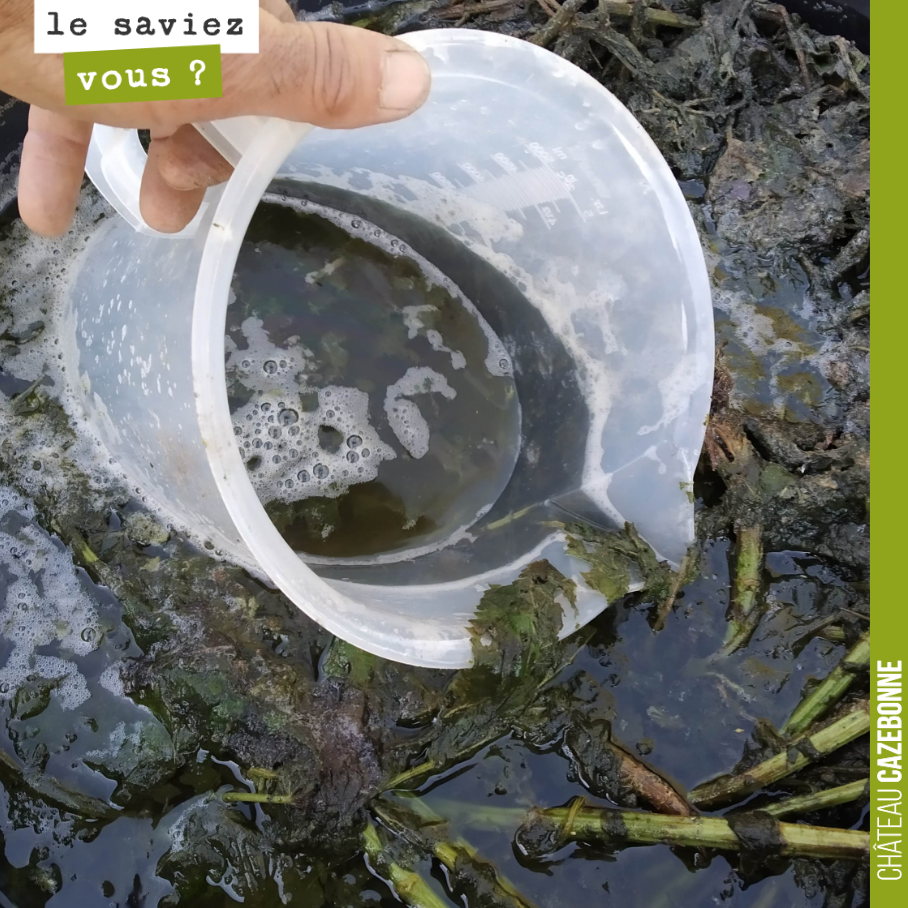
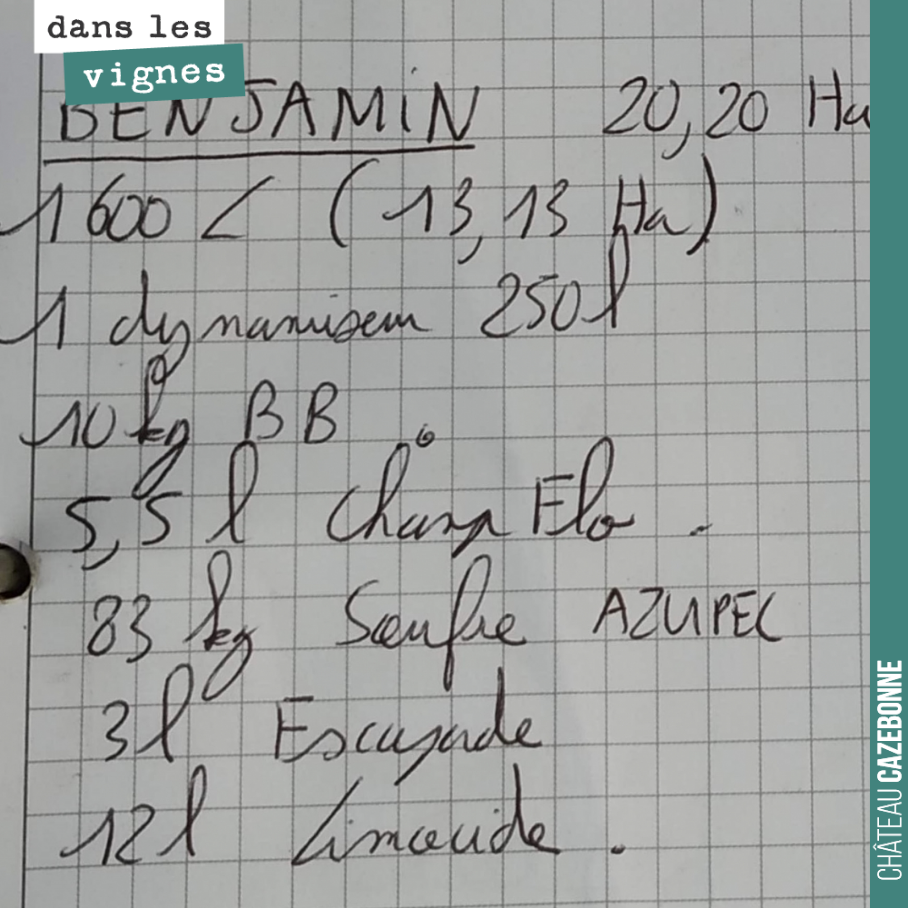
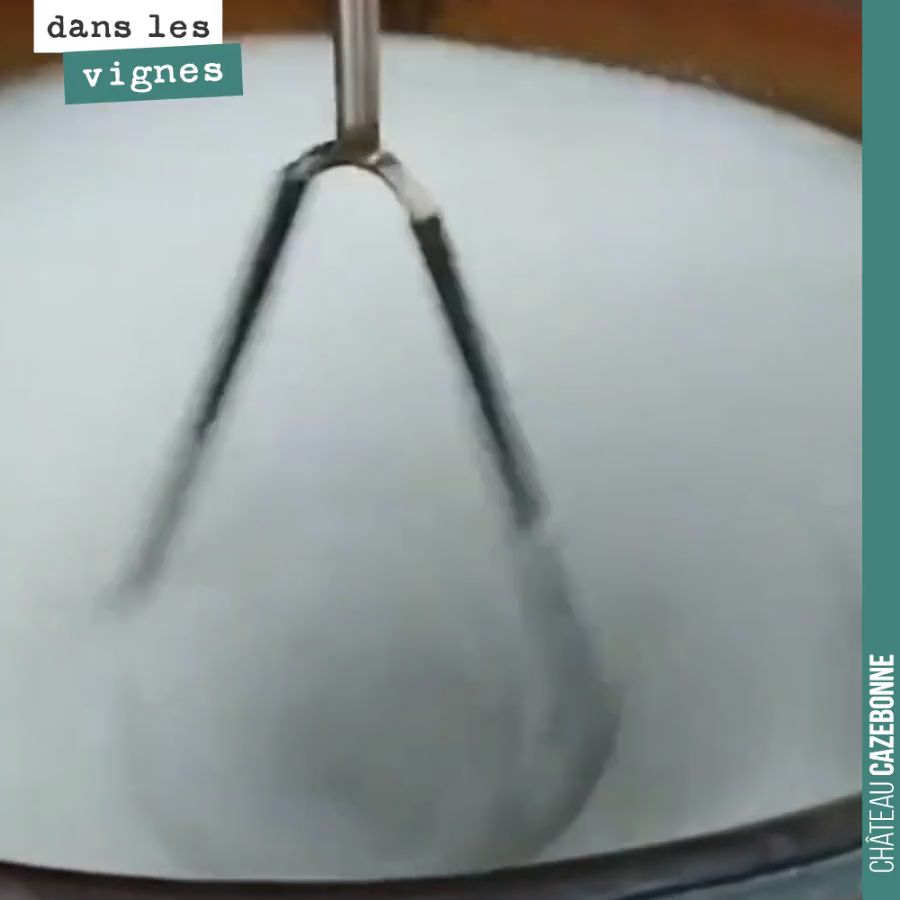
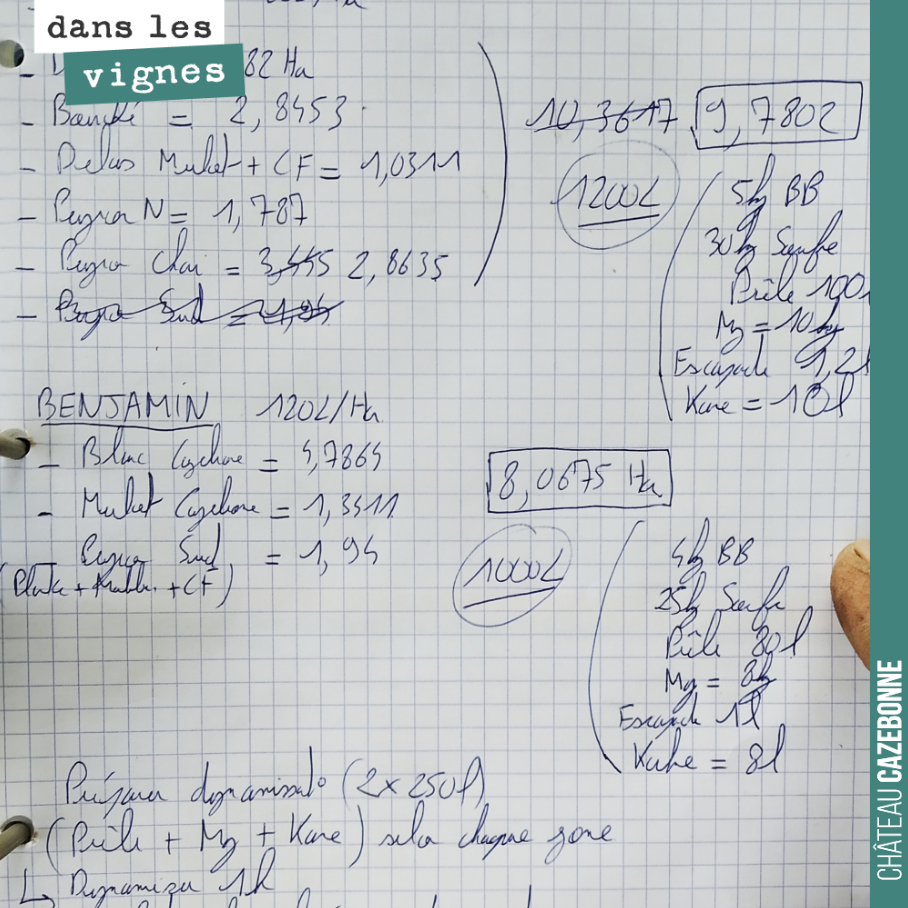
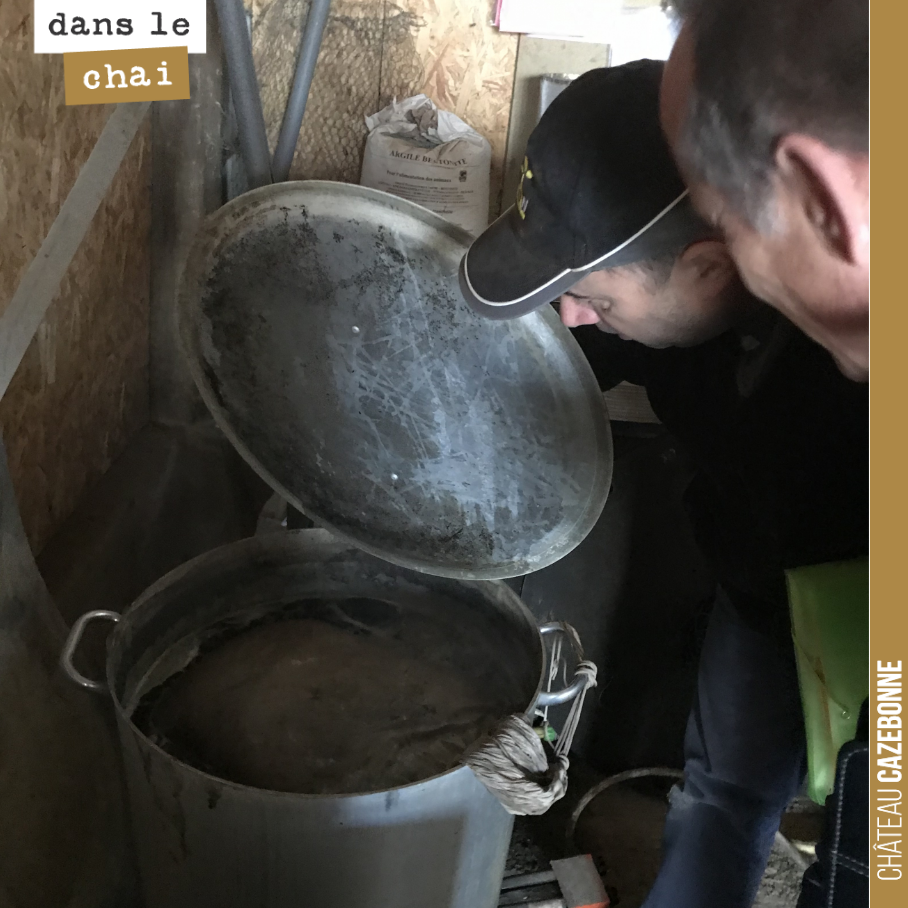
In organic farming, treatments rely on natural or naturally derived substances. The main products used are sulphur and copper. Sulphur is essential to combat powdery mildew, while copper is an effective fungicide against downy mildew. Other preparations, such as herbal teas or plant extracts, can be used to strengthen the vine's defences. Biodynamics incorporates specific preparations to revitalise the life of the soil and the plant. Nettle manure, for example, with its fortifying and repellent properties, is a valuable ally. The role of horsetail is also recognised for its fortifying and fungicidal properties.
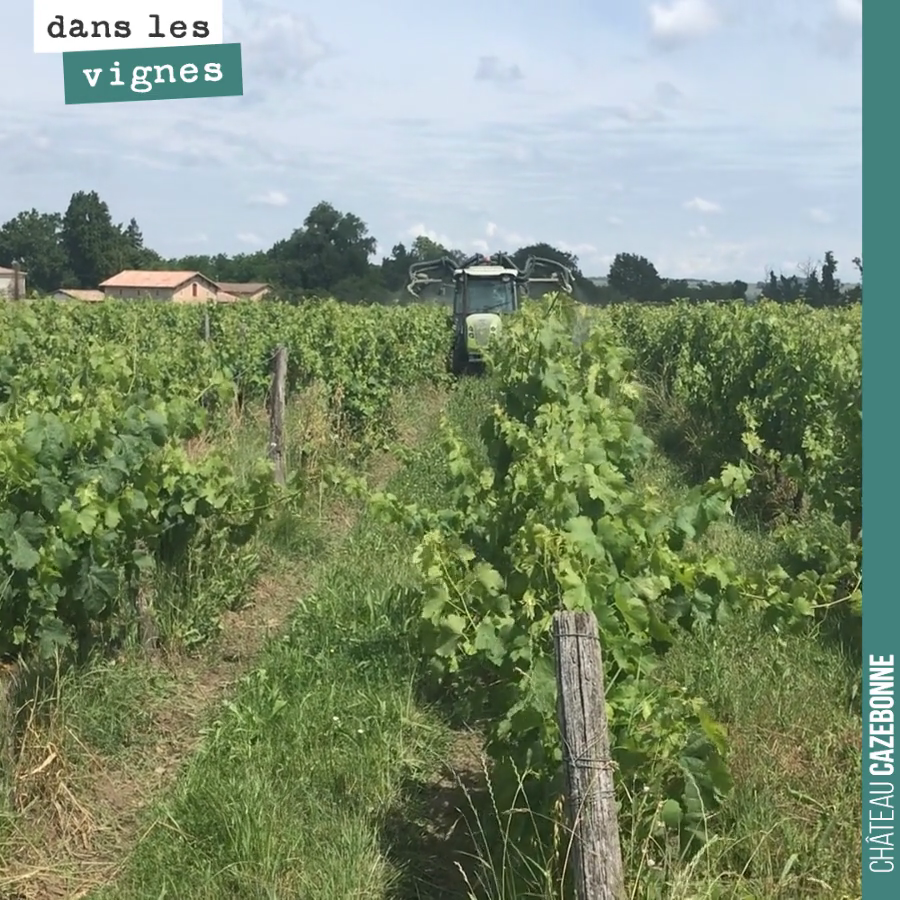
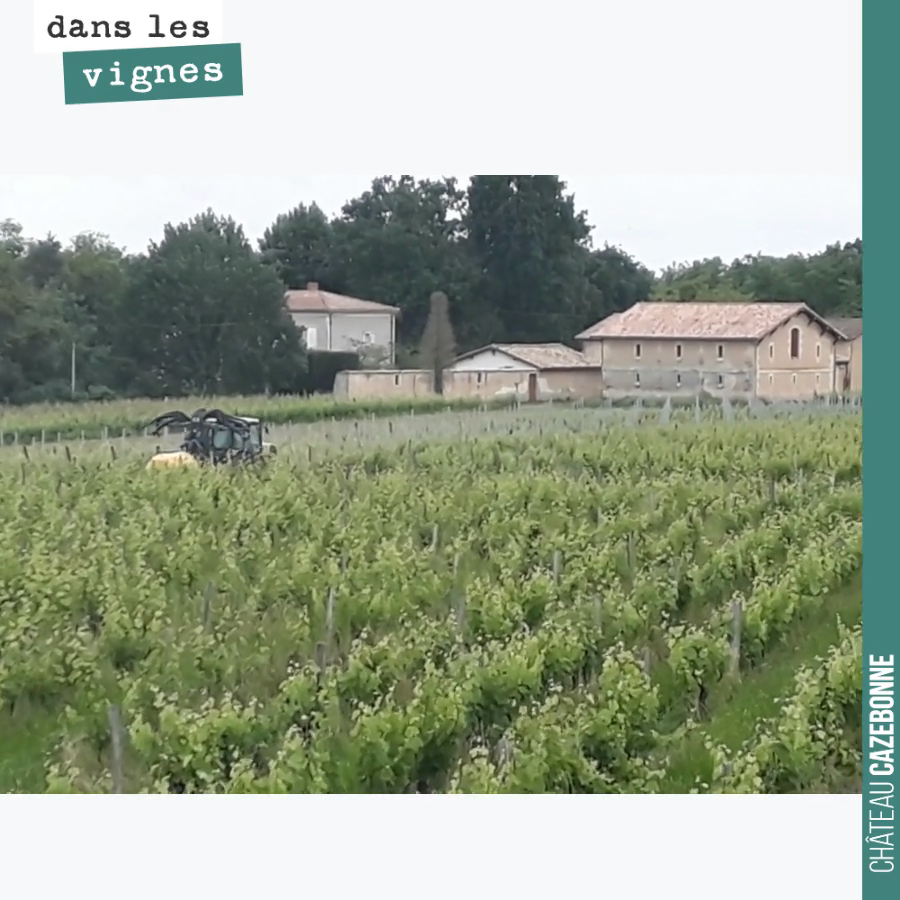
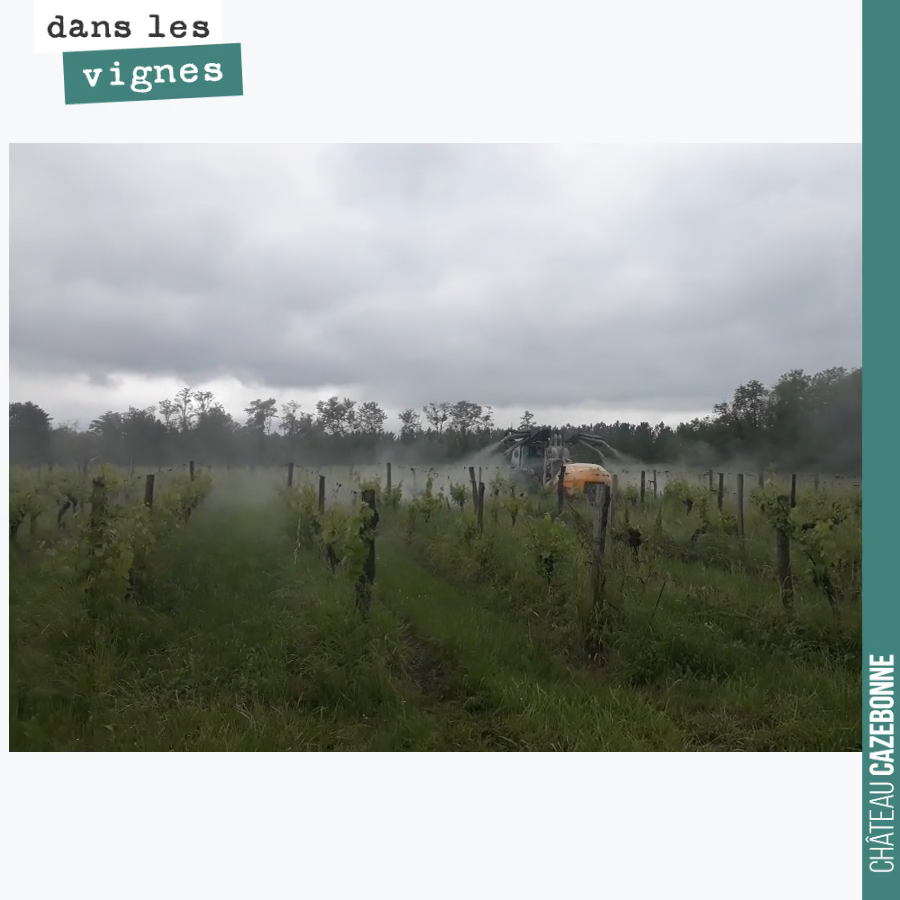
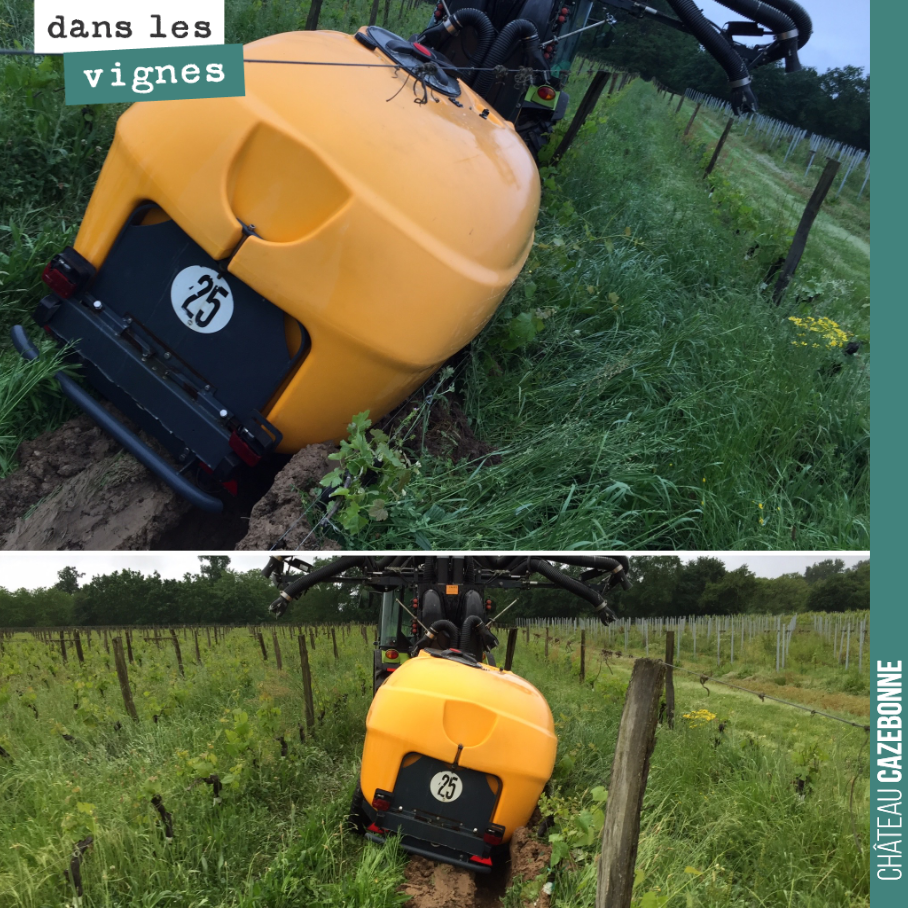
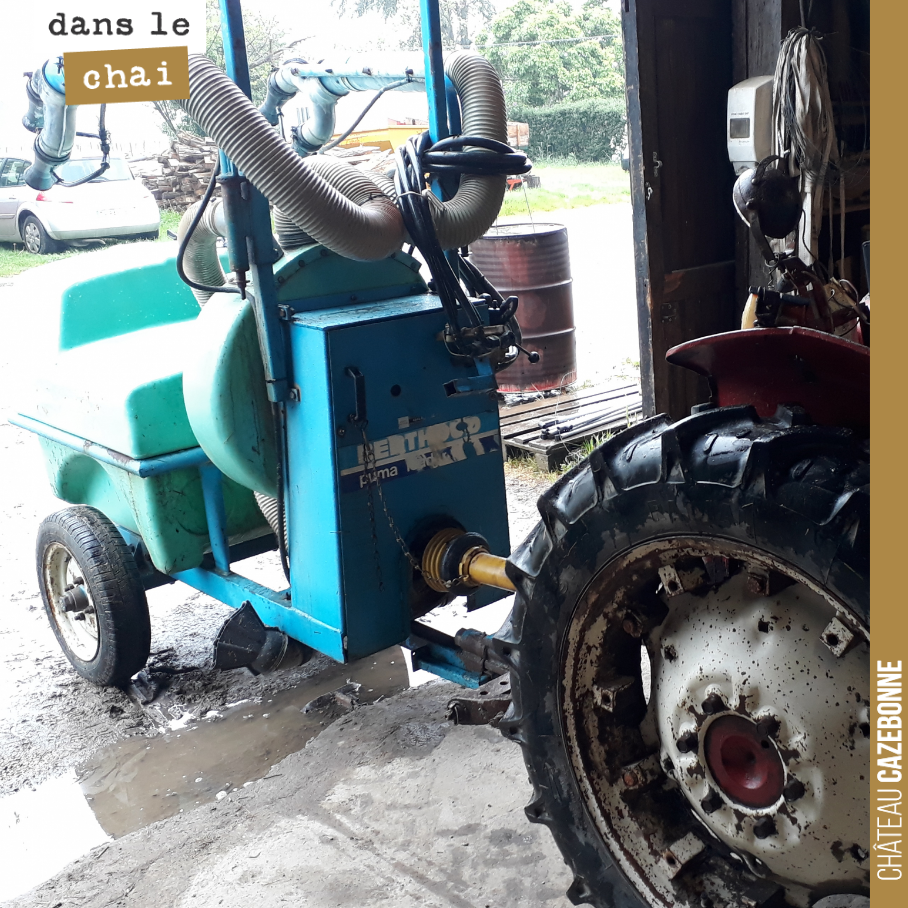
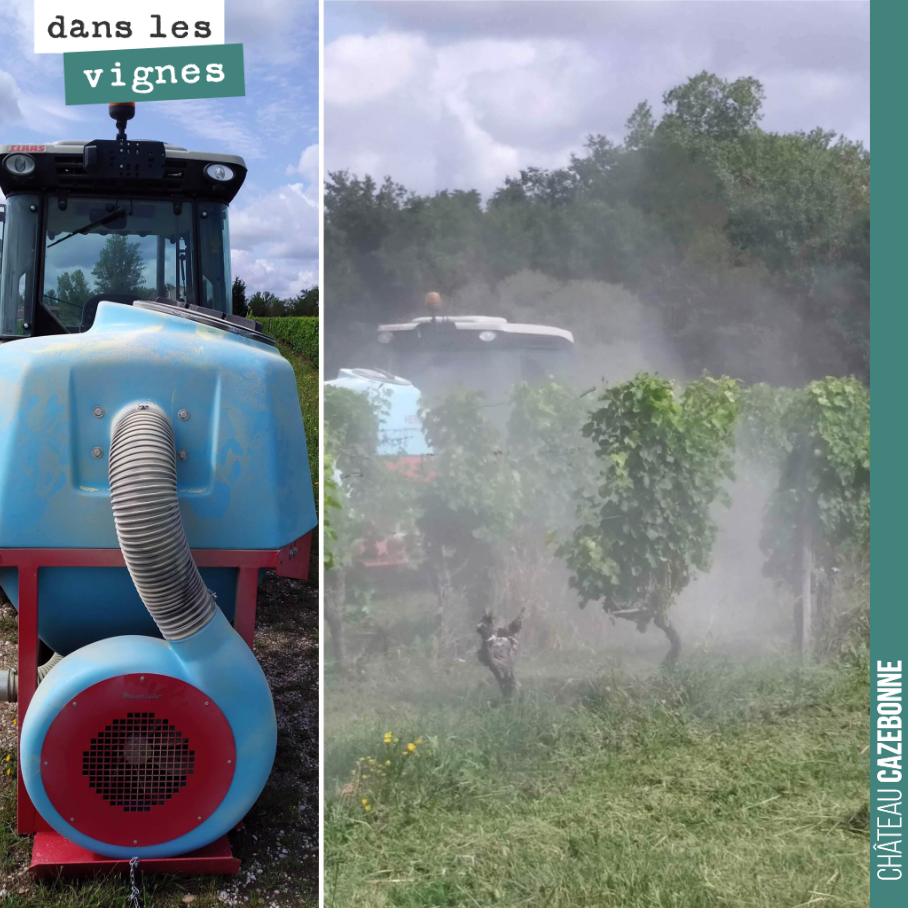
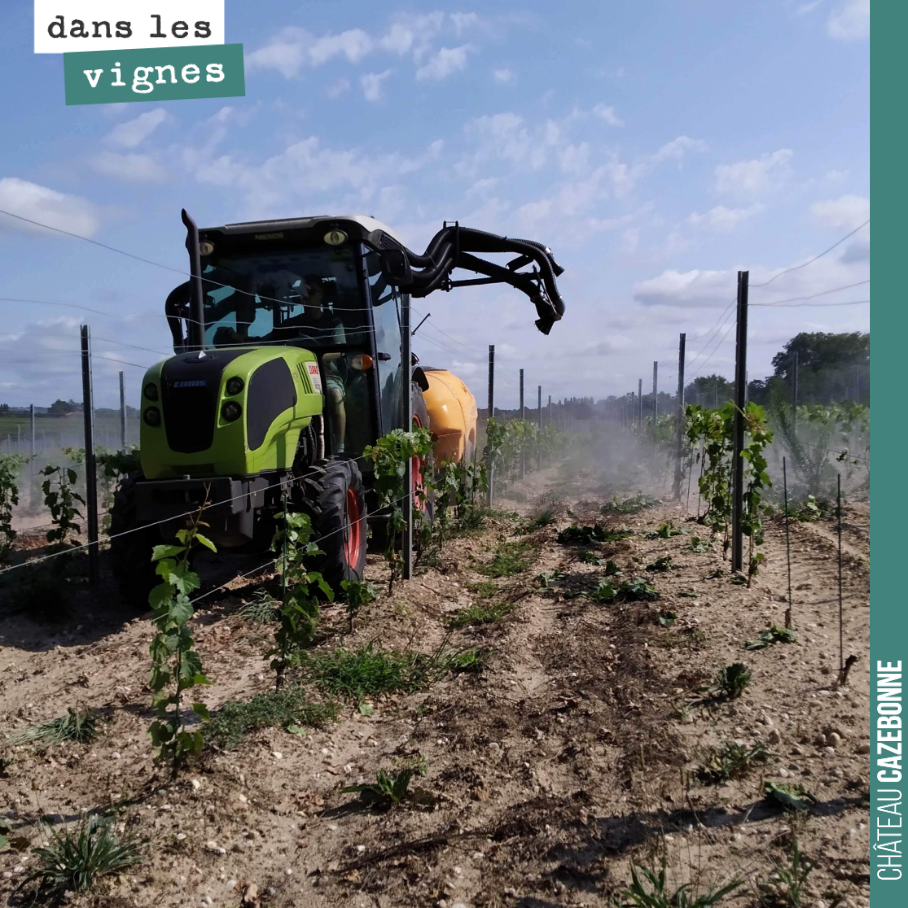
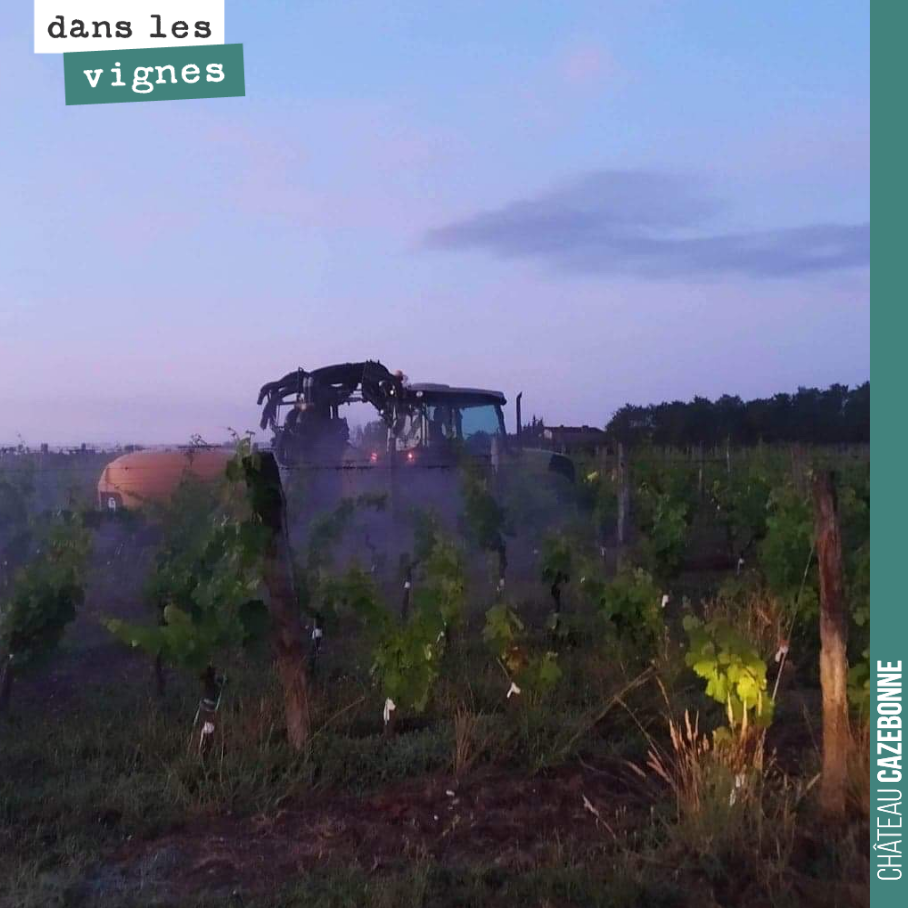
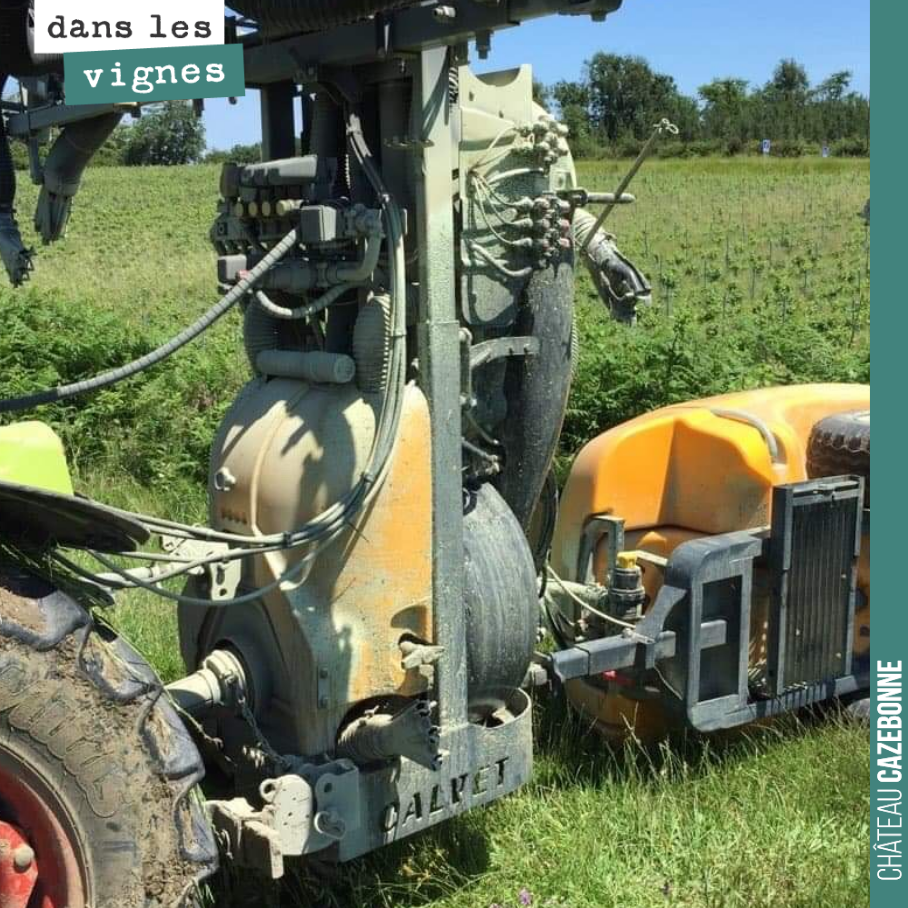
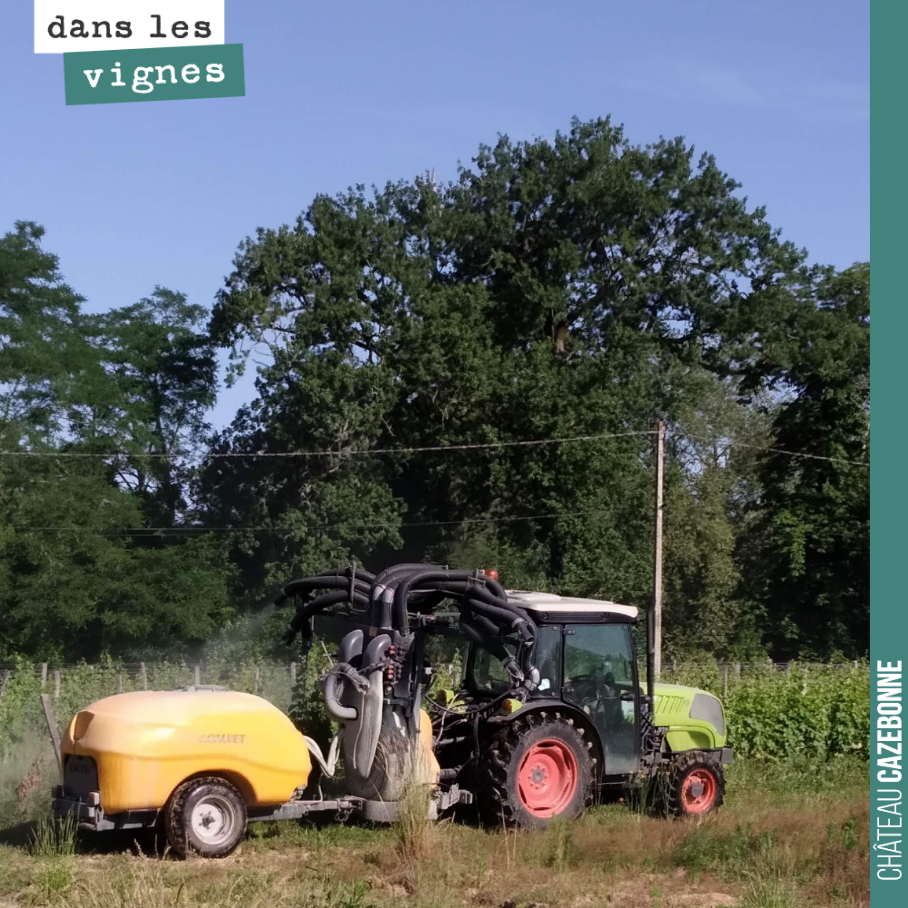
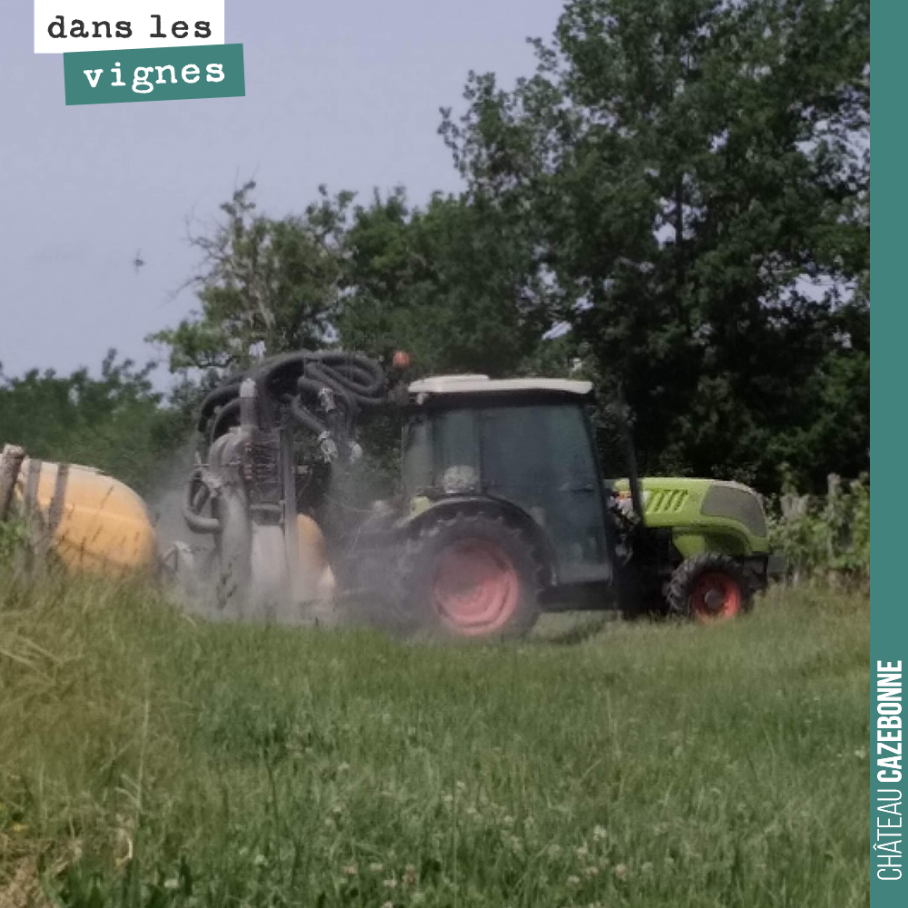
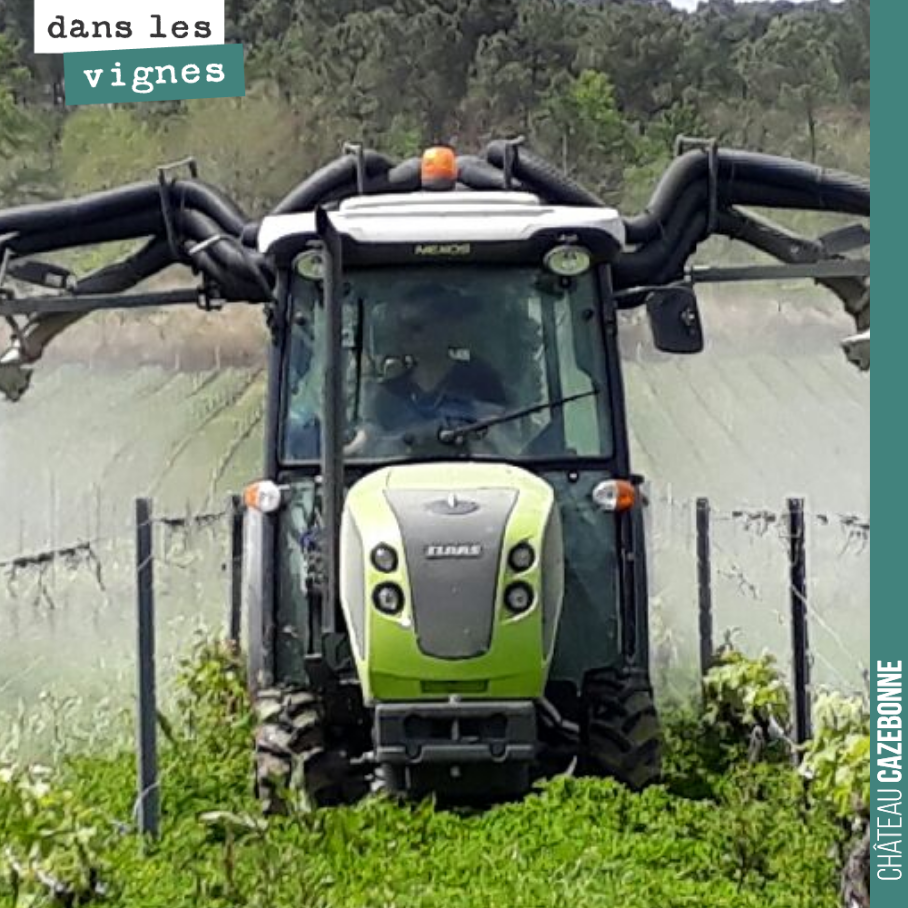
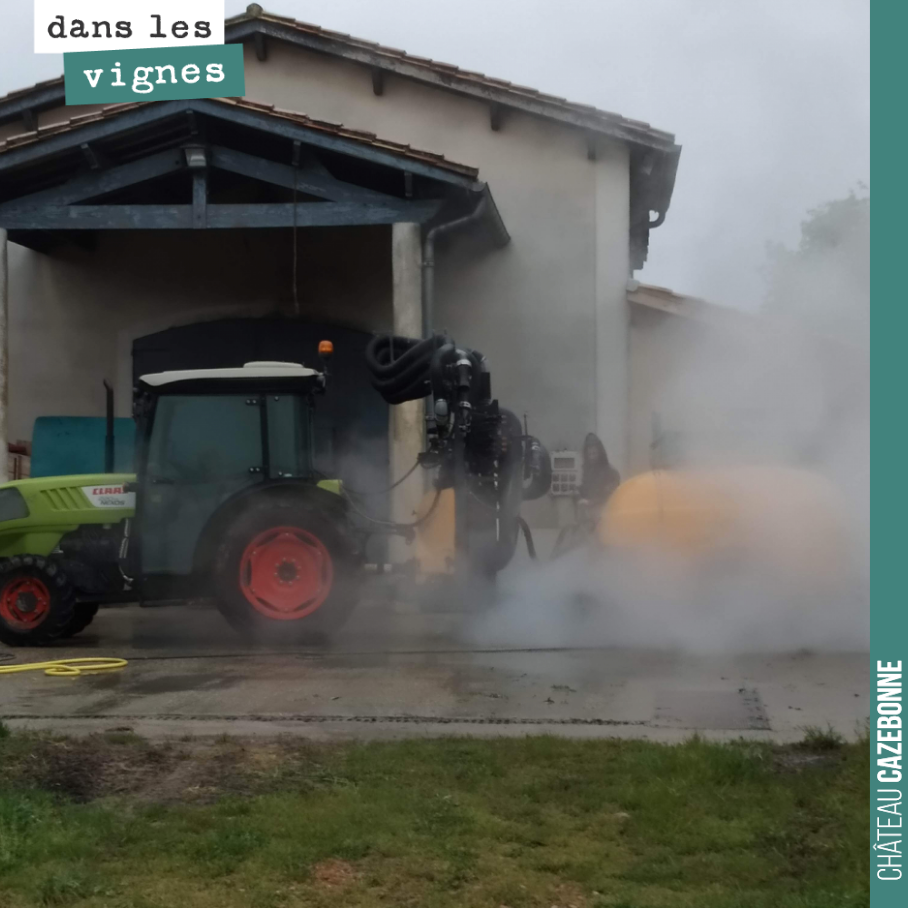
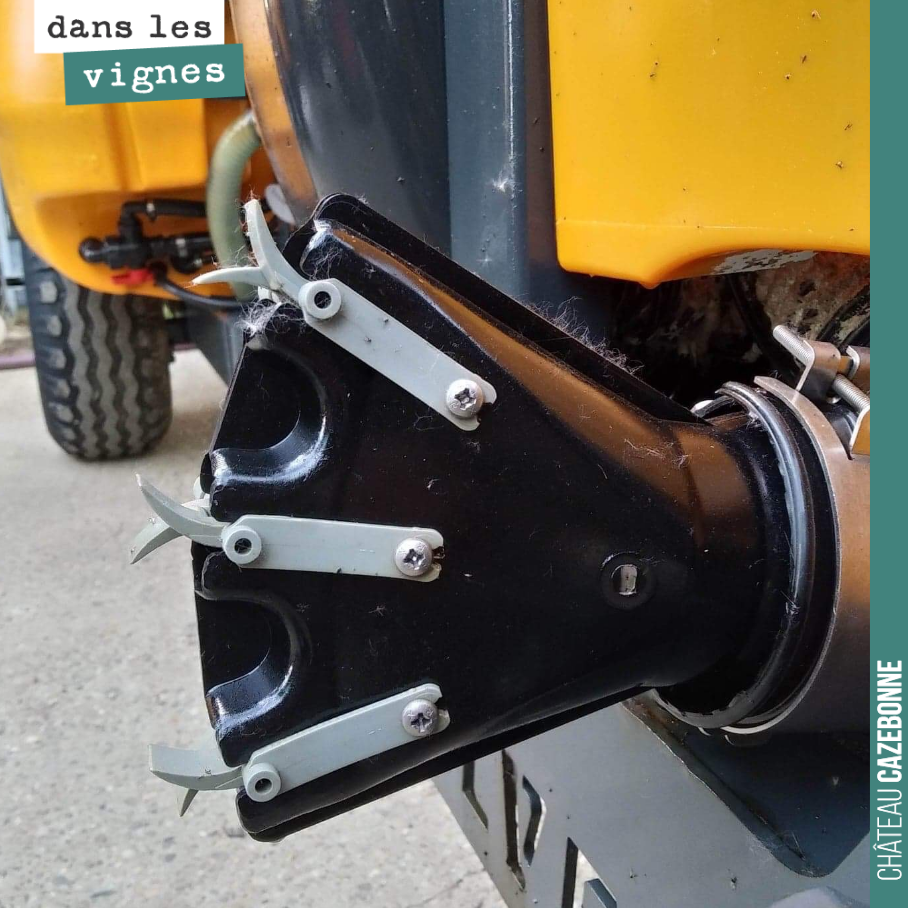
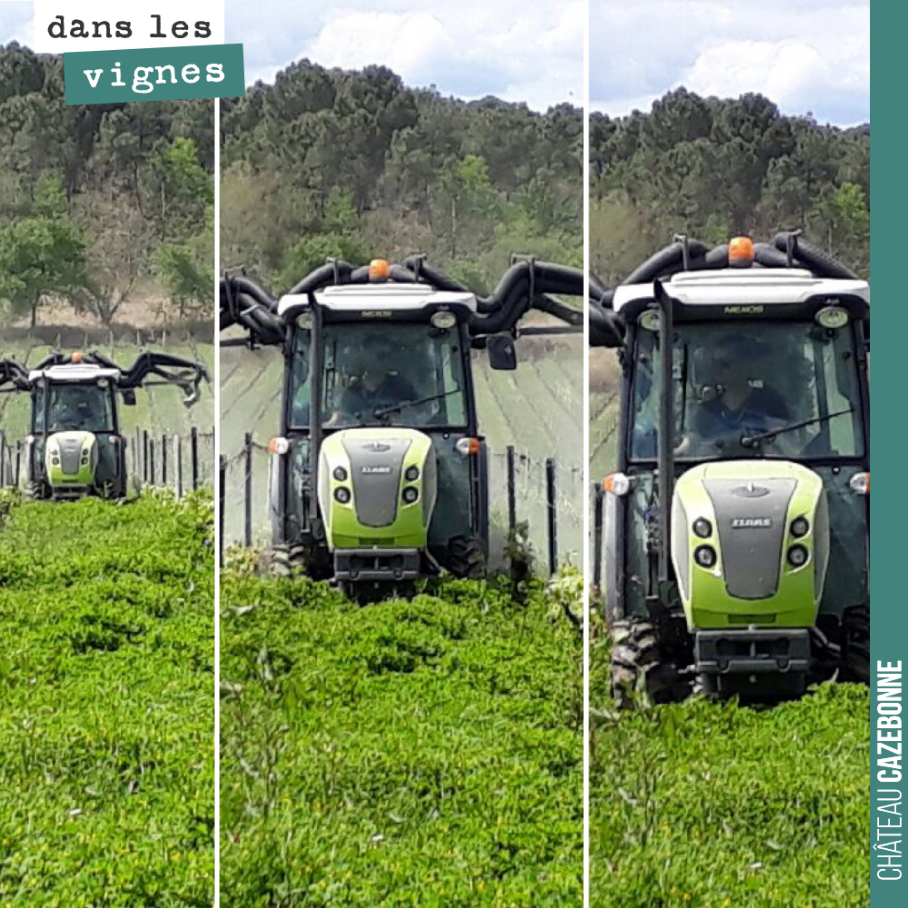
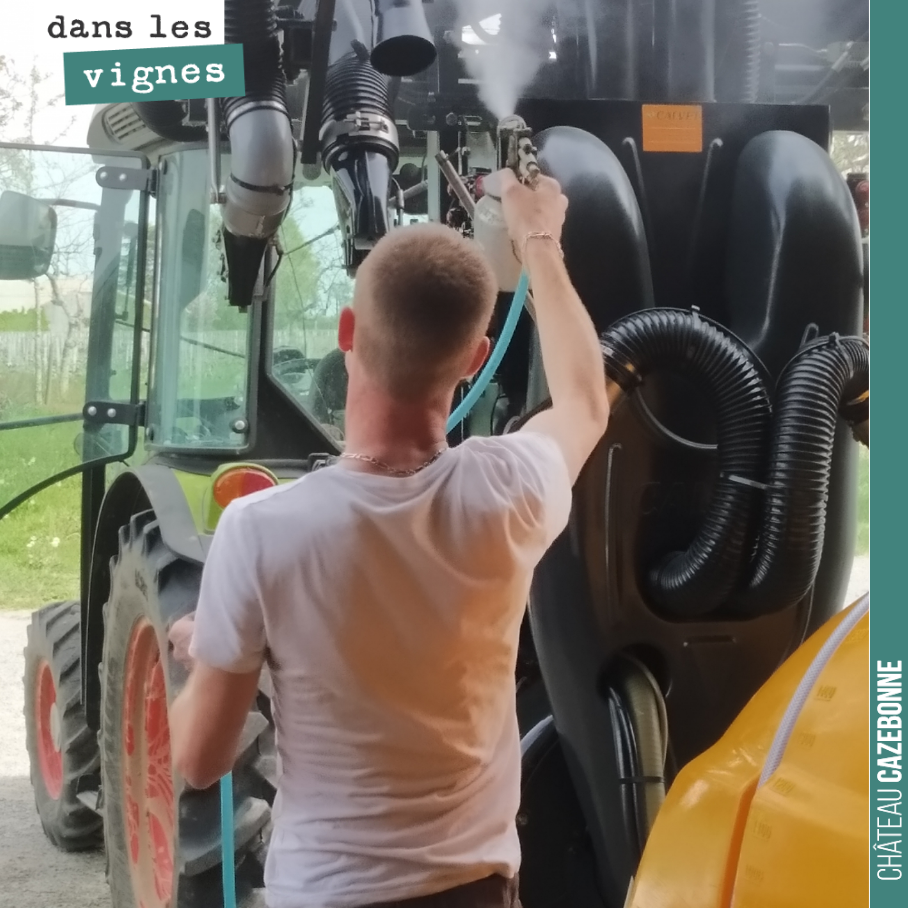
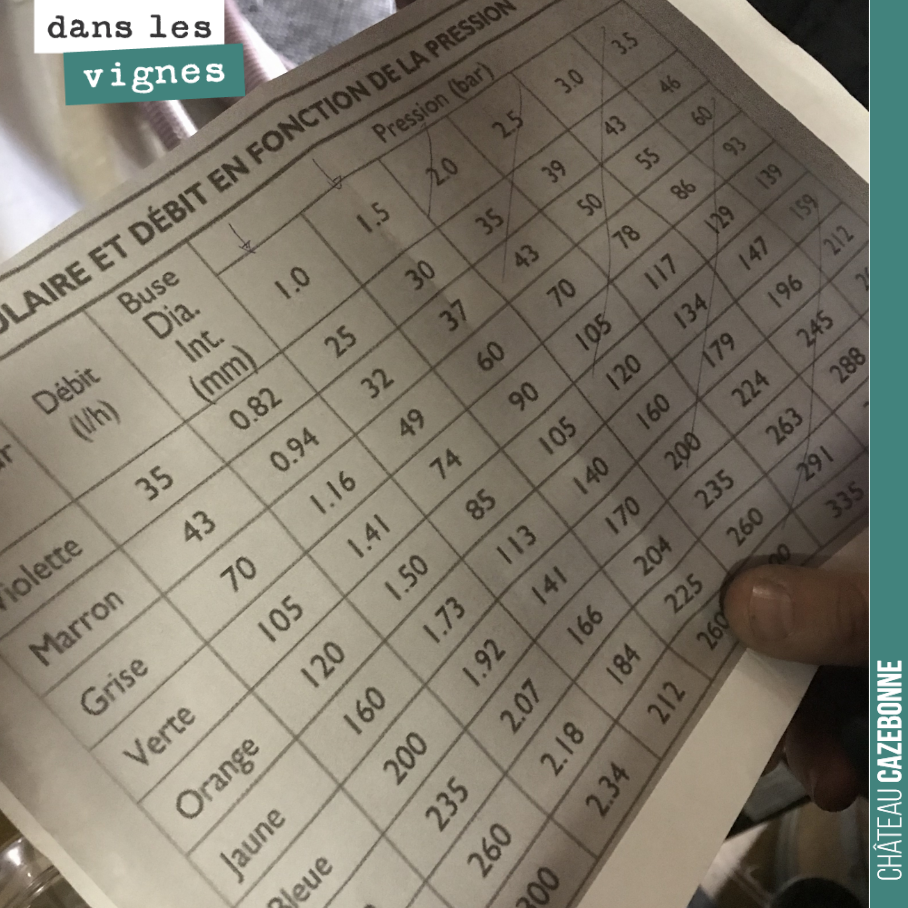
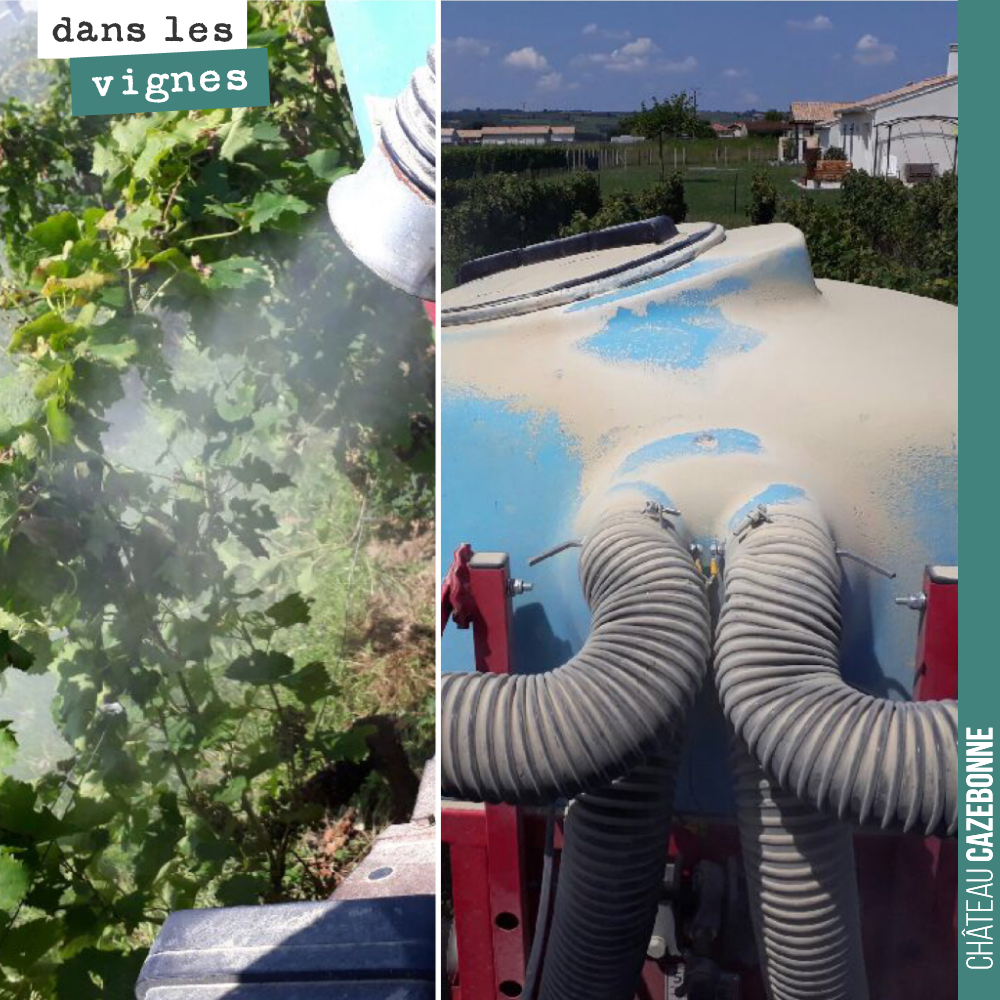
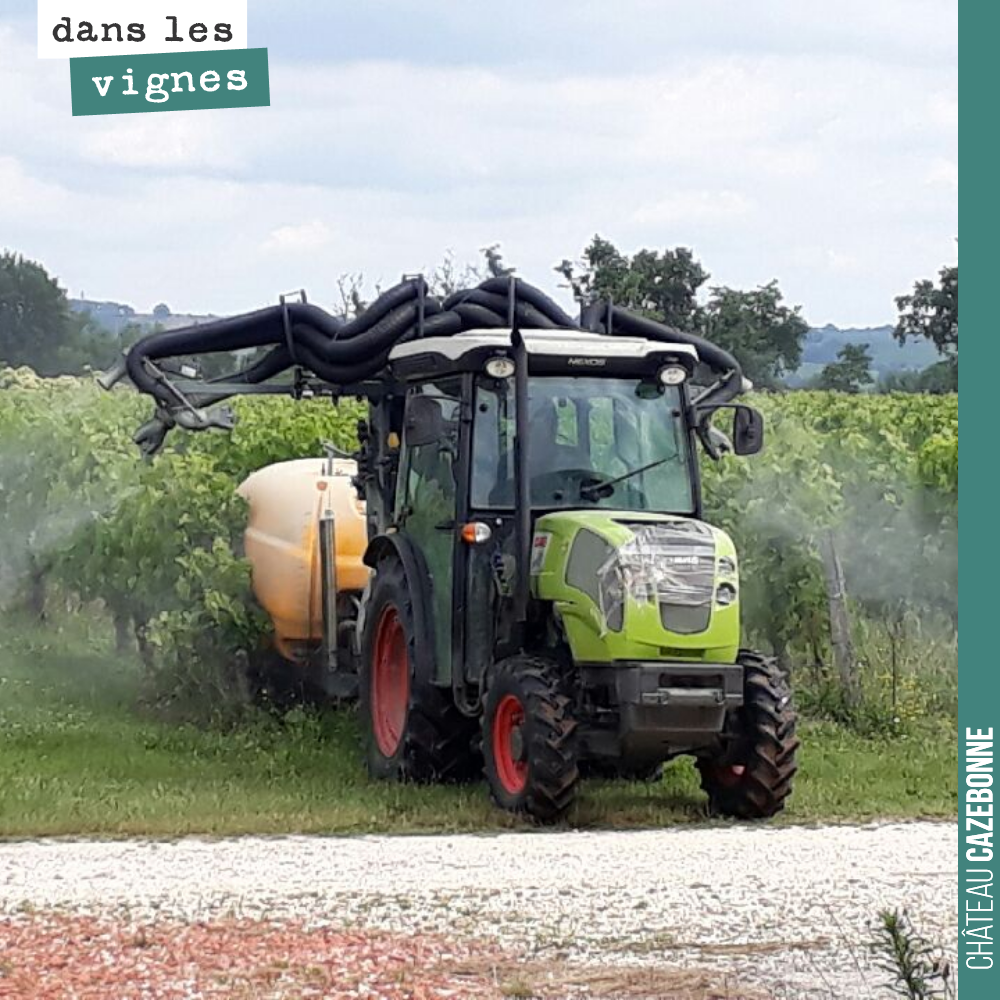
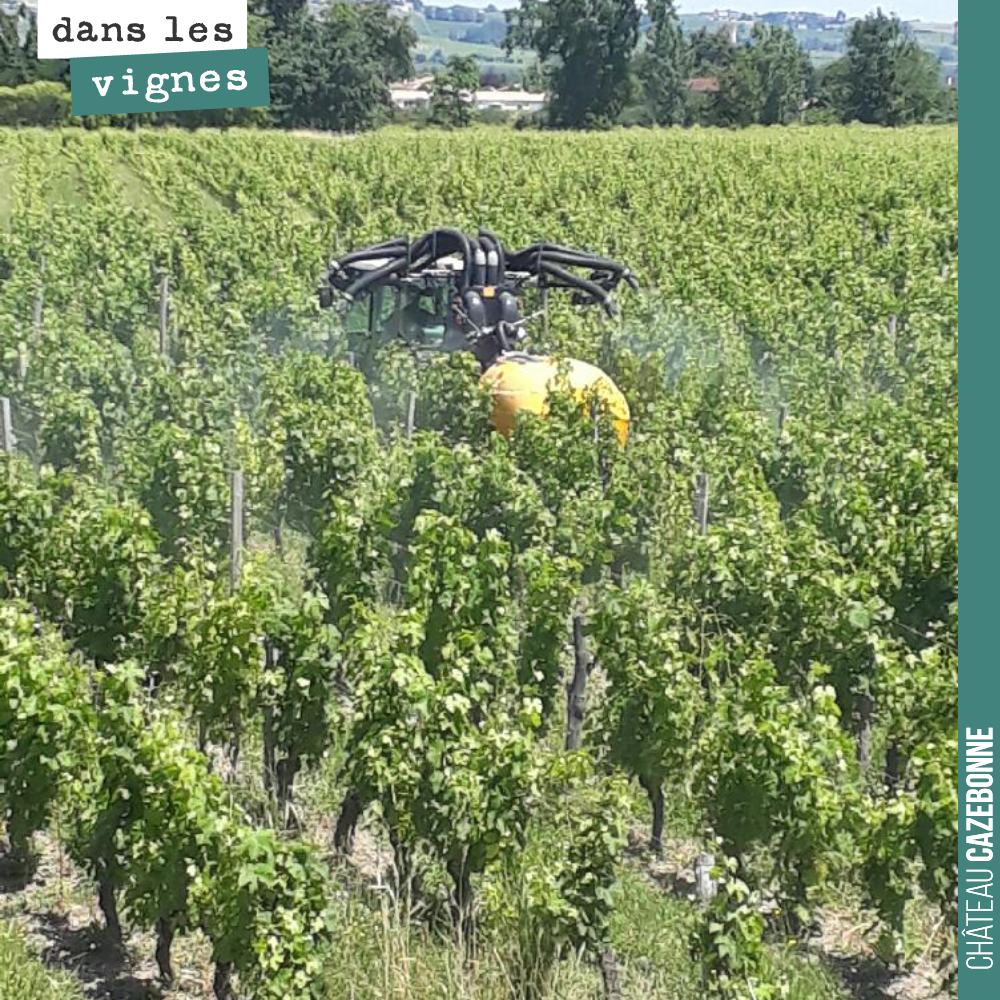
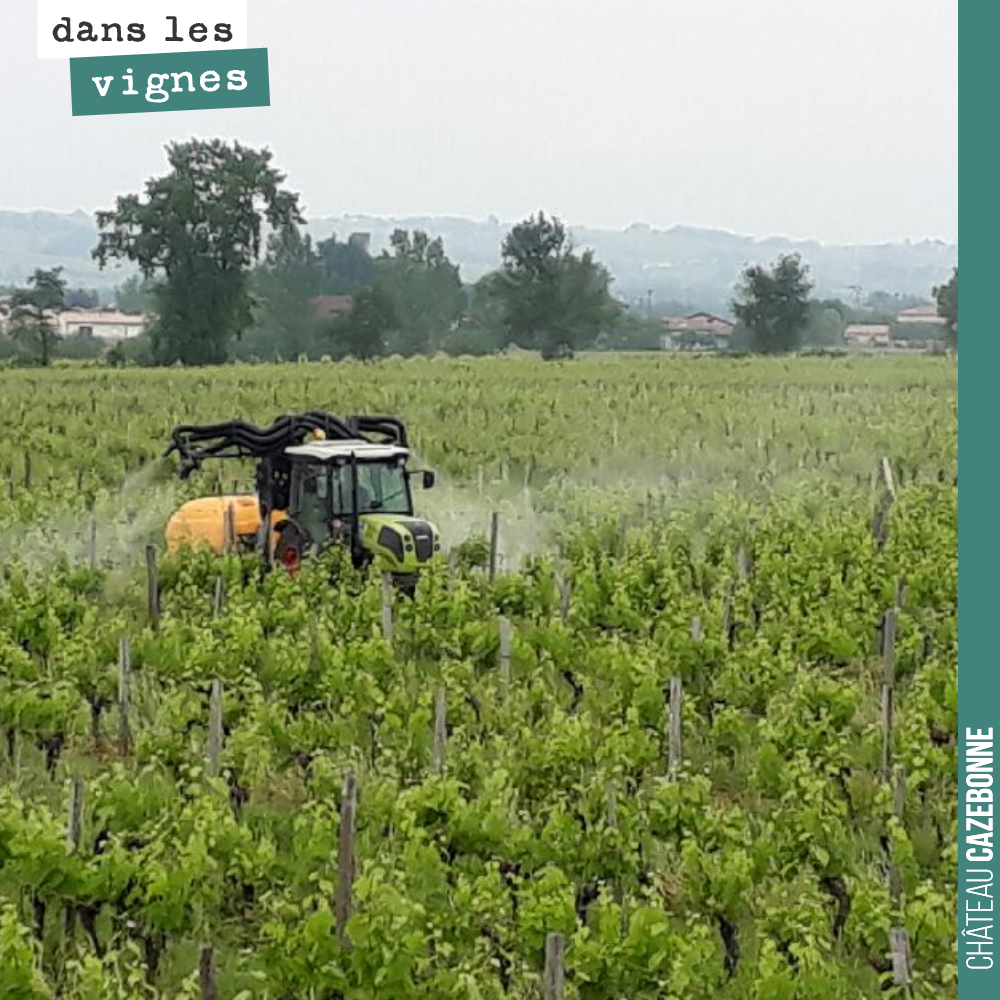
The application of treatments is mainly carried out using sprayers, whether they are mounted, trailed, or straddle tractors. The objective is to ensure an even and precise coverage of the vegetation, adjusting the volume and pressure according to the foliage and weather conditions. At Château Cazebonne, we favour equipment that allows for high precision to minimise drift and optimise efficiency.
Organic farming clearly stands out from conventional farming due to the ban on synthetic pesticides. Compared to biodynamics, it is less prescriptive regarding preparations and lunar calendars, but shares the same respect for soil life and biodiversity. The compromise often lies in the management of diseases such as downy mildew, where copper remains an authorised tool but its use is strictly regulated and controlled. For committed winegrowers, this choice is a true philosophy.
At Château Cazebonne, we go beyond the requirements of organic certification. Our goal is to limit any intervention as much as possible, by fostering the natural resilience of the vine. We practice very fine observation of the vineyard and only intervene if necessary, using the lowest possible doses and favouring a preventive approach. We are constantly looking for new methods and solutions to reduce our footprint and preserve the biodiversity of our soils, such as the use of cover crops or agroforestry.
This meticulous work, where every intervention is thought out for the well-being of the vine and the quality of the wine, is made possible thanks to the support of the wine lovers who adopt our wines. We invite you to discover the rich history and diversity of Bordeaux grape varieties by downloading our book "Bordeaux, une histoire de cépages", to test your knowledge of the wine world and, of course, to taste the fruits of our commitment by visiting our online boutique. For organic winegrowers in the Graves, knowing how to find a good organic wine is a true philosophy.
Our suggestions
-5%on your 1st order with code BIENVENUE
The essential6 bottles — Graves red 2022
The best price of the cellar: €12 per bottle delivered.
The everyday red: generous and straight to the point.
I want it Our recommendation92/100 RVF
6 bottles — Graves red 2022, 92/100 RVF
Rated 92/100 by La Revue du vin de France: a solid 10-year ageing potential.
Our Graves for ageing, the finest gateway to the estate.
I want it Go further
12 bottles — the whole range
12 bottles, the whole range tasted: the best discovery-to-price ratio.
The complete tour of the estate, in a single case.
I want it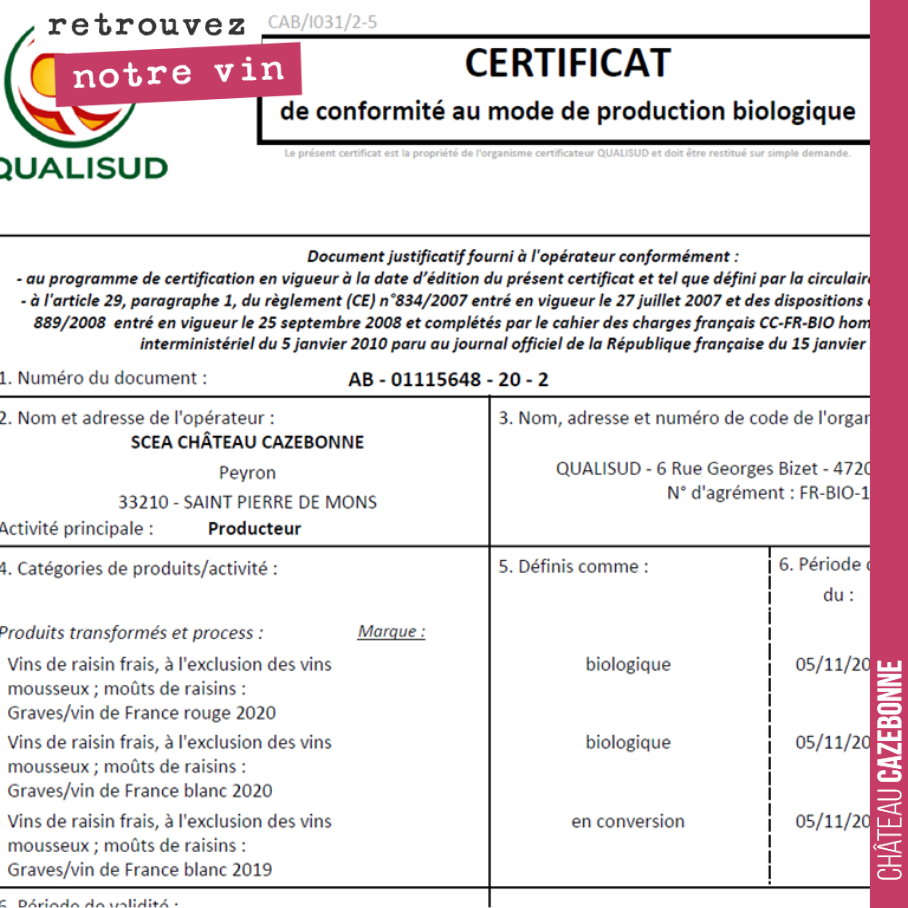
30 January 2021
16 July 2020
13 June 2020
02 June 2020
24 May 2020
14 May 2020
13 May 2020
22 April 2020

17 April 2020

29 October 2019
20 August 2019
05 August 2019
31 July 2019
20 June 2019
17 June 2019
17 June 2019

08 June 2019
05 June 2019
04 June 2019
23 May 2019
21 May 2019
19 May 2019
17 May 2019
16 May 2019
07 May 2019

01 May 2019
30 April 2019
19 April 2019
19 April 2019
19 April 2019
08 April 2019
20 March 2019
19 July 2018
16 July 2018
06 July 2018
03 July 2018
21 June 2018
14 June 2018
07 June 2018
The cellar, forgotten grape varieties and our cuvées, twice a month. 5% off your first order with the code BIENVENUE.