
 The essential
6 × Entre Amis red
6 bottles — Graves red 2022
The best price of the cellar: €12 per bottle delivered.
The everyday red: generous and straight to the point.
I want itWine press
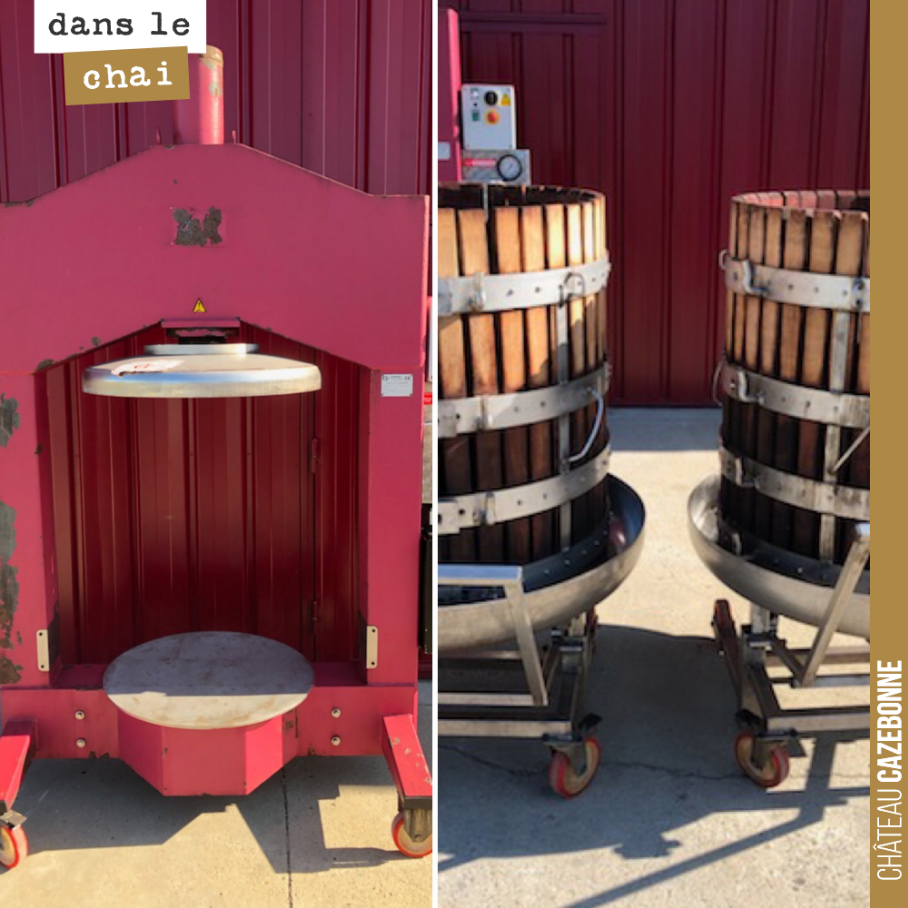
At the heart of our winery, the wine press proves to be much more than a simple machine. It is an instrument of precision, a guardian of aromas and structures, whose role is crucial in revealing the full complexity of Château Cazebonne wines. Its intervention, delicate and controlled, is a fundamental step in our quest for excellence.
The pressing of the grapes, whether fresh or fermented, is a key step in winemaking. It is a mechanical operation aimed at extracting the must (for whites and rosés) or the wine (for reds) from the solid parts of the grape (skins, pips, stalks). This extraction must be gentle and progressive to preserve the quality of the juices and avoid the addition of undesirable compounds, such as overly astringent tannins or vegetal aromas.
The main objective of pressing is to obtain juices or wines of the highest possible quality, respecting the aromatic and structural potential of the grape. Controlled extraction reveals the freshness, finesse and balance of white wines, while bringing the desired colour, tannic richness and ageing potential to red wines. It is a delicate operation that directly impacts the final sensory profile of the wine.
The schedule for using the wine press varies considerably depending on the type of wine being produced. For white wines (white winemaking), pressing takes place just after harvesting and possible destemming, before alcoholic fermentation. The grapes can be pressed whole for a more delicate juice. For red wines (red winemaking), the press is used after fermentation and skin maceration, to separate the wine from the pomace. The precise moment of pressing the reds will influence the intensity and suppleness of the tannins in the press wine, which can be blended with the free-run wine.
The whole or destemmed bunches are loaded into the press. A gentle and progressive pressing cycle is initiated, often in several phases, alternating pressure and "crumbling" (resting) periods to facilitate the flow of the juice. The must is then collected and routed to the vats for settling and fermentation. The duration and intensity of the pressing are adjusted to avoid excessive extraction of polyphenols.
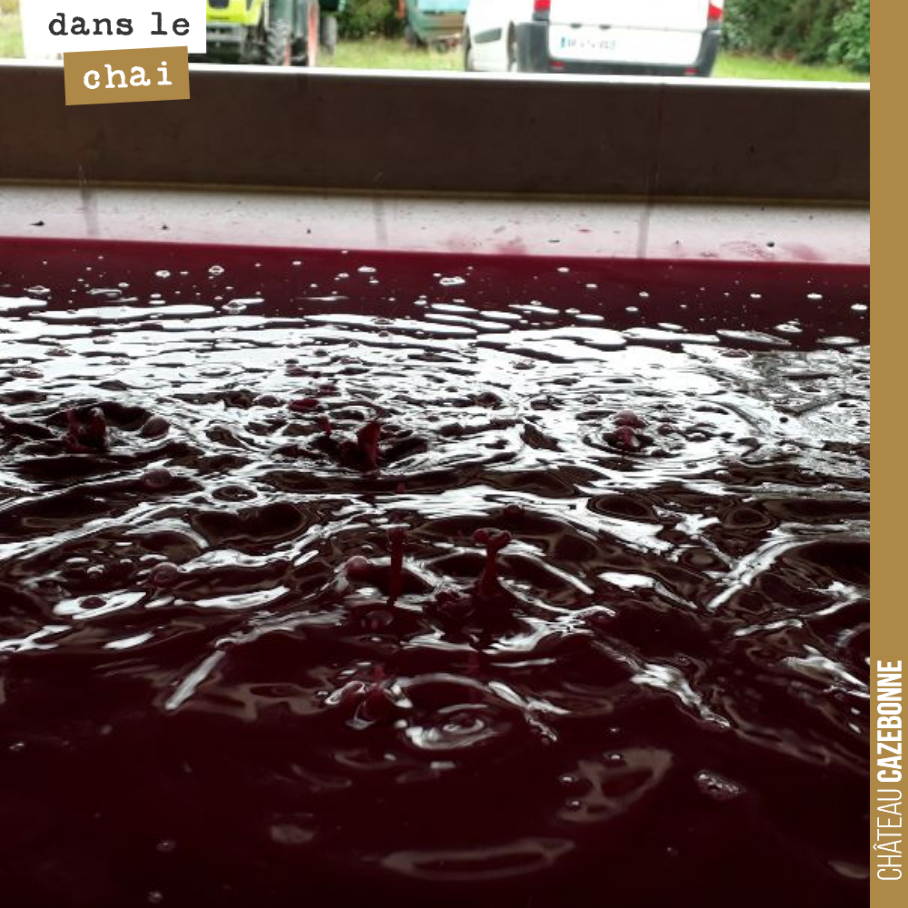
After the draining of the free-run wine, the fermented pomace is transferred to the press. Here, the pressure is often stronger, but always controlled, to extract the "press wine", which is rich in colour and tannins. This wine is then aged separately or blended with the free-run wine depending on the desired profile for the cuvée. Another extraction technique during red winemaking is pumping over, which allows for good homogenisation of the must.
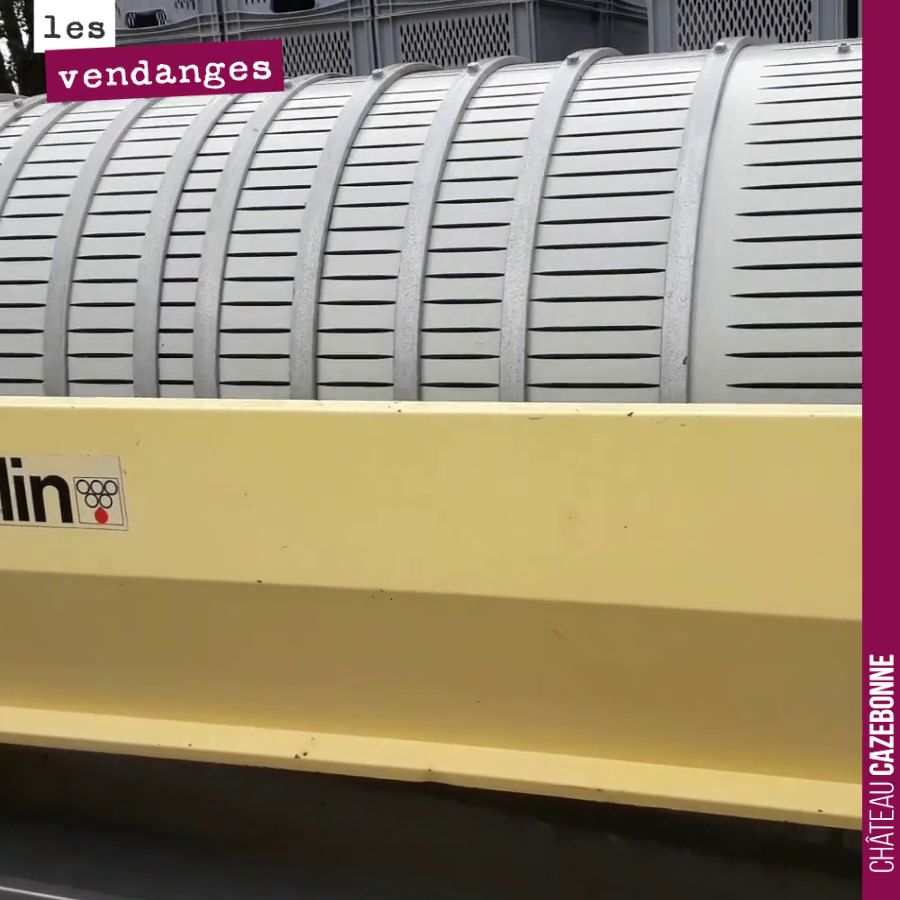
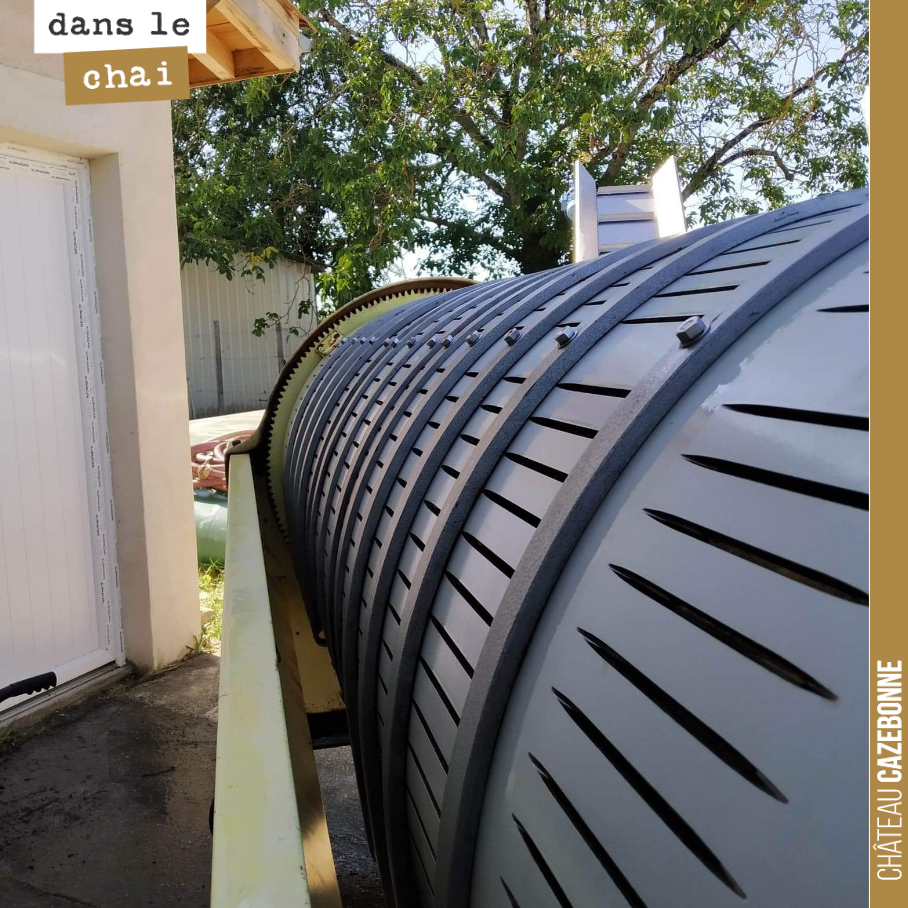
There are several types of wine presses, the most common of which in modern winemaking are pneumatic presses. These machines with flexible membranes apply uniform and gentle pressure on the grapes, minimising the crushing of the pips and skins. Certain vertical presses can be used for higher quality pressing on smaller volumes, allowing even more delicate handling of the berries or pomace. The use of this specialised equipment is clearly distinct from the mechanised approach of the harvesting machine, which focuses on harvesting the grapes in the vineyard rather than pressing them in the winery. Before pressing, a crucial step for the quality of the product is the sorting table, where the grapes are carefully selected to keep only the best berries.
At Château Cazebonne, we favour a gentle approach that respects the grape. For our white wines, we opt for a slow and delicate pressing of whole or lightly destemmed bunches, in order to preserve aromatic purity and freshness. For our red wines, the pressing of the pomace takes place after sufficient maceration, and we adjust the blending level of the press wine with the free-run wine to obtain a balanced and silky tannic structure, faithful to the elegance we seek in every bottle of our Graves wines. This care in pressing also contributes to the promotion of our forgotten grape varieties, allowing their finest expressions to be revealed.
Château Cazebonne is passionately committed to promoting Bordeaux grape varieties that have disappeared. This work is made possible thanks to the support of enthusiasts who have adopted our wines and share our vision. To delve deeper into the subject of Bordeaux grape varieties, discover the reference book "Bordeaux, une histoire de cépages" or test your knowledge via our oenological quizzes. You can also find out what the press says about Cazebonne or discover our cuvées and support our approach.
Our suggestions
-5%on your 1st order with code BIENVENUE
The essential6 bottles — Graves red 2022
The best price of the cellar: €12 per bottle delivered.
The everyday red: generous and straight to the point.
I want it Our recommendation92/100 RVF
6 bottles — Graves red 2022, 92/100 RVF
Rated 92/100 by La Revue du vin de France: a solid 10-year ageing potential.
Our Graves for ageing, the finest gateway to the estate.
I want it Go further
12 bottles — the whole range
12 bottles, the whole range tasted: the best discovery-to-price ratio.
The complete tour of the estate, in a single case.
I want it
19 August 2026
By Jean-Baptiste
05 October 2022
13 September 2021
01 September 2021
13 October 2020
30 August 2020
29 August 2020

19 November 2019
02 November 2019
24 October 2019

22 October 2019
14 October 2019
The cellar, forgotten grape varieties and our cuvées, twice a month. 5% off your first order with the code BIENVENUE.