
 The essential92/100 RVF
Comme en 1900 red 2022
Vin de France — heritage grapes, 92/100 RVF
The pre-phylloxera Bordeaux blend, revived at the estate.
Castets, Mancin, Pardotte: the Bordeaux before Bordeaux.
I want itPardotte
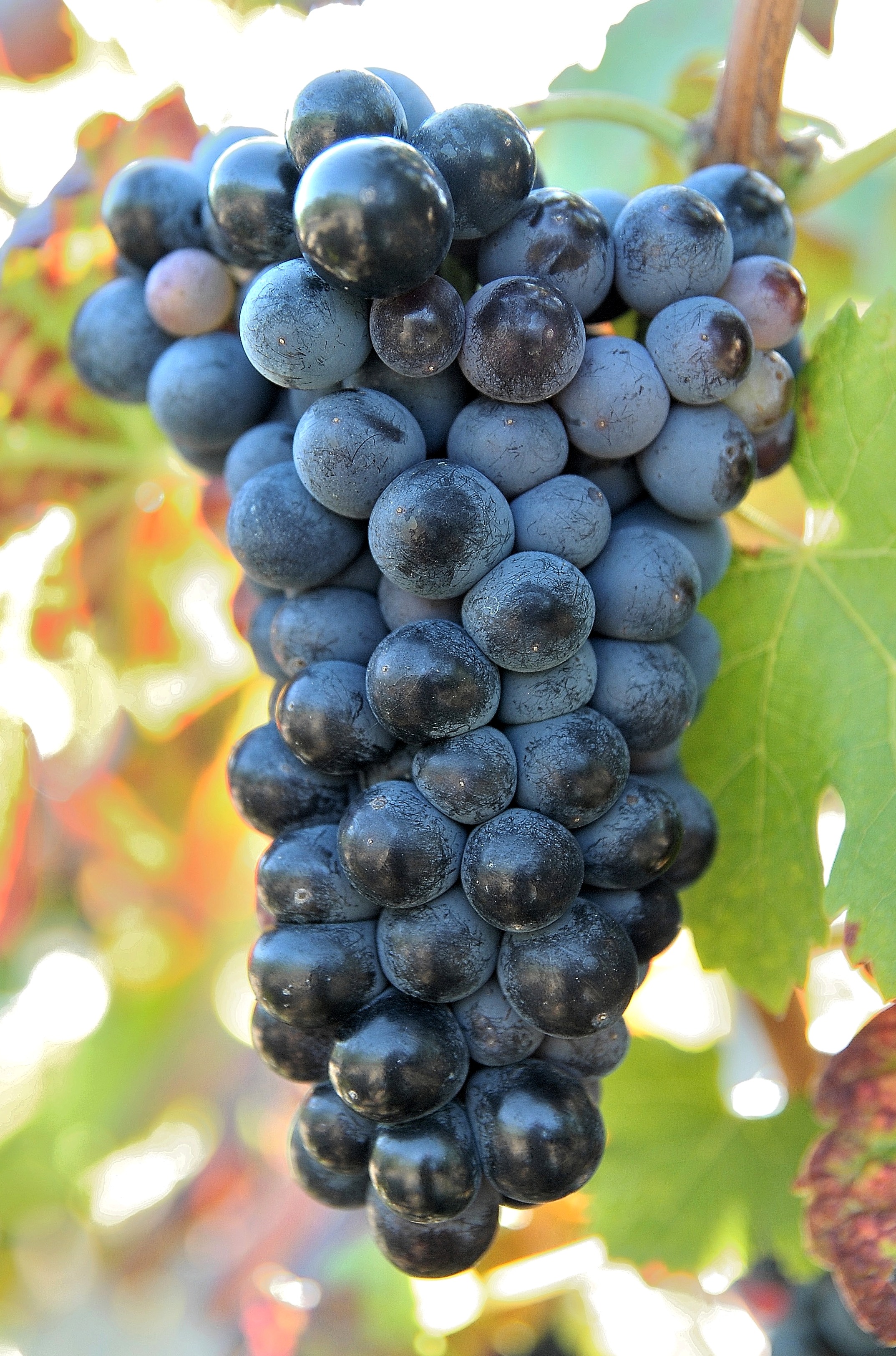
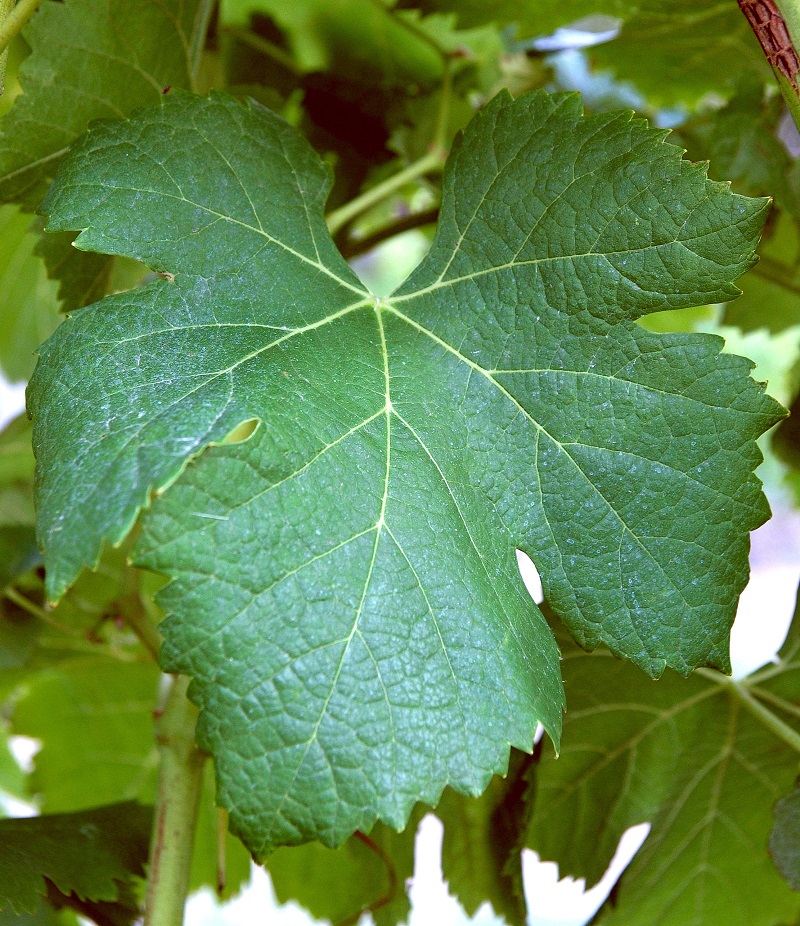
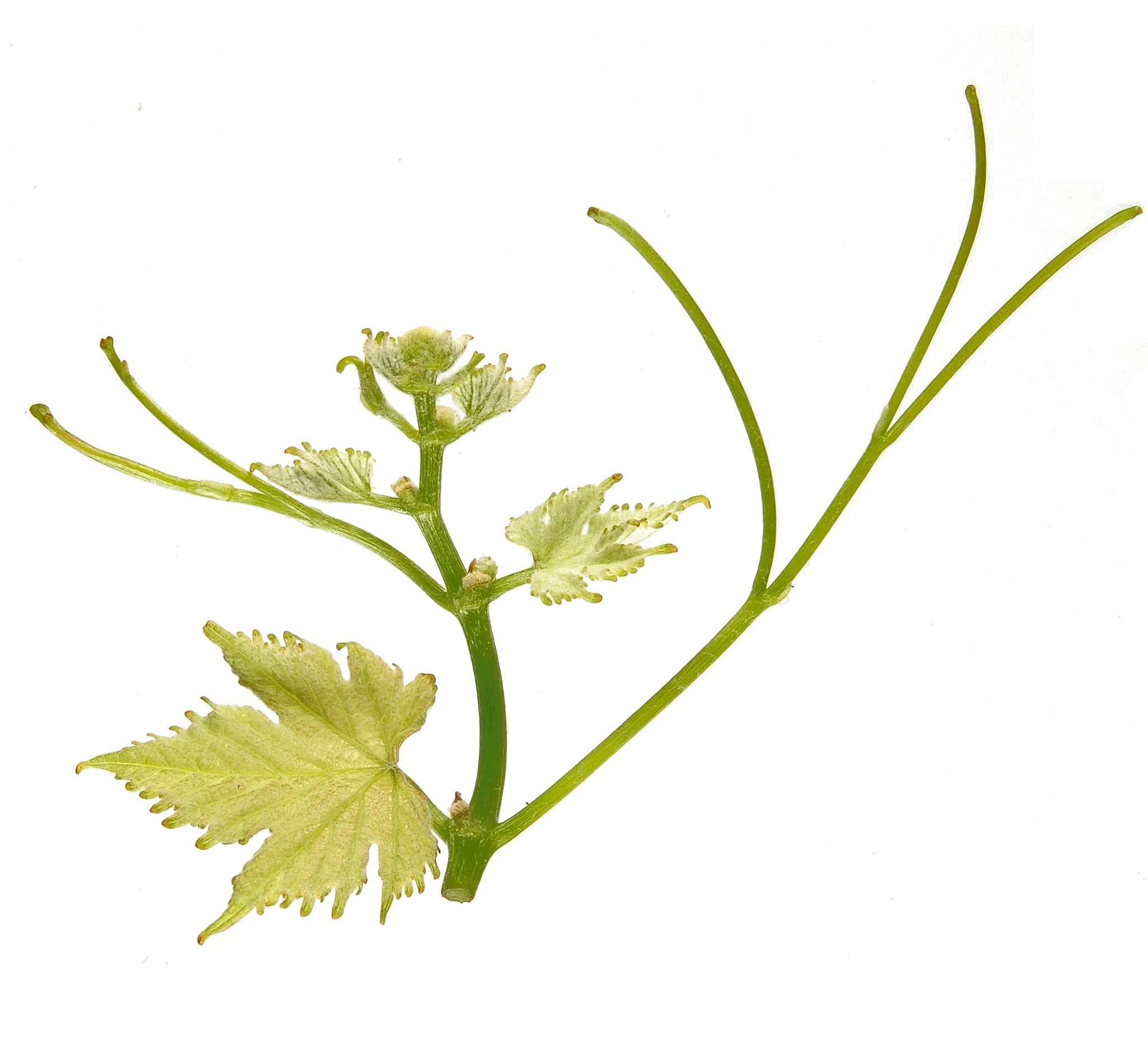
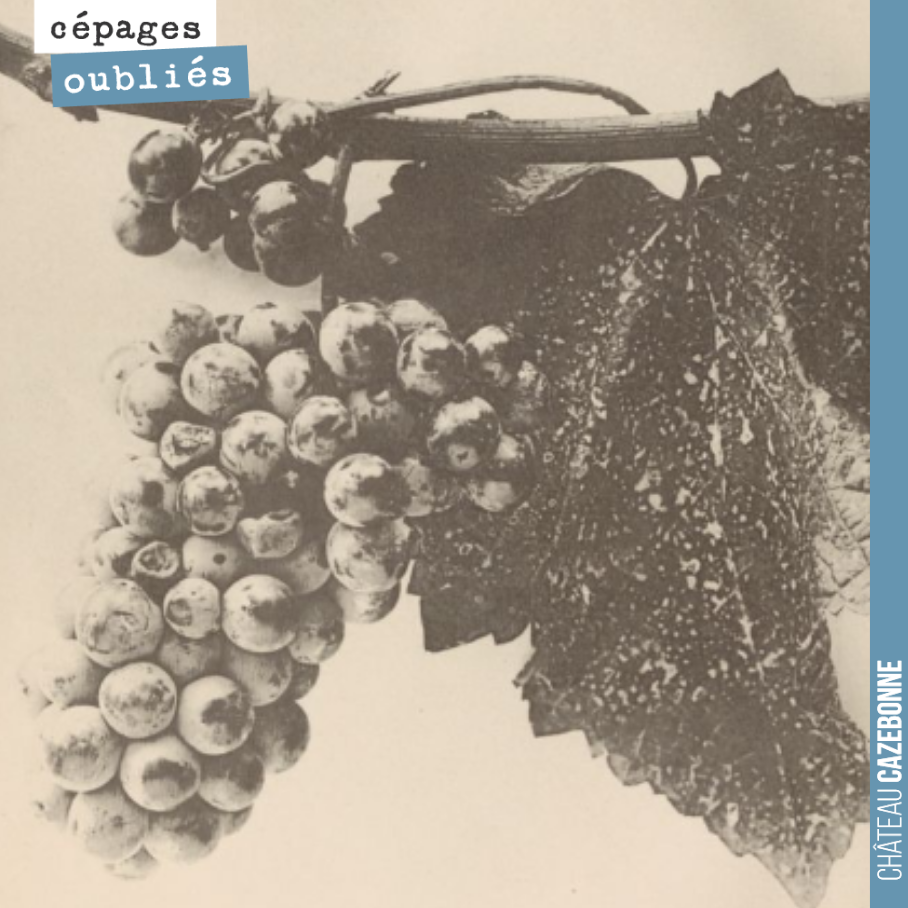
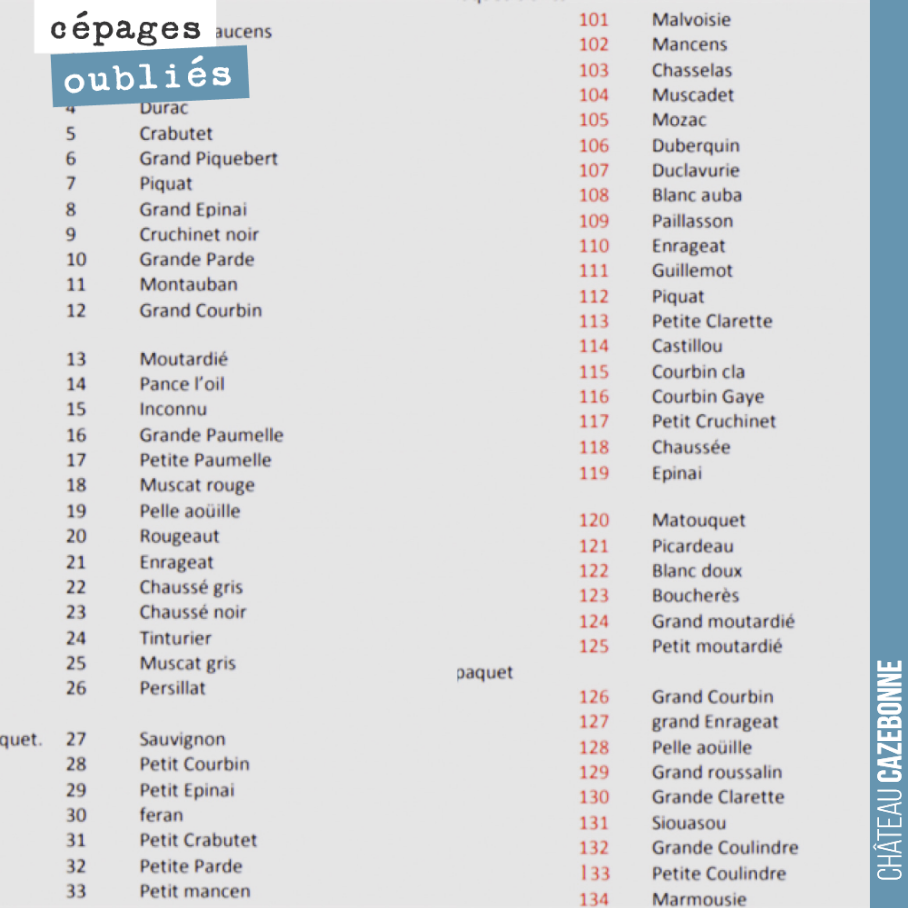
Pardotte is much more than just a grape variety; it is a true window into Bordeaux's viticultural history, a testament to the richness and diversity that characterised the Gironde vineyards before their standardisation. Its history begins as early as 1736, when Abbé Bellet mentioned it in his writings. In 1785, Jean-Baptiste de Secondat confirmed its presence in our vines, although he already classified it as a grape variety of average quality. Inventories by Dupré de Saint-Maur in 1784 also attest to its cultivation in Bazas, under the names Grande Parde and Petite Parde.
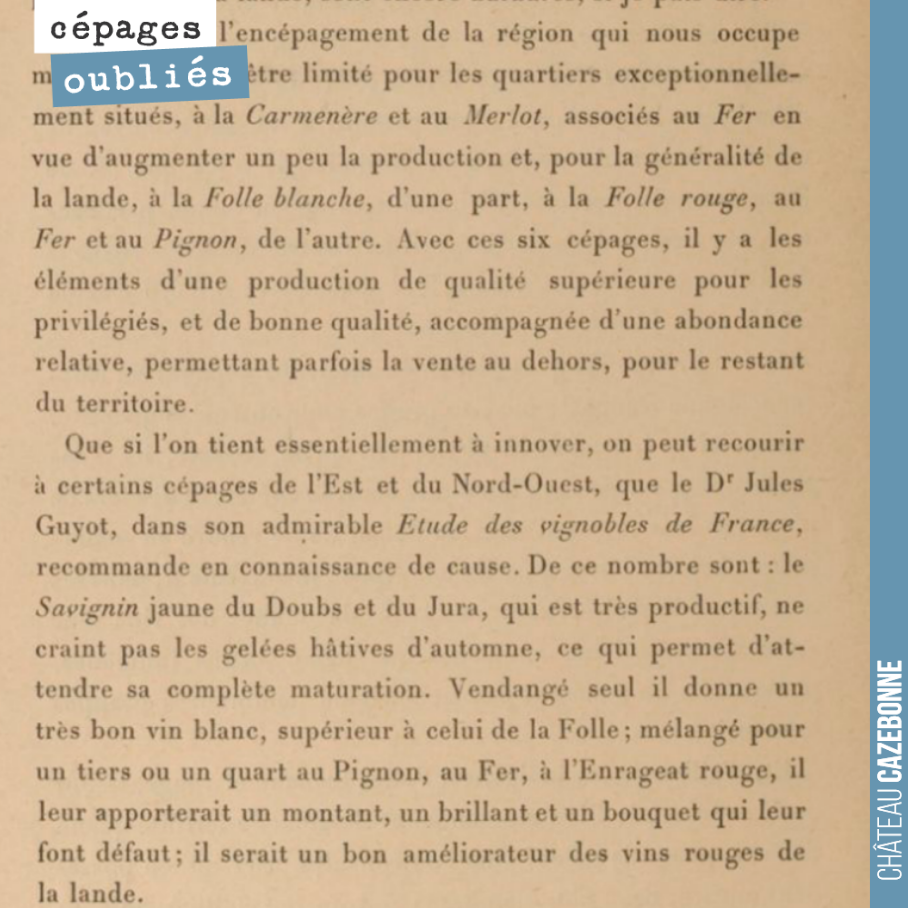
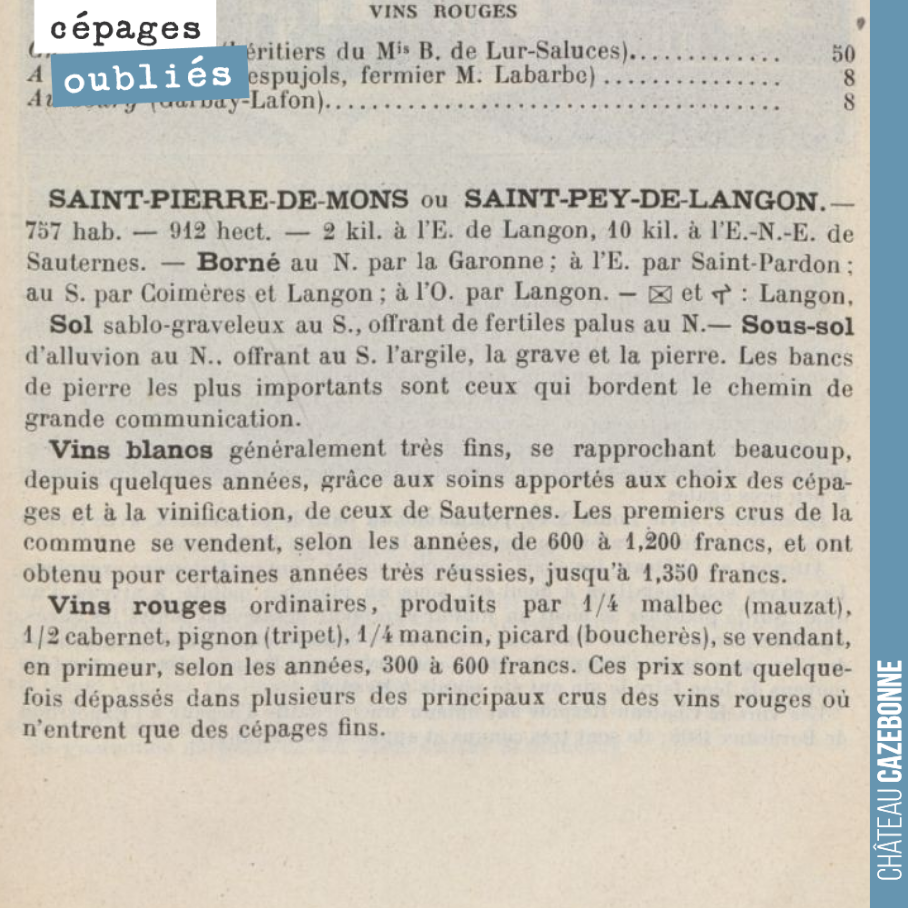
Over the centuries, Pardotte has taken on multiple identities, a sign of its wide distribution and local variations. While the name "Pardotte" was common around Cadillac and Langon, it was also found under the name "Parde" or "Petite Parde" in the Blanquefort and Graves regions. It sometimes borrowed the name "Sauvignon rouge" in Saint-Macaire or "Gros Machouquet" in Ambès and Montferrand, even though the latter name, according to Jean Bisson in 1957, could cause confusion with the Castets grape variety. In 1878, the famous work by Féret mentioned it under the name "Pignon", describing it then as an ordinary grape variety. Despite a mixed reception from winegrowers like Comte Odart, G. Bord confirmed its persistence in the Bordeaux region in 1932 as a secondary grape variety, proving its resilience and ancestral utility. In 1935, Pardotte was officially authorised as a secondary grape variety in the Bordeaux appellation decrees, thereby recognising its historical place.
| Characteristic | Description |
|---|---|
| Budburst | Comparable to that of Cabernet Franc. |
| Flowering | About a week after Merlot. |
| Maturity | Late second epoch, slightly before Cabernet Sauvignon. Requires short pruning due to its high productivity in order to avoid an excessive crop load and facilitate ripening. |
| Vigour | Vigorous and productive. |
| Resistance to coulure | Good. |
| Susceptibility to downy mildew | Relatively resistant. |
| Susceptibility to powdery mildew | More susceptible. |
| Winemaking potential | Wines are generally light-bodied and light in colour, but can acquire finesse with ageing. Probably used to lighten overly structured wines. |
Its hardiness and productivity made it a significant asset for winegrowers of yesteryear. Jean Bisson specifies that it could account for up to a quarter of the red plantings in the Graves, Réolais, Bas-Médoc, Premières Côtes, and potentially the Bourgeais-Blayais. It is a vigorous and generous grape variety, highly resistant to coulure. It features a budburst comparable to that of Cabernet Franc and flowering that occurs about a week after Merlot. To obtain a healthy and ripe harvest, short pruning is essential, as an excessive crop load can make it harder to ripen, being a late second epoch variety, slightly before Cabernet Sauvignon. Although relatively resistant to downy mildew, it proves more susceptible to powdery mildew.
Wines made from Pardotte are generally light-bodied with a light colour, but they possess an unsuspected ability to acquire finesse with age. It is highly likely that this grape variety was used in the past to lighten the wines of the Bas-Médoc, which were often perceived as too structured and hard in their youth. Remarkably, Château Haut-Bailly long preserved a few century-old Pardotte vines, bearing witness to its historical presence. Today, Château Cazebonne, alongside Liber Pater, is committed to the revival of this forgotten grape variety, replanting it to offer it a new future in the Bordeaux wine landscape, thus joining the trend of winegrowers replanting forgotten grape varieties, such as the Gros verdot grape or the Mérille grape.
This restoration work on historical grape varieties, led with passion by Château Cazebonne, is made possible by the invaluable support of the many wine lovers who have embraced our wines and share our vision of a return to the roots of taste. To deepen your knowledge, the book "Bordeaux, une histoire de cépages" is available for download, while our oenological quizzes will allow you to test your expertise. Finally, to explore the culmination of this approach and taste our cuvées made from these rediscovered grape varieties, we invite you to visit our online shop.
Sources
Our suggestions
-5%on your 1st order with code BIENVENUE
The essential92/100 RVFVin de France — heritage grapes, 92/100 RVF
The pre-phylloxera Bordeaux blend, revived at the estate.
Castets, Mancin, Pardotte: the Bordeaux before Bordeaux.
I want it Our recommendation
IGP Atlantique — rare grape variety
A forgotten grape brought back: dense colour, wild fruit.
For the curious about lost grape varieties.
I want it Go further
12 bottles — the whole range
12 bottles, the whole range tasted: the best discovery-to-price ratio.
The complete tour of the estate, in a single case.
I want it
11 July 2024

08 June 2021
23 January 2021
05 January 2020
04 December 2019
10 January 2019
The cellar, forgotten grape varieties and our cuvées, twice a month. 5% off your first order with the code BIENVENUE.