
 The essential92/100 RVF
Comme en 1900 red 2022
Vin de France — heritage grapes, 92/100 RVF
The pre-phylloxera Bordeaux blend, revived at the estate.
Castets, Mancin, Pardotte: the Bordeaux before Bordeaux.
I want itBordeaux Grape Varieties History Book
The book "Bordeaux, une histoire de cépages", written by Jean-Baptiste Duquesne, explores the little-known richness and diversity of the Bordeaux region's ampelographic heritage. This book is the result of several years of in-depth research in archives and ancient texts, revealing an unsuspected diversity of yesterday's grape varieties. Far from the few varieties that are world-famous today, the author highlights dozens of grape varieties once common, now extinct or extremely rare. Names such as Mancin, Castets, Pardotte, Saint-Macaire, or Blanc Verdet profoundly shaped the viticultural landscape and aromatic profile of Bordeaux wines for centuries.
Beyond the author Jean-Baptiste Duquesne, winemaker at Château Cazebonne, this work puts into perspective the work of many figures, past and present, who have contributed to understanding and preserving these grape varieties. It also speaks to the winegrowers who, across generations, made varietal choices influenced by the events of their time. The book's foreword evokes a chain of encounters and support, from the author's early mentors to ampelography experts and winemakers who encouraged him along the way.
The book details the reasons for the decline of these ancestral varieties. Among the key factors, the susceptibility of many forgotten varieties to diseases such as powdery mildew (oïdium) and downy mildew played a decisive role. The devastating impact of phylloxera in the 19th century, a major crisis in the history of the vine in France, also forced drastic choices, notably the widespread adoption of grafting. Finally, the emergence of the Appellations d'Origine Contrôlée (AOC) led to inevitable standardisation, sidelining many grape varieties in favour of a restricted few considered to be of the highest quality or suited to mass production standards. This process, combined with shifting consumption patterns, gradually marginalised Bordeaux's ampelographic diversity. To better understand these dynamics, it is worth looking into the consequences of phylloxera and the reasons behind the simplification of grape varieties detailed in this book.
The simplification of the varietal mix resulted in a gradual homogenisation of Bordeaux wines. While it helped strengthen the identity of certain globally recognised styles, it also led to the loss of a rich and complex aromatic and textural palette. These forgotten varieties, each with its own specificities, contributed to a more nuanced expression of terroirs. Their disappearance reduced the vineyard's resilience to certain challenges, particularly climatic ones, by limiting the available genetic diversity. Understanding this loss helps appreciate the significance of rediscovering Bordeaux's ampelographic heritage.
"Bordeaux, une histoire de cépages" is not merely a historical collection; it is a vibrant plea for viticultural biodiversity. The book sets out the genesis of the pioneering project to replant these varieties at Château Cazebonne. This bold approach aims to safeguard an invaluable genetic heritage, rediscover lost flavours and authenticity, and explore the adaptive potential of these ancestral grape varieties in the face of contemporary climate challenges. It offers a renewed, more diverse vision of great Bordeaux wines—a genuine resurgence of yesteryear's grape varieties.
The study is based on meticulous research across various archives and ancient texts, of which the book itself is a synthesis. Jean-Baptiste Duquesne's work draws upon historical documents and ampelographic records to trace the journey of each grape variety. This rigorous approach is essential for the credibility of the replanting venture and the promotion of these forgotten varieties.
This research and writing laid the foundation for our replanting project at Château Cazebonne, an avant-garde adventure made possible by the unwavering support of the wine lover community. By choosing our wines, you actively participate in the revival of these grape varieties, and you can discover this heritage by downloading the digital edition of the book "Bordeaux, une histoire de cépages". To test your knowledge and learn even more about Bordeaux grape varieties, feel free to explore our wine quizzes, and to taste the fruit of this unique approach, discover all our cuvées crafted from these rediscovered treasures available in our online shop.
Sources
Our suggestions
-5%on your 1st order with code BIENVENUE
The essential92/100 RVFVin de France — heritage grapes, 92/100 RVF
The pre-phylloxera Bordeaux blend, revived at the estate.
Castets, Mancin, Pardotte: the Bordeaux before Bordeaux.
I want it Our recommendation
IGP Atlantique — rare grape variety
A forgotten grape brought back: dense colour, wild fruit.
For the curious about lost grape varieties.
I want it Go further
12 bottles — the whole range
12 bottles, the whole range tasted: the best discovery-to-price ratio.
The complete tour of the estate, in a single case.
I want it30 August 2026
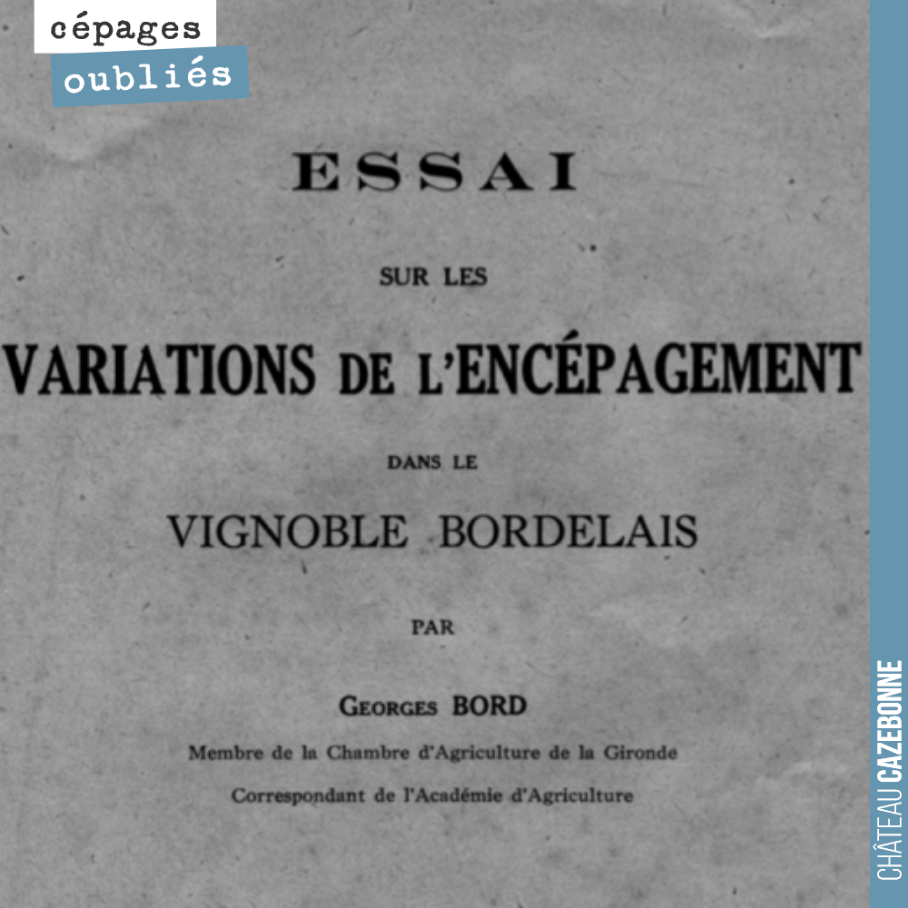
Georges Bord published this essay in 1932. Essai sur les variations de l'encépagement dans le vignoble bordelais, published by the Imprimerie de la Feuille Vinicole. In this essay, he makes a case for the grape varieties that Bordeaux would later definitively adopt. In this article, I detail the reason
By Jean-Baptiste
19 October 2023
25 May 2020
The cellar, forgotten grape varieties and our cuvées, twice a month. 5% off your first order with the code BIENVENUE.