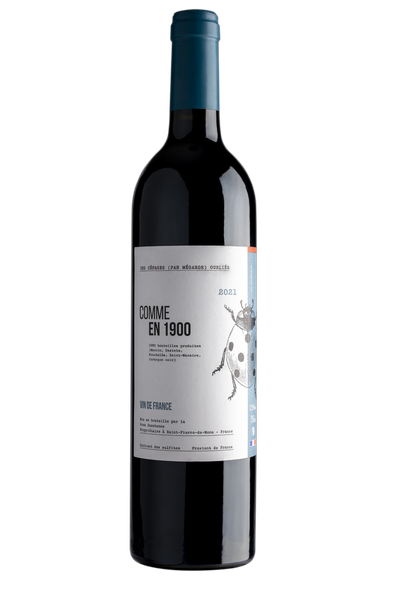
 The essential92/100 RVF
Comme en 1900 red 2022
Vin de France — heritage grapes, 92/100 RVF
The pre-phylloxera Bordeaux blend, revived at the estate.
Castets, Mancin, Pardotte: the Bordeaux before Bordeaux.
I want it
Marcelin Albert
Natural wine was not born with today's debates on native yeasts or sulphites. In 1907, a winegrower from the Aude, Marcelin Albert (often spelled Marcellin), led a movement demanding wine made from grapes, with no added sugar and no manufacturing. It was not natural wine in today's sense, but the idea was close: that wine should first and foremost be the fruit of the grape. Jean-Baptiste Duquesne told this story in one of the estate's posts, which this section takes up and completes.
At the start of the 20th century, the wine-growing Midi went through a severe crisis and prices collapsed. A 1903 law made it easier to add sugar to the harvest by lowering the tax on sugar. Widespread abuses followed: some produced "wine" from water, sugar and various colourings or additives. For winegrowers, this artificial competition explained why they could not sell their harvests. The wider context of the crisis is covered in our section on the 1907 riots and the origins of the AOCs.
Born in 1851 in Argeliers, in the Aude, Marcelin Albert was a winegrower and café owner. He took up the cause and drew a growing number of angry winegrowers behind him. On 9 June 1907, the Montpellier demonstration gathered, according to estimates, between 500,000 and 800,000 people, one of the largest of the Third Republic. On 19 and 20 June, troops fired on the crowd in Narbonne, killing several people. The Republic lost control of the situation.
Wanted by the authorities, Marcelin Albert went to Paris and was received on 23 June 1907 by Georges Clemenceau, head of government and Minister of the Interior. A seasoned politician, Clemenceau gave him a safe-conduct and 100 francs for his train fare home. As soon as he left, Clemenceau gave the press his own version, stressing that the leader had accepted the money. Back in the Midi, Marcelin Albert was seen as a sell-out. He gave himself up a few days later. Unwelcome in the Aude, he went into exile in Algeria for a time and died in poverty in 1921.
The crisis forced the State to legislate and regulate production more strictly. The law of 29 June 1907 banned the making and selling of falsified wine and required declarations of vineyard areas, harvests and stocks. Other laws followed, up to the 1935 decree-law that created the appellations d'origine contrôlée. As for Marcelin Albert, all he asked for was a more natural wine and an end to fraud.
The word "natural" has changed meaning. In 1907, it meant wine made from grapes alone, with no added sugar or water. Today, natural wine means wine made with as little intervention as possible, often with no added sulphites. At Château Cazebonne, we explore this path through sulphur-free winemaking. Marcelin Albert's fight is a reminder that the question of what goes into wine, and of what may be called wine, is nothing new.
In the wake of debates on natural wine, Petnat Gaz'bonne combines Semillon and Sauvignon without added sulphur.
Our suggestions
-5%on your 1st order with code BIENVENUE
The essential92/100 RVFVin de France — heritage grapes, 92/100 RVF
The pre-phylloxera Bordeaux blend, revived at the estate.
Castets, Mancin, Pardotte: the Bordeaux before Bordeaux.
I want it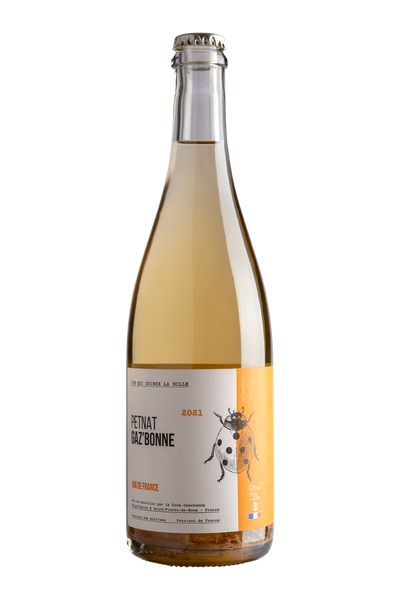 Our recommendation
 Go further
12 bottles — the whole range
12 bottles, the whole range tasted: the best discovery-to-price ratio.
The complete tour of the estate, in a single case.
I want itThe cellar, forgotten grape varieties and our cuvées, twice a month. 5% off your first order with the code BIENVENUE.