
 The essential
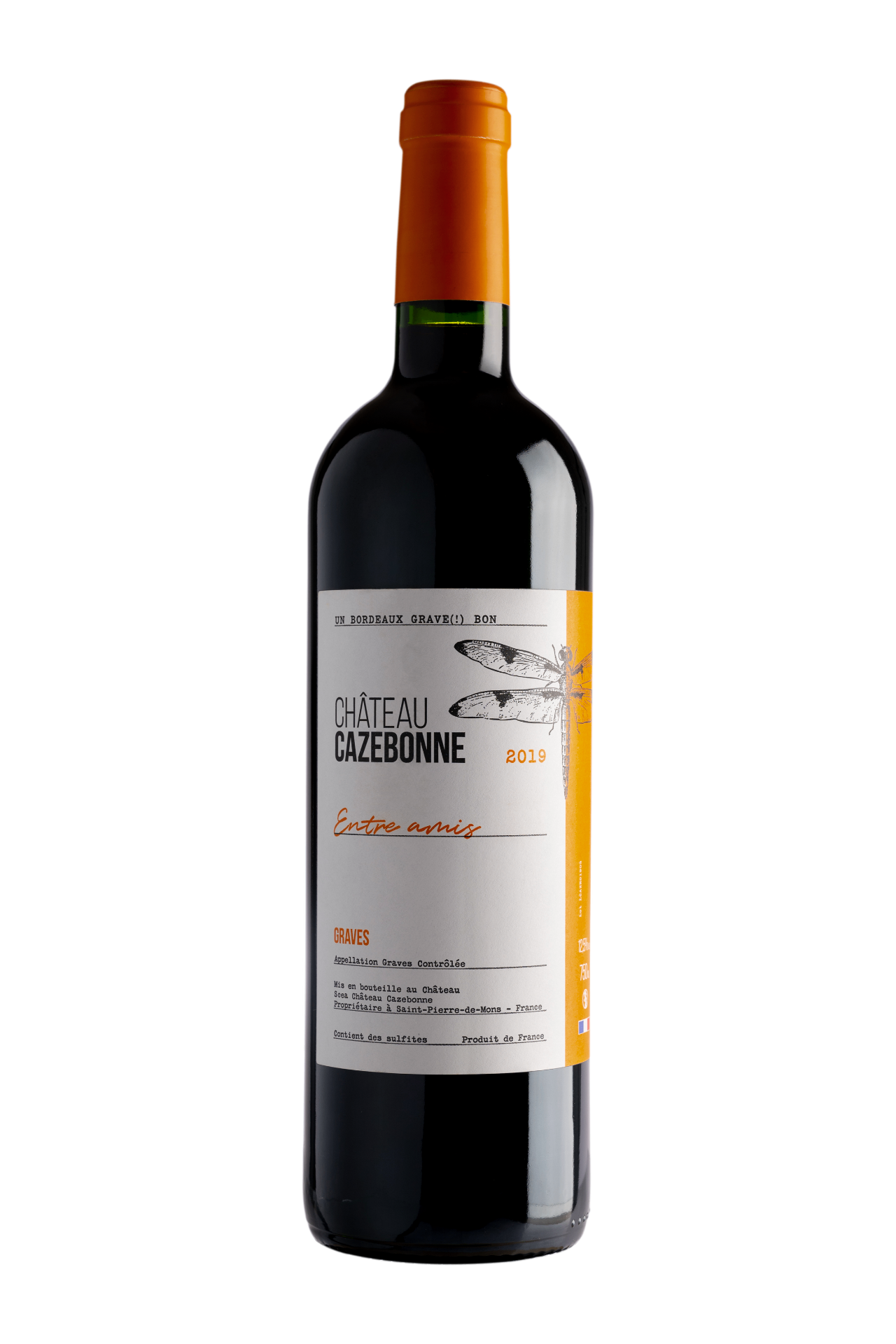
6 × Entre Amis red
6 bottles — Graves red 2022
The best price of the cellar: €12 per bottle delivered.
The everyday red: generous and straight to the point.
I want it
The Bordeaux vineyard, rich in history and prestige, stands today at a crucial crossroads. Consumer expectations are evolving, making a profound re-evaluation of its wines' profile inevitable. This is not about denying our history but adapting it to contemporary realities, as has always been the case over the centuries, in the face of crises or market shifts.
Historically, the Bordeaux model, with its division of labour between estate and négociant (the estate makes the wine, the négociant sells it), has created a disconnect between producers and consumers. Market feedback struggles to filter back, making it difficult for winemakers to grasp new expectations. Many consumers still perceive Bordeaux wines as too tannic. Yet, it's not inevitable to produce only tannic wines in Bordeaux. And indeed, the wine profiles offered by estates are numerous, including wines that are easier to drink in their youth. Demand has been shifting for years towards fresh, less alcoholic, and fruitier wines. Bordeaux has taken this turn, but far too timidly.
Consumption patterns have evolved considerably. The structured meal is giving way to the "impromptu apéritif", where tannic and full-bodied wines struggle to find their place. This largely explains why urban consumers seek freshness, soft tannins, and easy-drinking wines. This trend is particularly pronounced in cities, and southern vineyards like Bordeaux, traditionally sunnier, must adapt.
The current Bordeaux grape varietal mix, dominated by Merlot and Cabernet-Sauvignon, developed in a temperate climate, particularly in the 1960s, when Merlot plantings expanded significantly.
A few months ago, I published a 1960s nurseryman's poster, showing the diversity of grape varieties that could still be planted in Gironde at the time. Merlot has since become omnipresent in the vineyards. At that time, it possessed many qualities: flavour, alcohol content (which was a cardinal quality back then), and a susceptibility to mildew that was not yet perceived as a prohibitive weakness (the spring climate was cool, and treatments easily contained the fungus).
These chosen grape varieties now yield too much alcohol, have excessively low acidity, and mildew becomes impossible to control with heavy rainfall and high temperatures in spring.
In the past, winemakers have always adapted and chosen grape varieties best suited to their terroir (which, of course, includes the climate parameter). The climate is changing, so why shouldn't we adapt?
With climate change, summers are becoming extreme, and ripening is accelerating. Grapes rapidly accumulate sugar, leading to a decrease in acidity and an increase in pH. Vintages like 2026 show Merlots exceeding 14 degrees with pH levels above 3.7, sometimes 4, moving these wines away from the desired freshness. Bordeaux no longer has a temperate climate. Or rather, Bordeaux can still experience more temperate years (2021, 2024), but extreme vintages are multiplying (2020, 2022, 2025, 2026).
We have no other choice.
We must put the customer back at the centre. It is they who buy our wines; we must offer them wines that meet their expectations, for their moments of consumption.
To do this, we will need to readjust our grape varietal mix. I'm not talking about uprooting all our Merlot plots. I advocate for authorising grape varieties with higher acidity, later ripening, and lower alcohol levels within our appellations. In blends, these varieties can temper the ardour of our Merlots.
Our 2026 vinifications reveal magnificent batches of old grape varieties with controlled alcohol levels (around 13 degrees). I am thinking in particular of Jurançon noir and Bouchalès.
We have authorised the replanting of Castets in Bordeaux as part of the VIFA programme. In my opinion, this is a mistake. Castets is rather early-ripening (comparable to Merlot), also shows high alcohol levels (over 14° this year, and even 15° in one plot). Its pH levels were close to 4.
For the past two years, we have stopped vinifying Castets as a single varietal. Vinifications are difficult under these alcohol and acidity conditions. We now co-ferment Bouchalès with Castets, and it works very well. We obtained a wine around 13.5° with a magnificent aromatic expression.
As I write these lines (26th September), we have still not harvested our late-ripening varieties: Mancin, Carménère, Saint-Macaire (from a very late-pruned plot), Béquignol, Gros Verdot, Petit Verdot...
We should bring them in by 1st October, and they are magnificent. Not bad for a scorching year like 2026!
The idea of losing a "Bordeaux typicity" seems to me an outdated debate. The history of the vineyard shows that typicity has always evolved. Depending on the climate, consumption patterns, and techniques. Roger Dion demonstrates this very well in his work: "Histoire de la vigne et du vin en France des origines au XIXe siècle".
The nature and existence of wine are intimately linked to the markets it can open and is established near rivers, near cities.
We have a strength, and that is blending.
It allows us to evolve continuously, introduce new grape varieties, and gently adapt our product profiles.
Why deprive ourselves of it?
Sources
Our suggestions
-5%on your 1st order with code BIENVENUE
The essential6 bottles — Graves red 2022
The best price of the cellar: €12 per bottle delivered.
The everyday red: generous and straight to the point.
I want it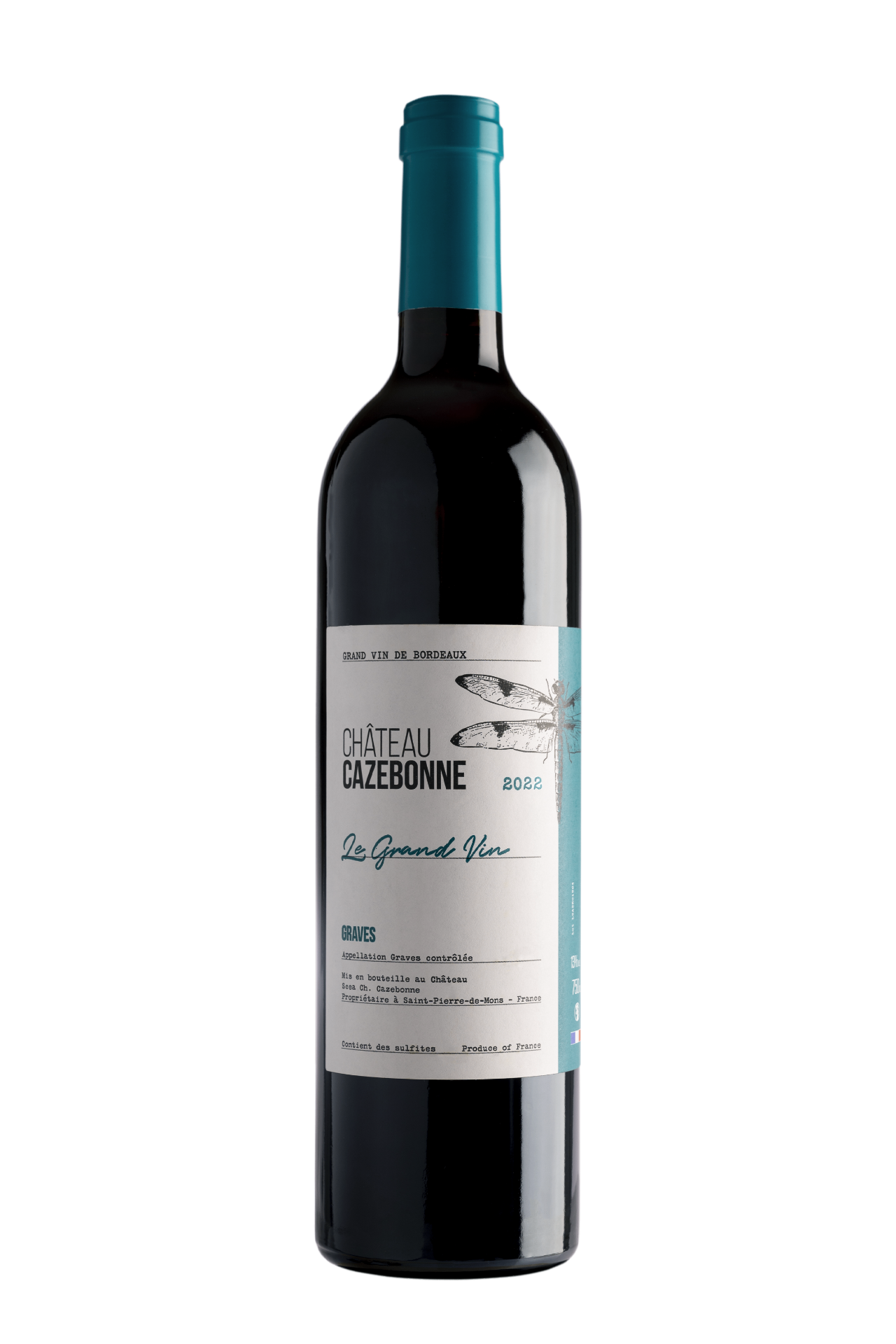 Our recommendation92/100 RVF
6 bottles — Graves red 2022, 92/100 RVF
Rated 92/100 by La Revue du vin de France: a solid 10-year ageing potential.
Our Graves for ageing, the finest gateway to the estate.
I want it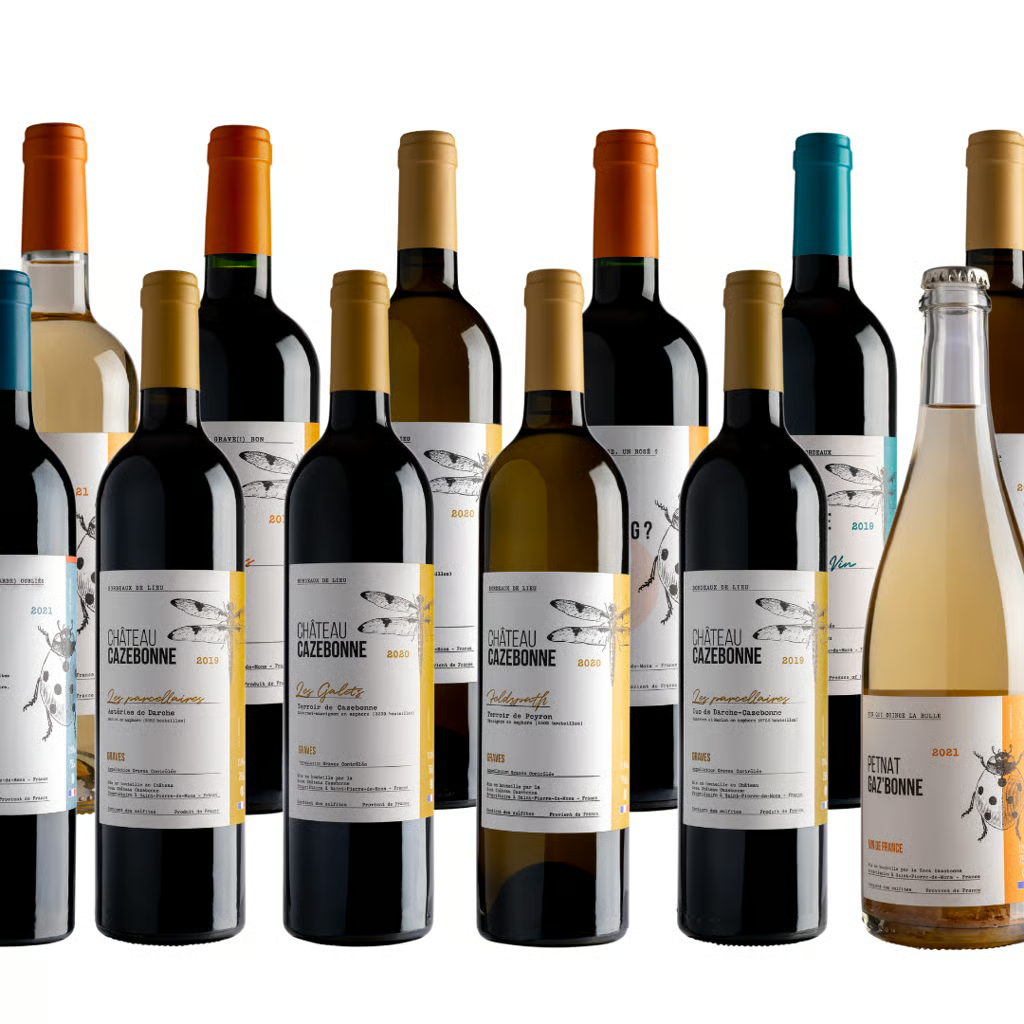 Go further
12 bottles — the whole range
12 bottles, the whole range tasted: the best discovery-to-price ratio.
The complete tour of the estate, in a single case.
I want it
26 September 2026
By Jean-Baptiste