
 The essential92/100 RVF
Comme en 1900 red 2022
Vin de France — heritage grapes, 92/100 RVF
The pre-phylloxera Bordeaux blend, revived at the estate.
Castets, Mancin, Pardotte: the Bordeaux before Bordeaux.
I want itPenouille
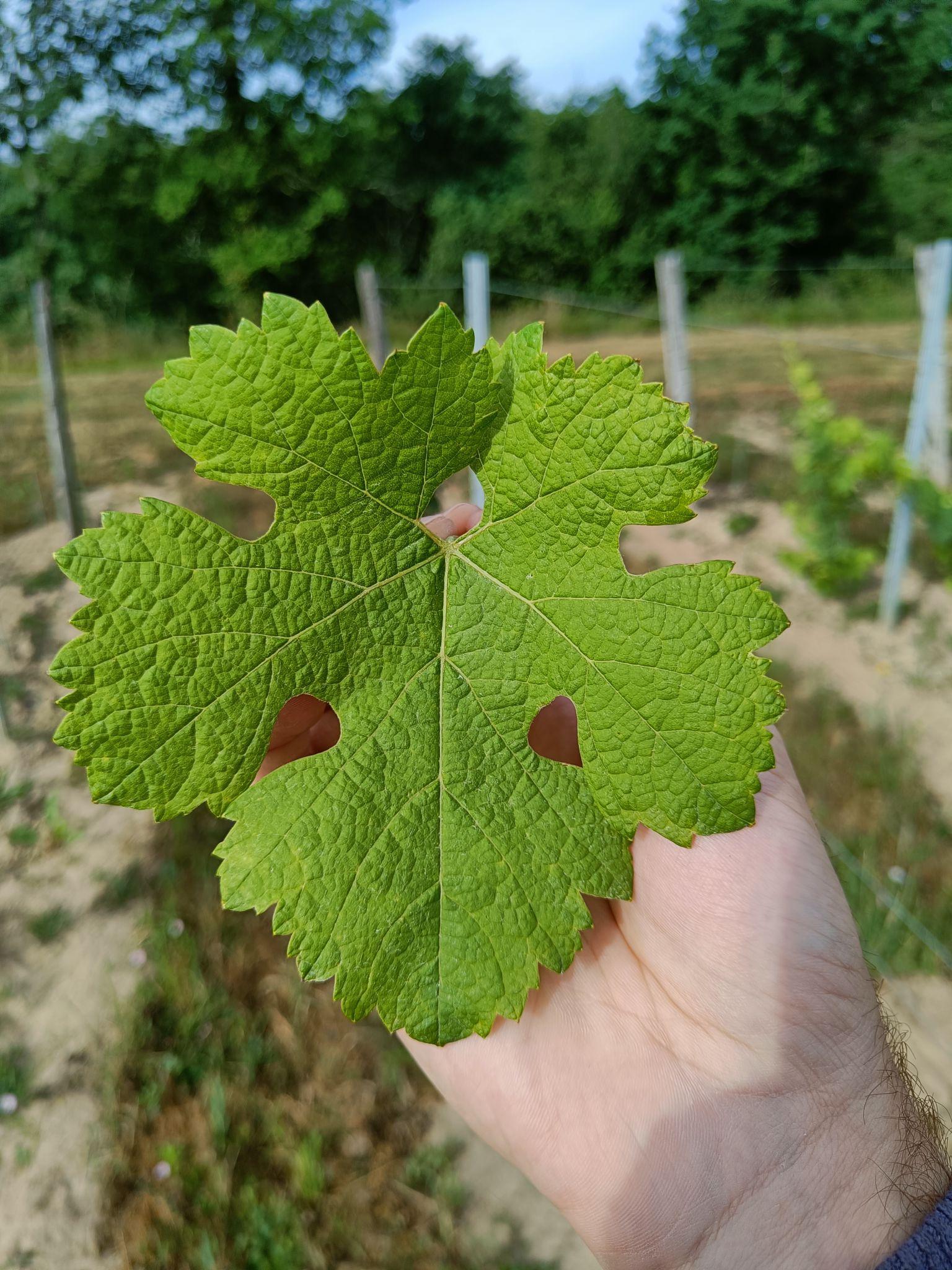
Among the grape varieties that Château Cazebonne is striving to rehabilitate, Penouille, also known by names such as "Pied-d'Œille", "Pelaouille" in the Graves, or even "Pétouille", holds a special place. These various names testify to a historical presence in the Bordeaux vineyards, although its destiny has been a source of controversy.
Early viticultural literature offers a nuanced portrait of Penouille. Some described it as producing a wine that was "flat, without sap or vinosity", while others praised its potential, particularly on specific terroirs, such as the "light gravels" of the Bas-Médoc where it was "highly esteemed". These observations highlight the importance of terroir in the expression of this grape variety's qualities. Féret, in his 1874 edition, suggested that when blended with a fuller-bodied wine, Penouille could bring a delicate touch. This blending potential is a characteristic studied by Château Cazebonne in its approach to rehabilitating forgotten grape varieties.
Pierre Galet, a renowned ampelographer, made a precise description of Penouille in 1962, confirming its characteristics. This grape variety buds early but ripens late. Its susceptibility to oidium was undoubtedly a factor in its decline, with winegrowers favouring varieties that were more resistant and less labour-intensive. Jean-Baptiste Duquesne, in his book "Bordeaux, une histoire de cépages", also points out that Penouille was a vigorous grape variety resistant to coulure, but that it had to be pruned short to achieve good ripeness. It was widespread in the Gironde and could account for up to a quarter of the red plantings in the Graves and the Bas-Médoc (Duquesne, 2021, p. 183). The same book also discusses The Petit Péjac grape variety, and of course the history of The Mérille grape variety, another of these Bordeaux ampelographic treasures, as well as The Syrah grape variety (in Bordeaux) and that of the Cabernet Goudable grape variety.
| Characteristic | Description |
|---|---|
| Budburst | Early |
| Ripening | Late second epoch (before Cabernet-Sauvignon) |
| Vigour | Vigorous |
| Oidium susceptibility | Susceptible |
| Downy mildew susceptibility | Relatively resistant |
| Coulure resistance | Resistant |
| Winemaking potential | Light-bodied, lightly coloured wines, capable of bringing delicacy to a blend. |
At Château Cazebonne, we are committed to the rediscovery of these grape varieties, thereby contributing to the richness and identity of Nouveau Bordeaux. To deepen your knowledge of this fascinating history, you can download our book "Bordeaux, une histoire de cépages" and test your knowledge with our oenological quizzes. You can also discover our wines made from these rediscovered varieties, the result of a long-term endeavour made possible thanks to the support of wine enthusiasts who embrace our wines and share our passion.
Sources
Our suggestions
-5%on your 1st order with code BIENVENUE
The essential92/100 RVFVin de France — heritage grapes, 92/100 RVF
The pre-phylloxera Bordeaux blend, revived at the estate.
Castets, Mancin, Pardotte: the Bordeaux before Bordeaux.
I want it Our recommendation
IGP Atlantique — rare grape variety
A forgotten grape brought back: dense colour, wild fruit.
For the curious about lost grape varieties.
I want it Go further
12 bottles — the whole range
12 bottles, the whole range tasted: the best discovery-to-price ratio.
The complete tour of the estate, in a single case.
I want it
24 September 2022
04 December 2019
23 May 2019
15 July 2018
13 July 2018
13 July 2018
22 June 2018
The cellar, forgotten grape varieties and our cuvées, twice a month. 5% off your first order with the code BIENVENUE.