
 The essential
6 × Entre Amis red
6 bottles — Graves red 2022
The best price of the cellar: €12 per bottle delivered.
The everyday red: generous and straight to the point.
I want itDowny Mildew
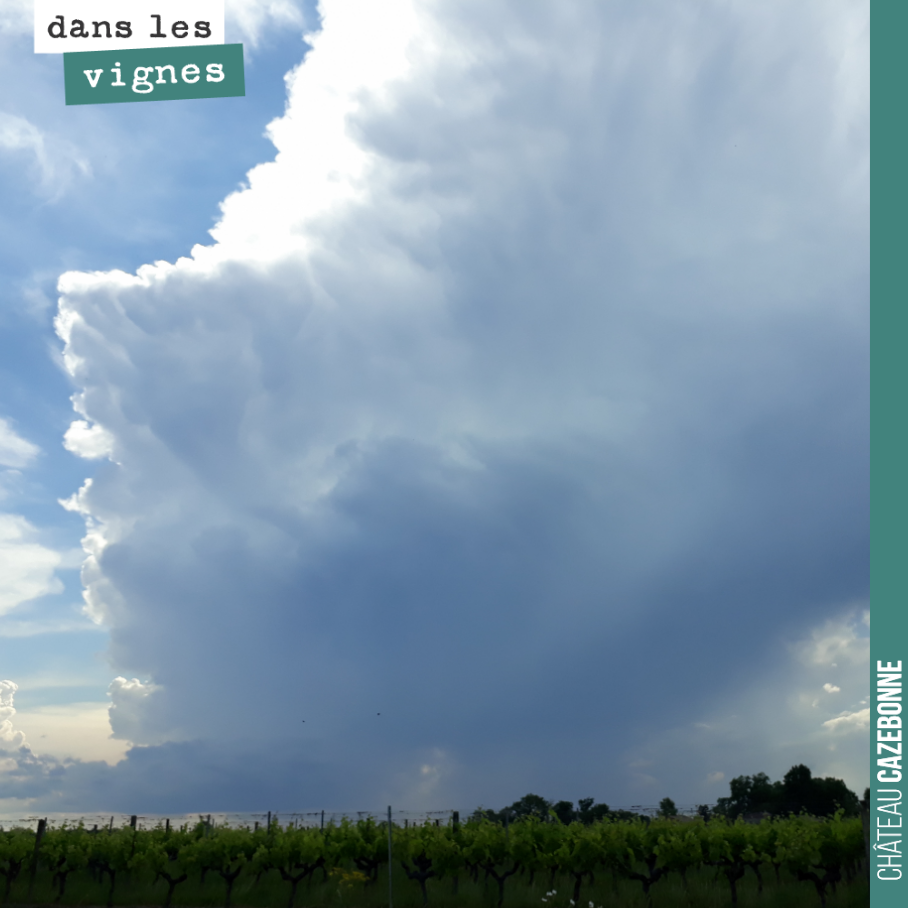
Downy mildew, caused by the fungus Plasmopara viticola, is undoubtedly one of the most serious threats to viticulture, particularly in regions like the Gironde, where the oceanic climate favours its development. This cryptogamic disease, imported from the United States in the mid-19th century, has deeply left its mark on Bordeaux's winemaking history. It can cause considerable devastation in a very short space of time, sometimes turning years of hard work into compromised harvests. Constant humidity, mild temperatures, and poor ventilation are all favourable conditions for its proliferation, and wet vintages can quickly become nightmares for the winegrower.
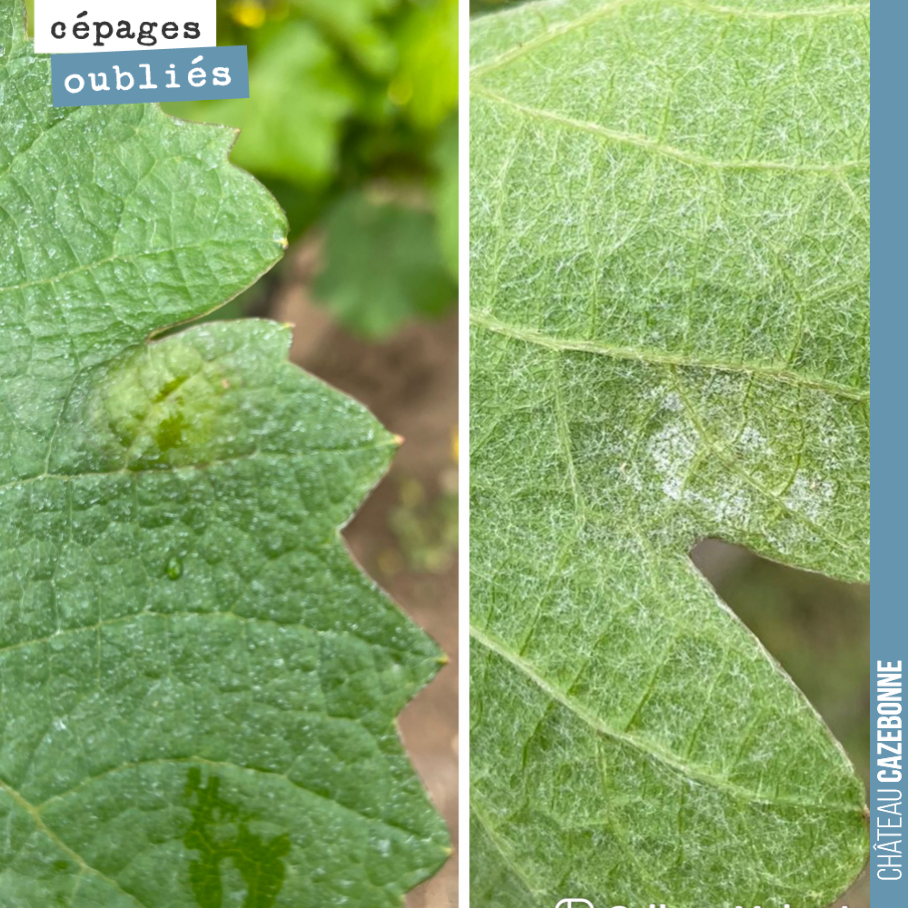
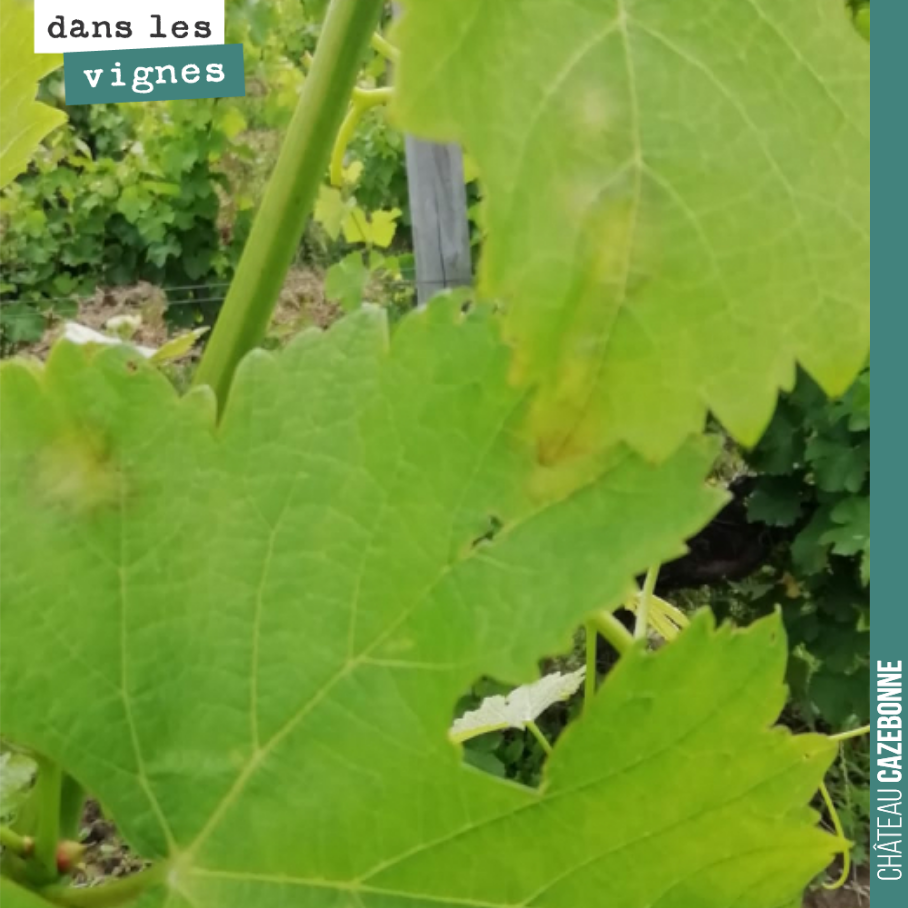
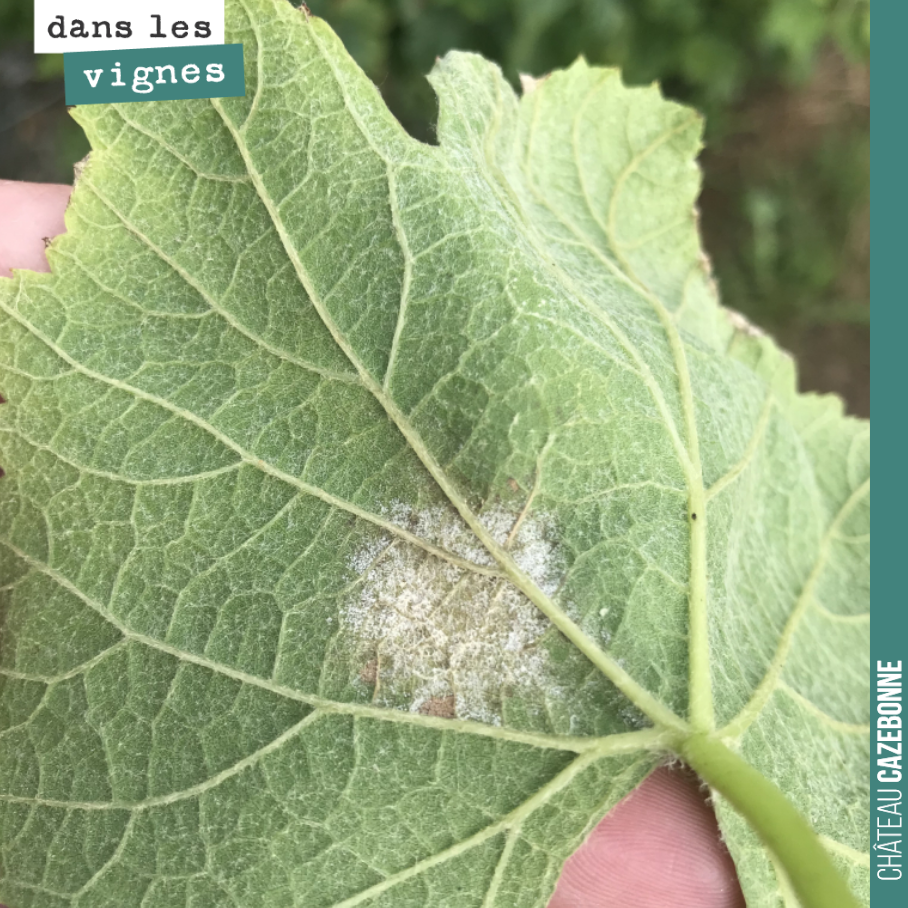
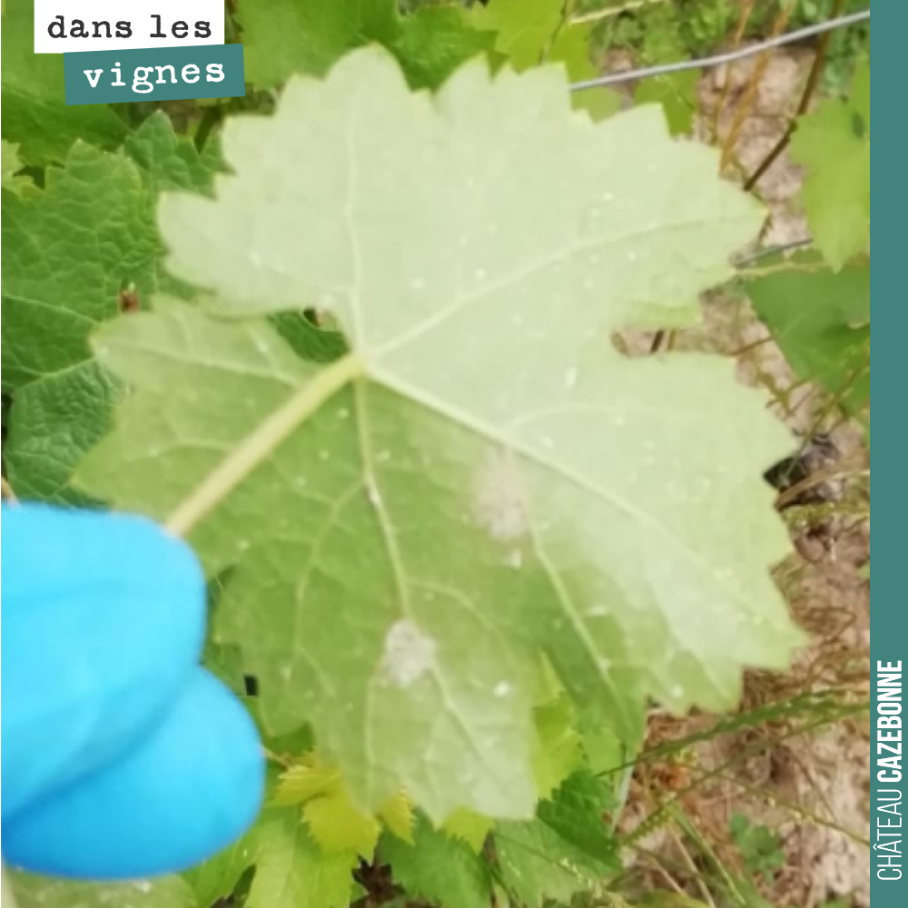
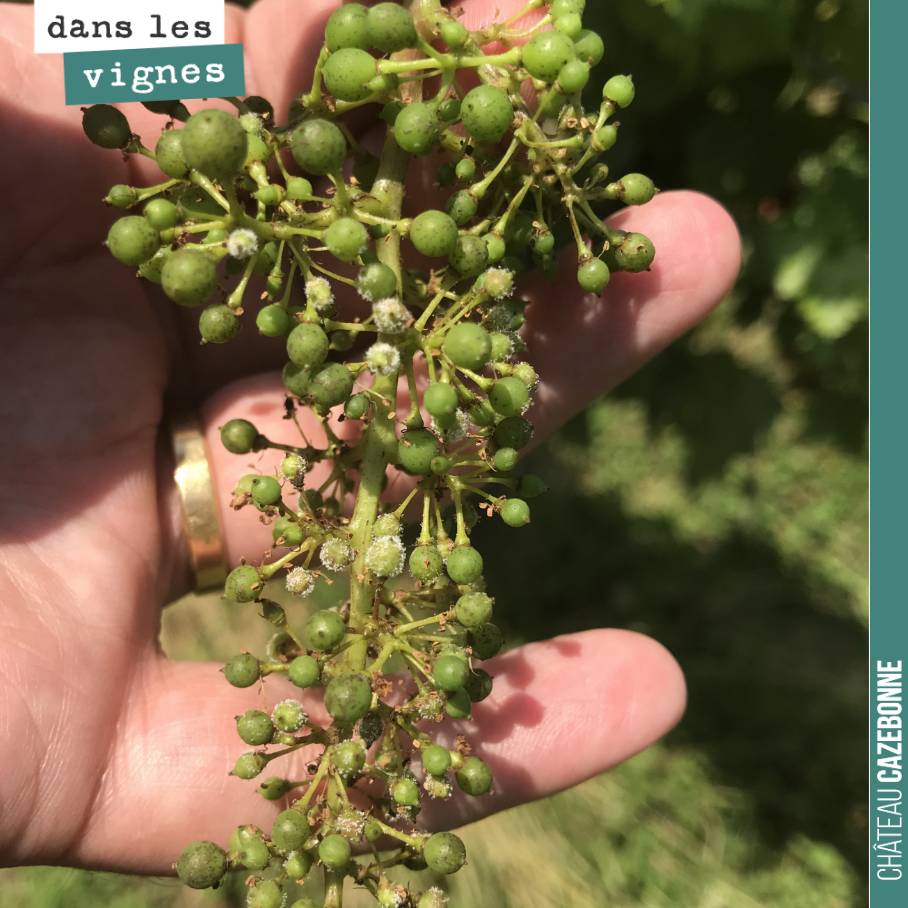
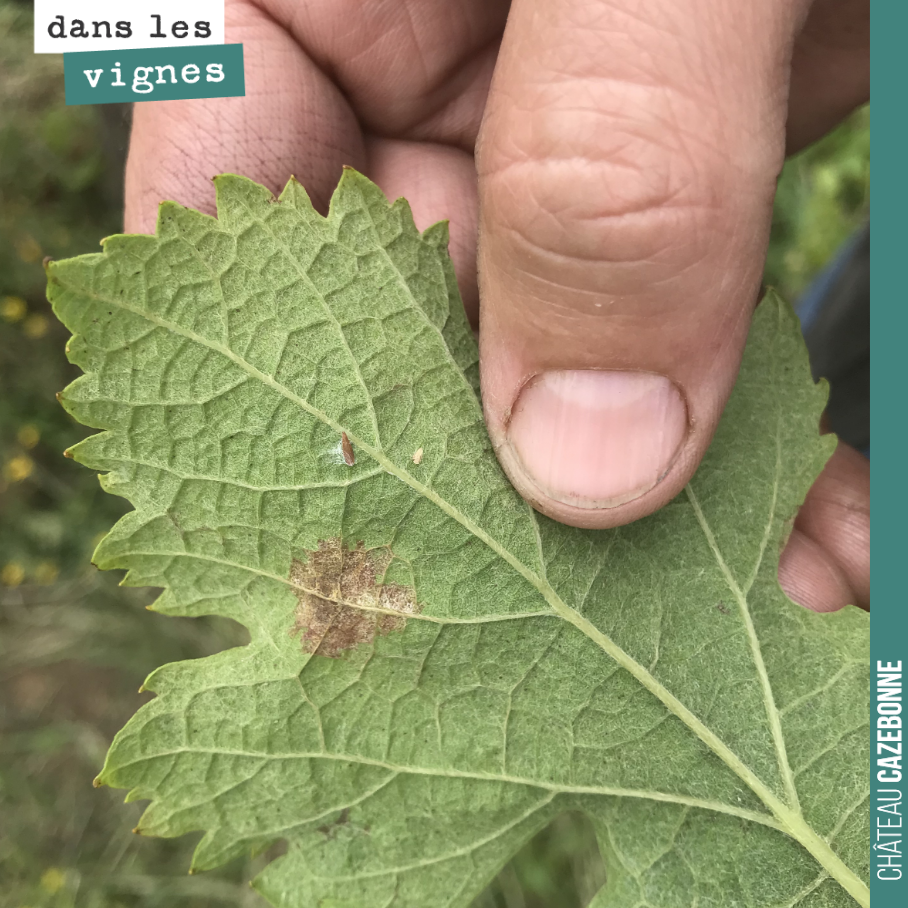
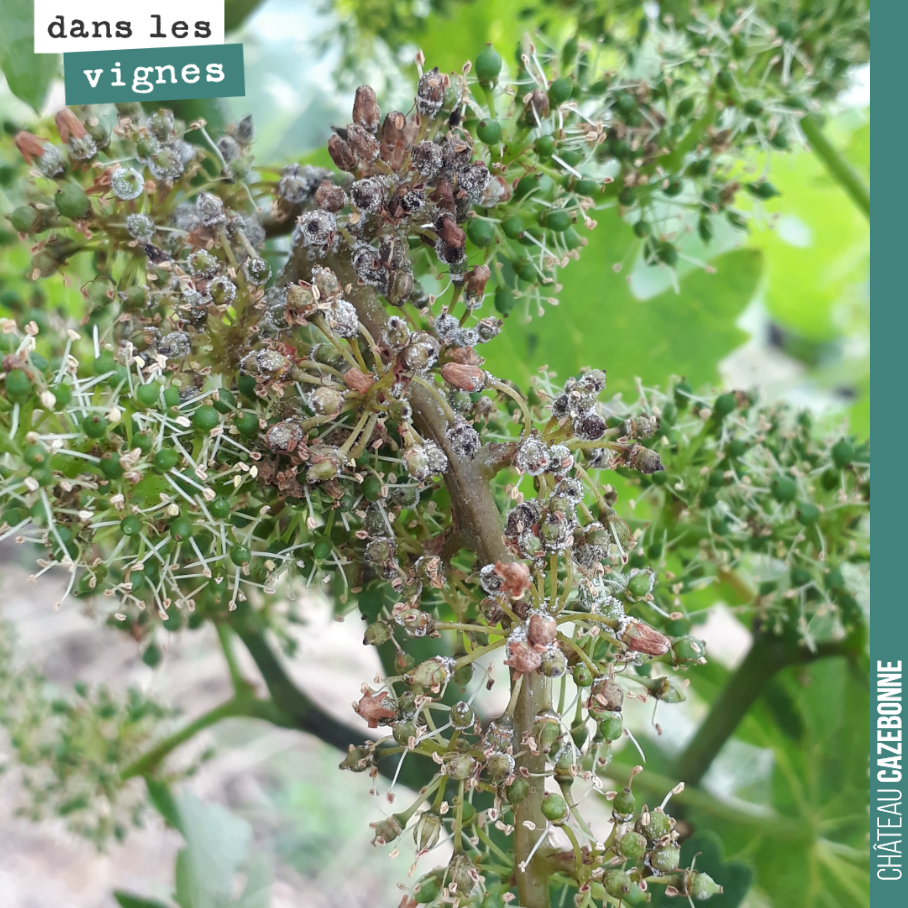
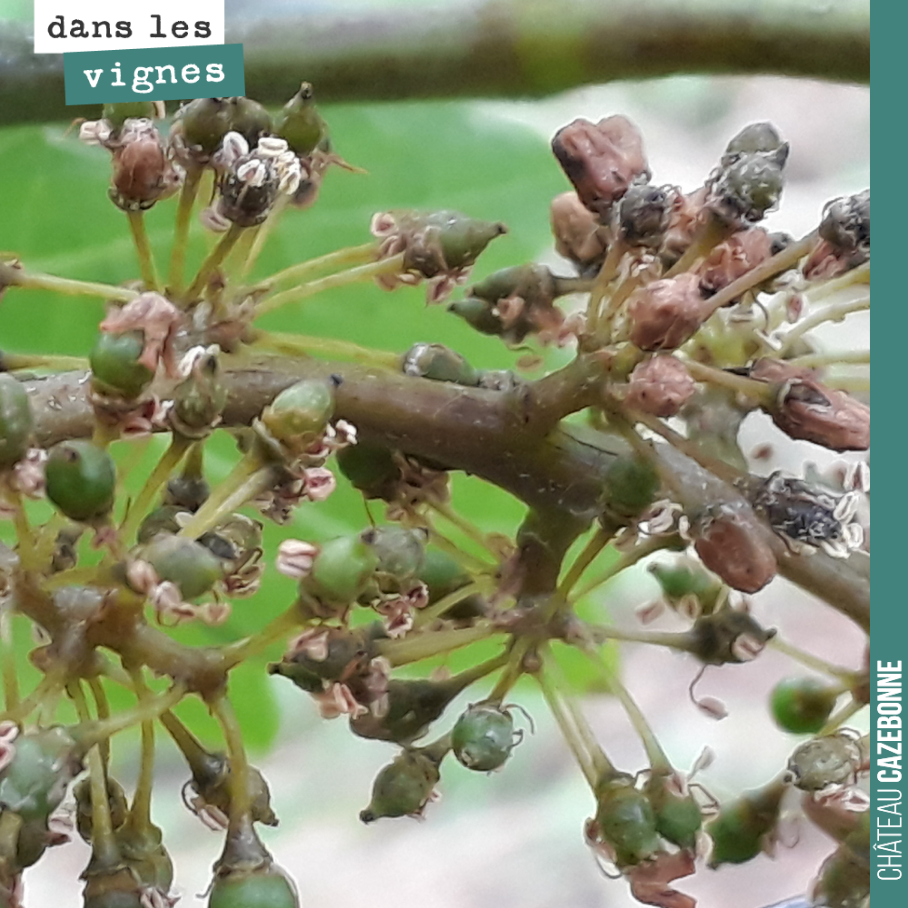
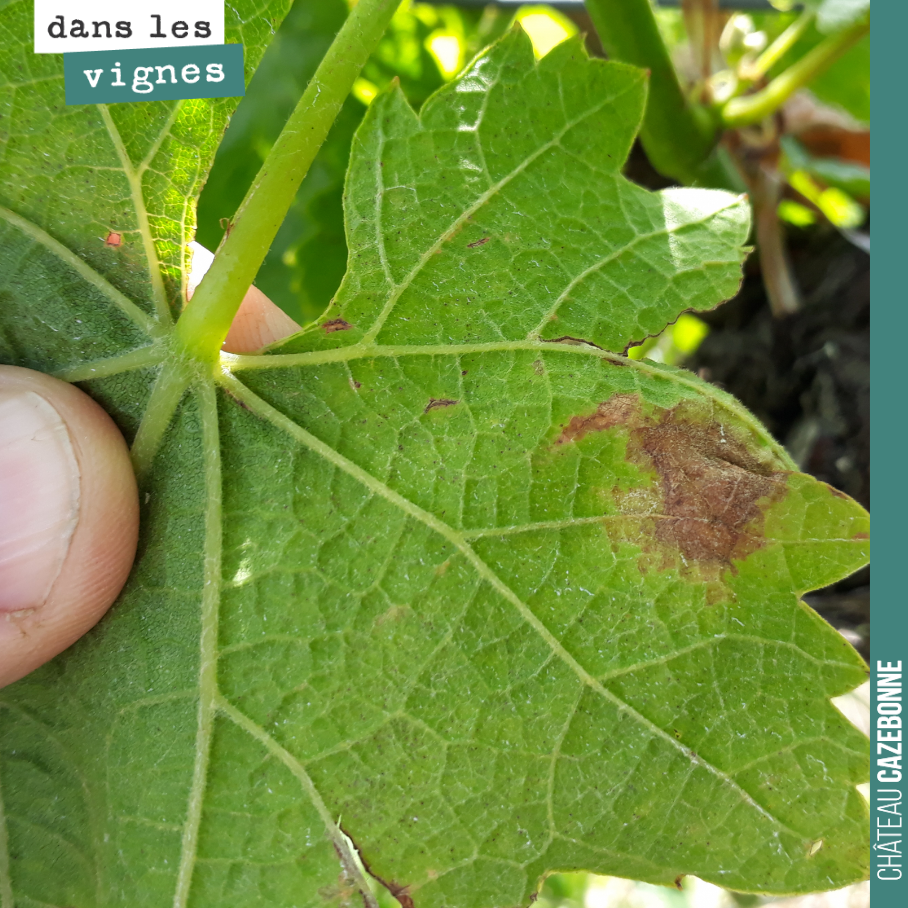
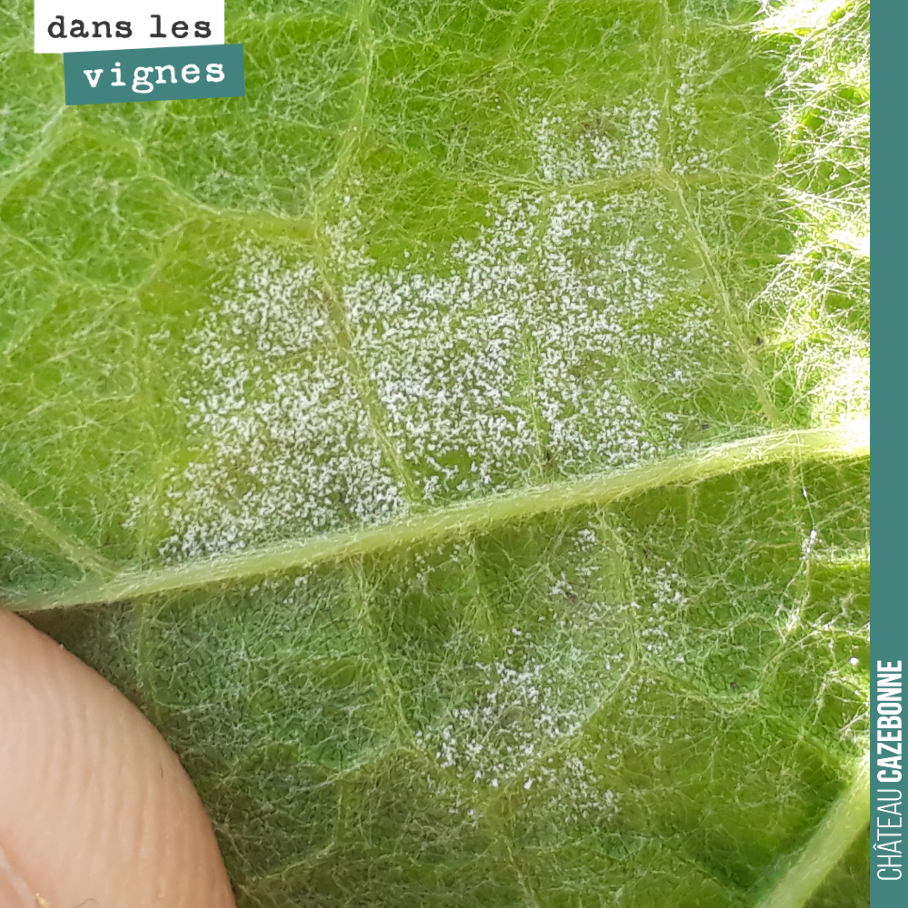
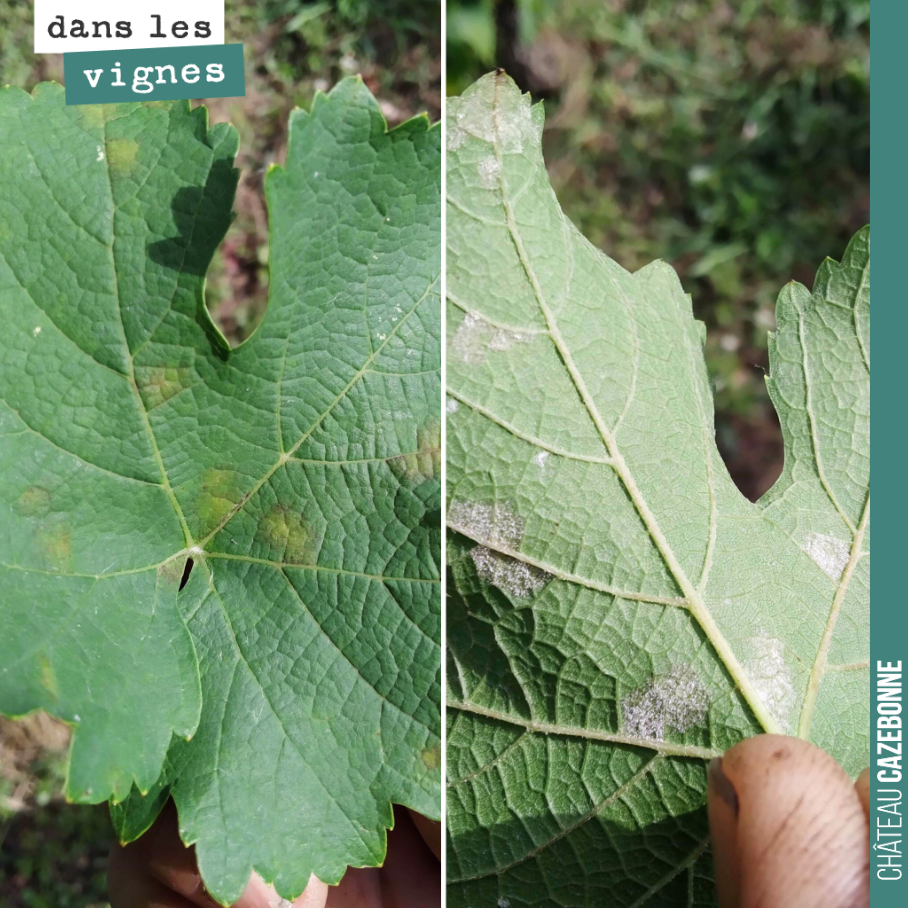
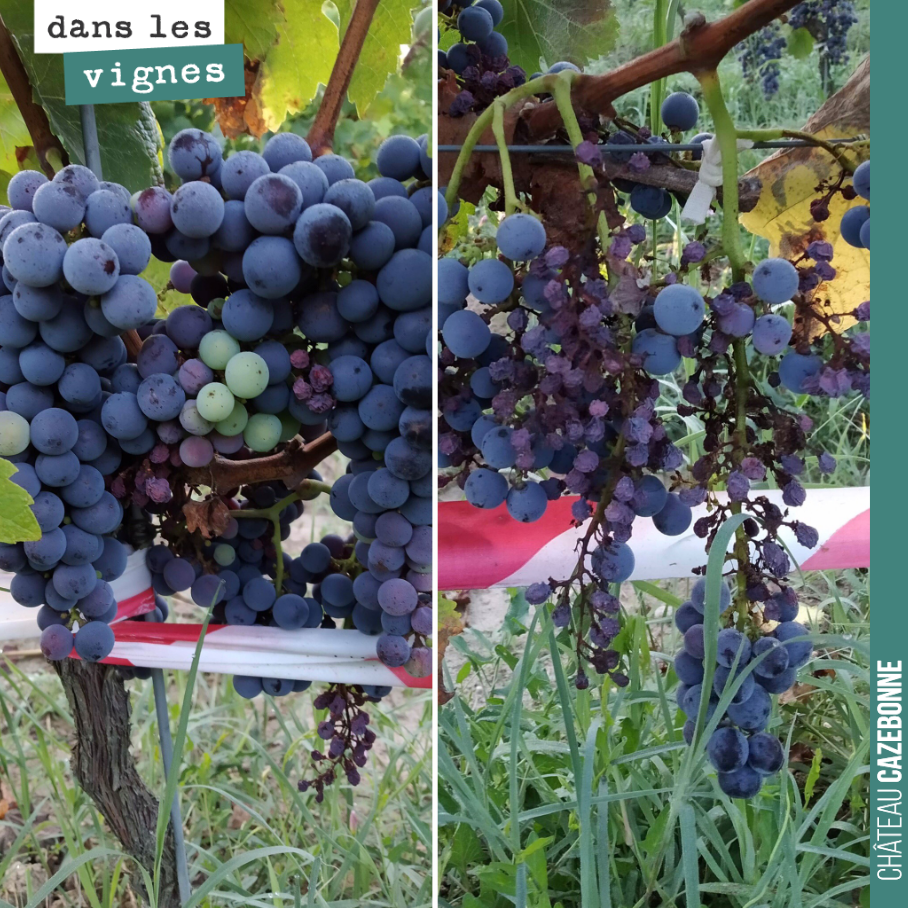
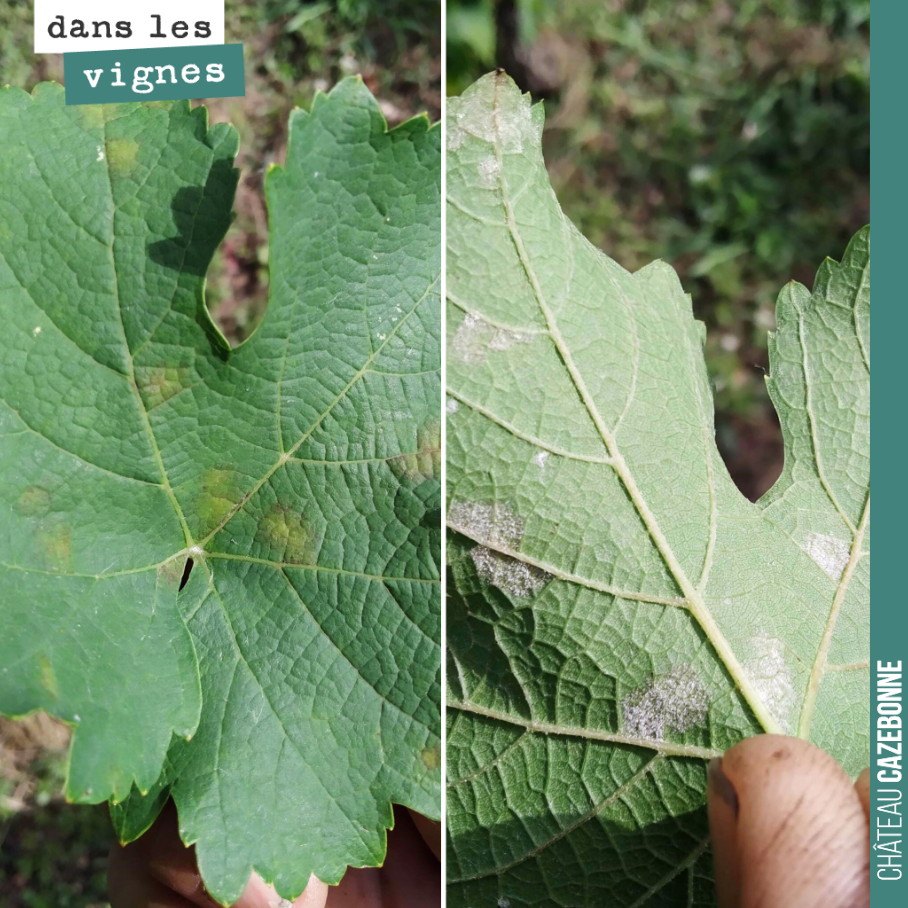
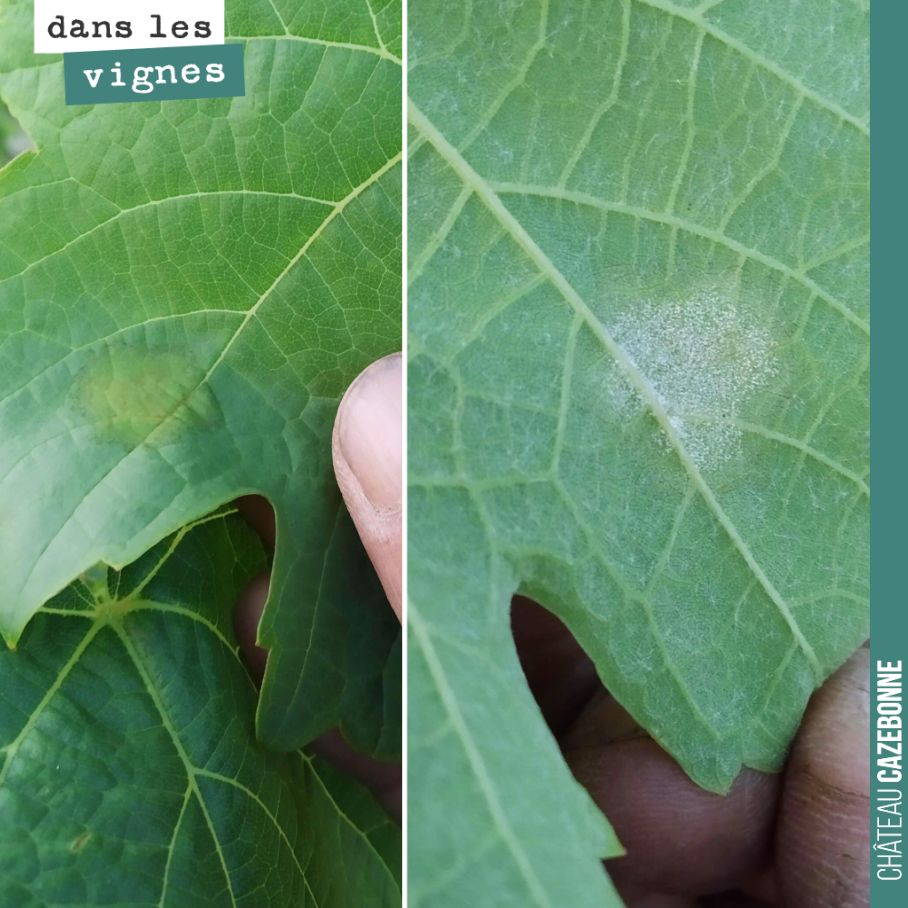
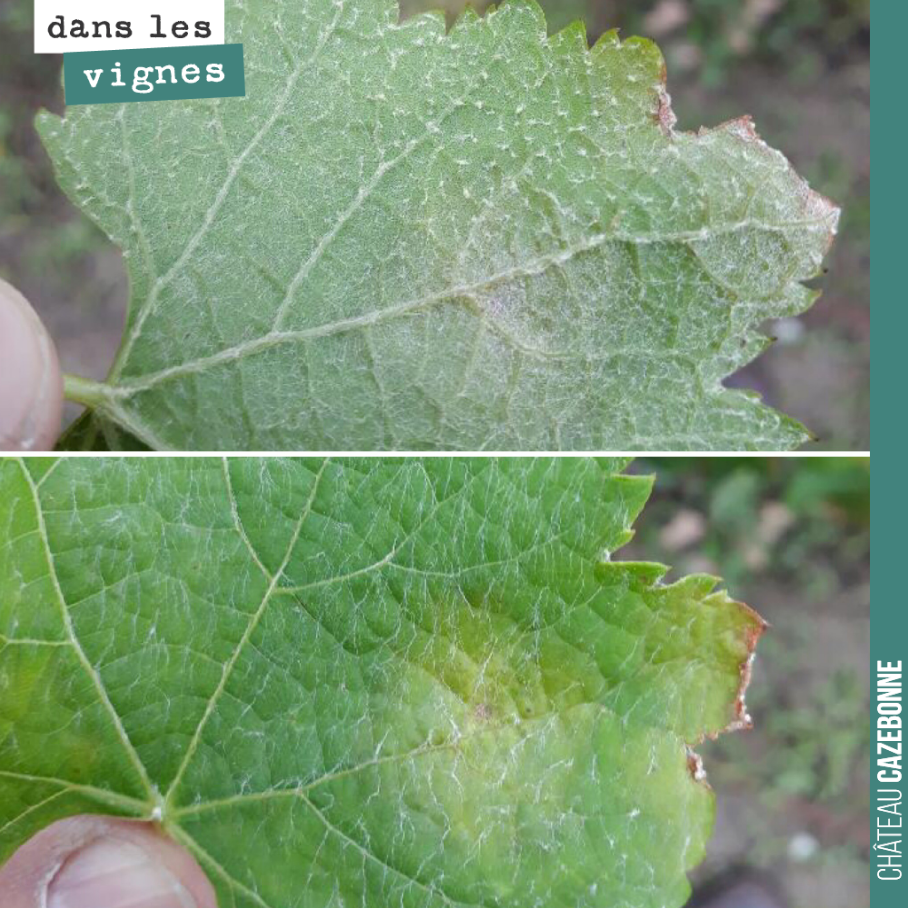
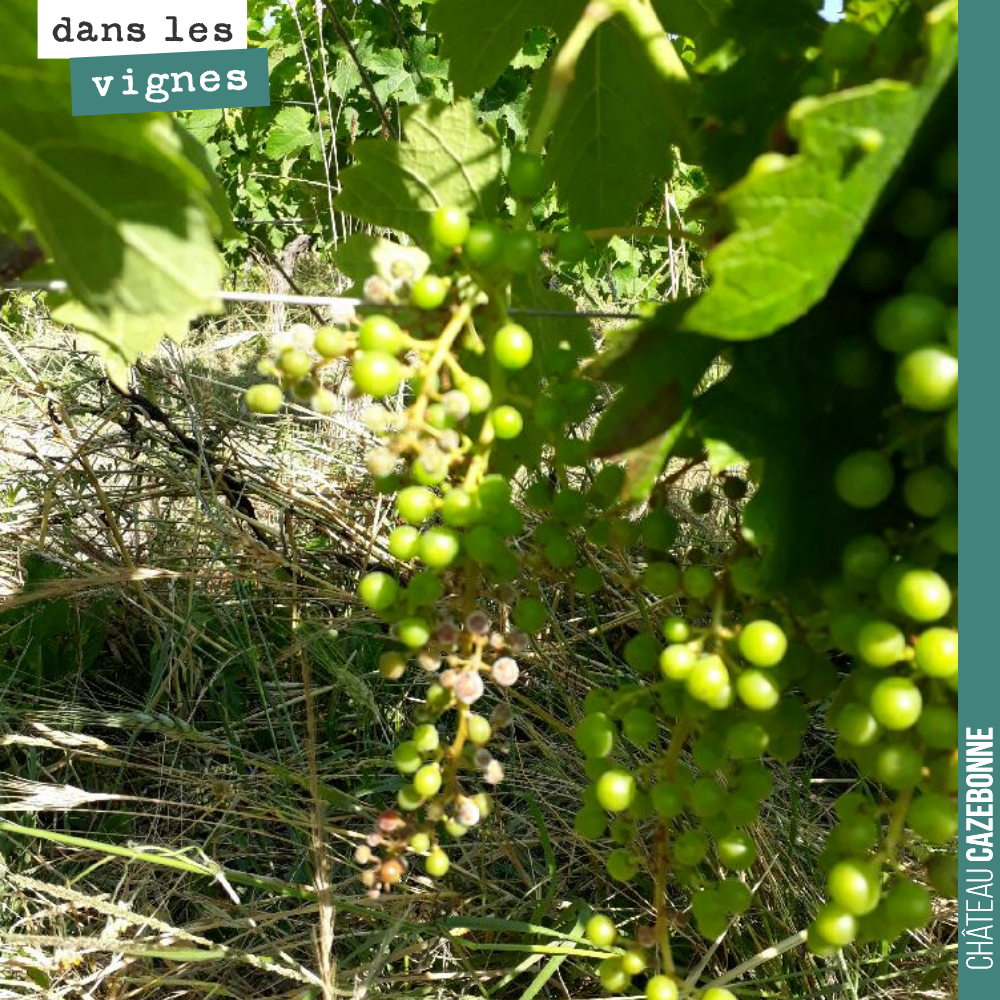
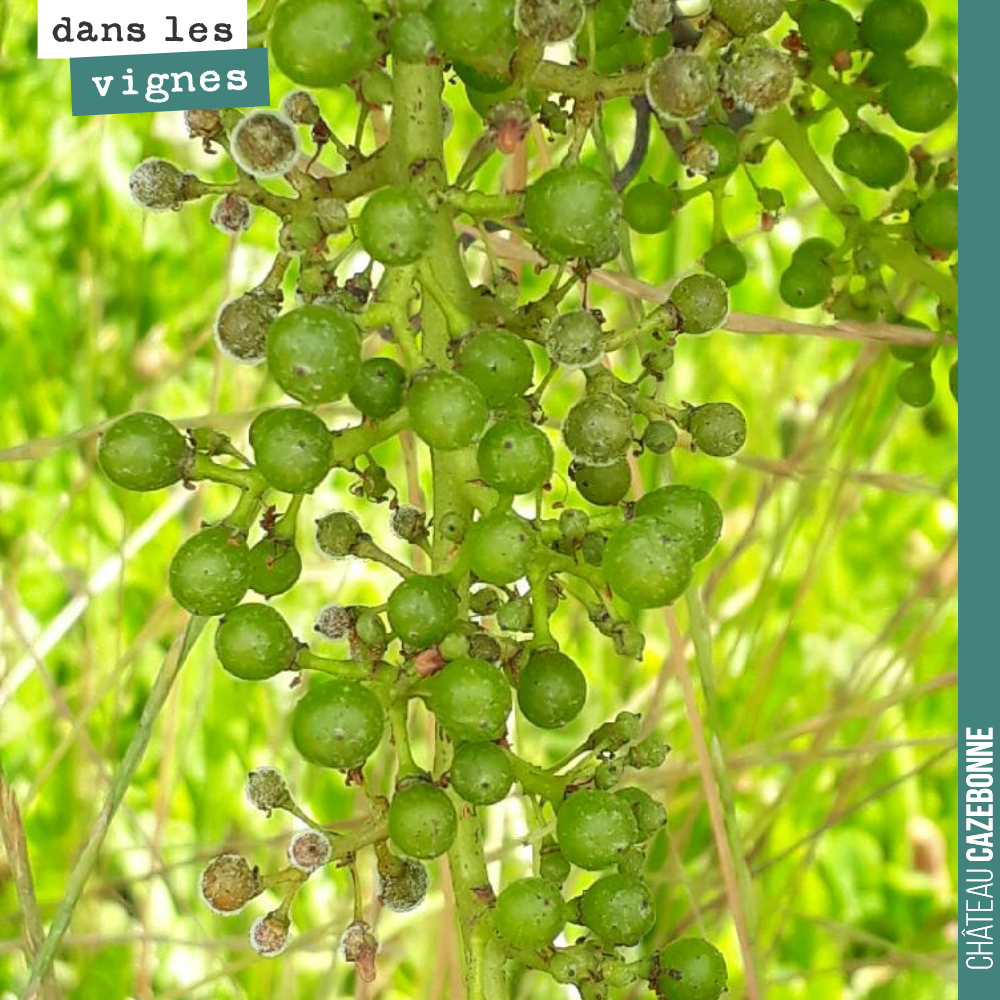
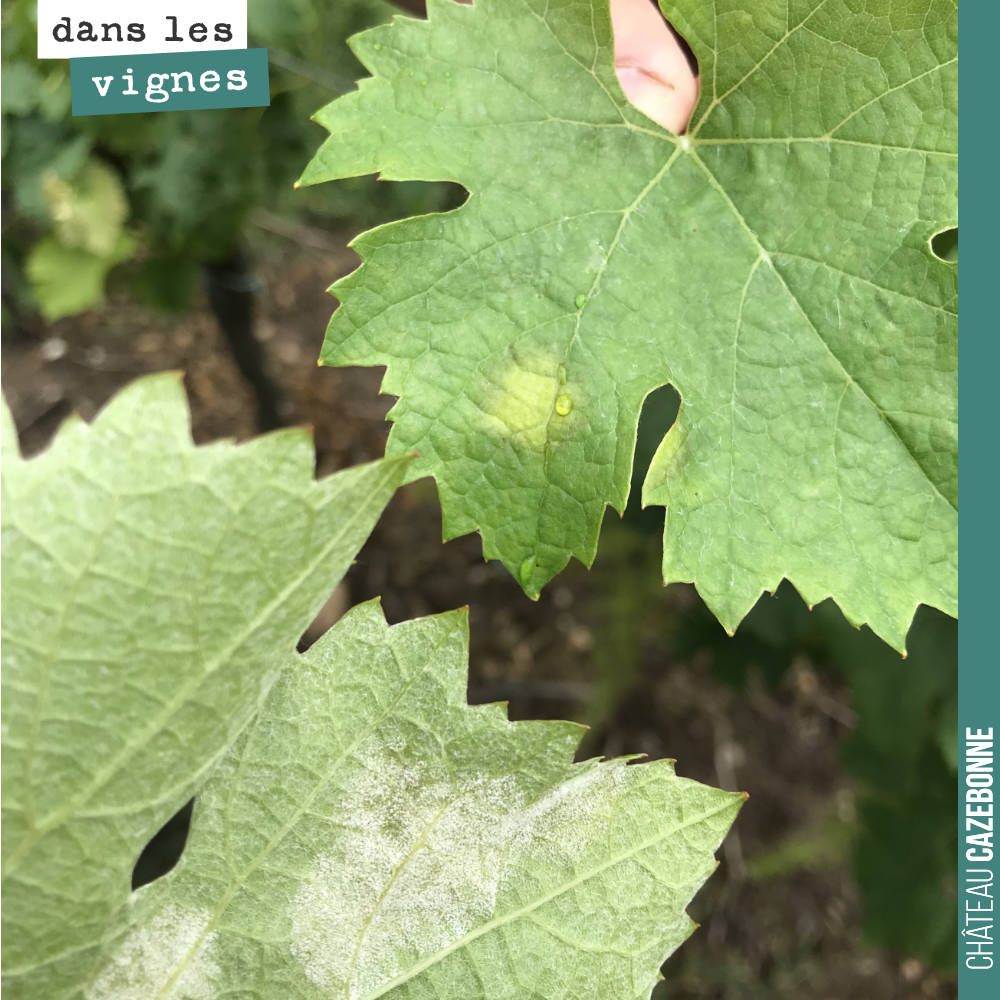
Its symptoms are unfortunately well known. On the leaves, downy mildew initially manifests as yellowish "oil spots" on the upper surface, which then become covered with a powdery white down on the underside, a sign of the fungus sporulating. But it is on the bunches that the damage is most devastating: young affected berries become covered with a white mycelium and die, whilst more developed berries harden, change colour, and eventually drop off. The year 2018, characterised by exceptional rainfall, served as a sad reminder of the virulence of downy mildew and the difficulty of controlling it without flawless vigilance and responsiveness.
Identified by its Latin name Plasmopara viticola, this fungal micro-organism is actually an oomycete, often confused with a classic fungus. Its most characteristic visual description is the presence of the so-called "oil spots" on the leaves, which evolve into a cottony white down on the underside, composed of sporangia releasing spores. On inflorescences and young berries, it forms this same whitening down, leading to their rapid desiccation. An attack of downy mildew on the bunch is easily recognisable by the deformation and browning of the berries, which eventually fall off.
The life cycle of downy mildew is closely linked to weather conditions. It overwinters as oospores in the soil, then in spring, when the temperature reaches around 11°C and significant rainfall (over 10mm) occurs, the oospores germinate to release zoospores. The latter are dispersed by the wind and rain, infecting the young tissues of the vine by penetrating through the stomata. After an incubation period (around 4 to 18 days depending on the temperature), the first symptoms appear. The cycle can repeat itself rapidly, favoured by heavy rainfall and mild temperatures, making downy mildew particularly aggressive during wet springs and summers.
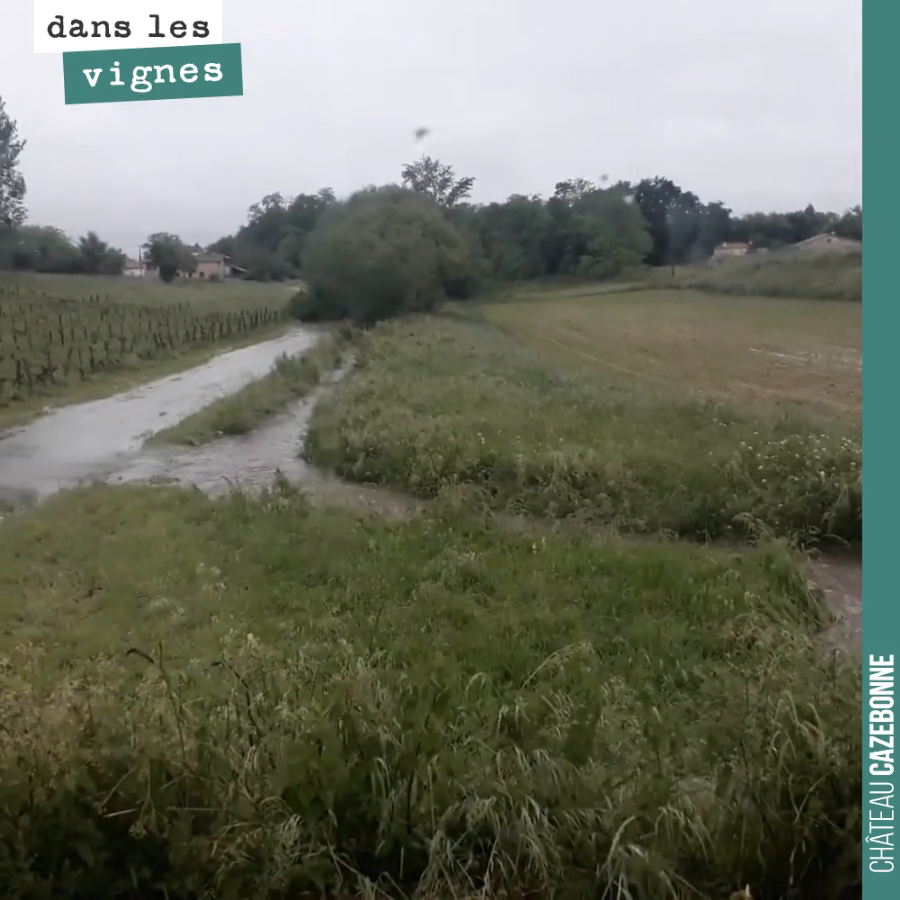
At Château Cazebonne, we observe downy mildew in plots where ventilation is more limited or on the most susceptible grape varieties after prolonged rainy spells. Its presence is a constant indicator of the need for careful monitoring. Downy mildew is exclusively harmful to the vine, leading to a drastic reduction in photosynthesis, a decrease in the quality and yield of the grapes, and ultimately, a generalised weakening of the vine stock. To learn more about this subject, we invite you to discover our article on Fungi in the vineyards.
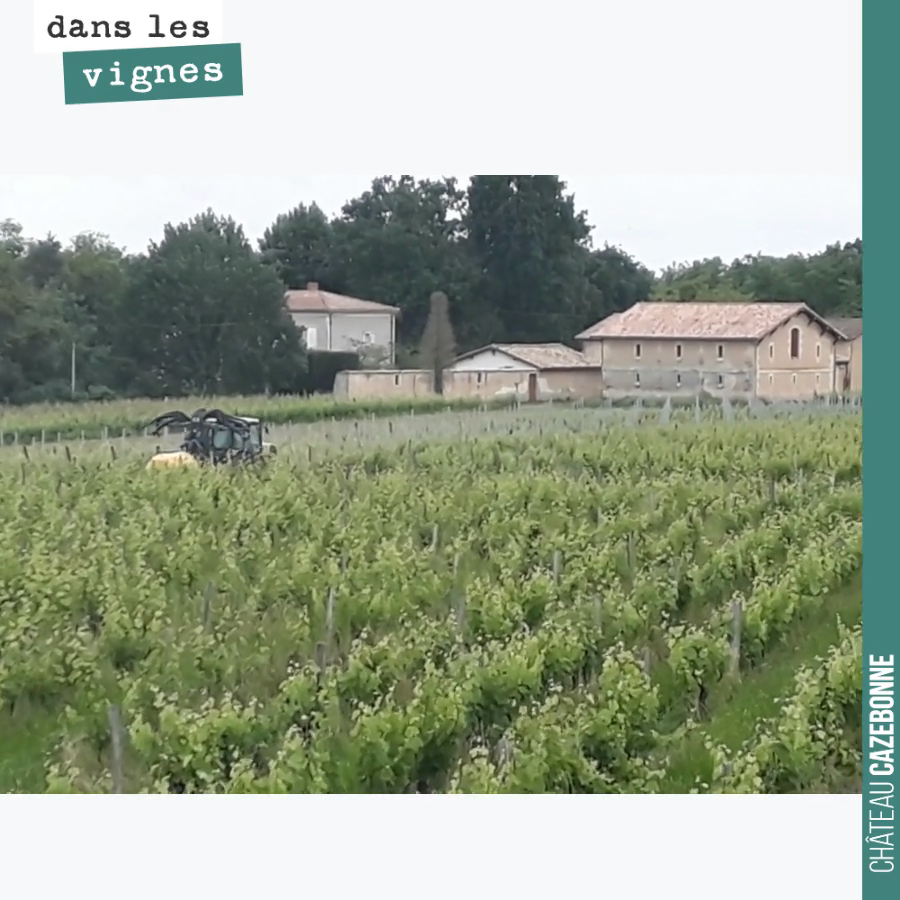
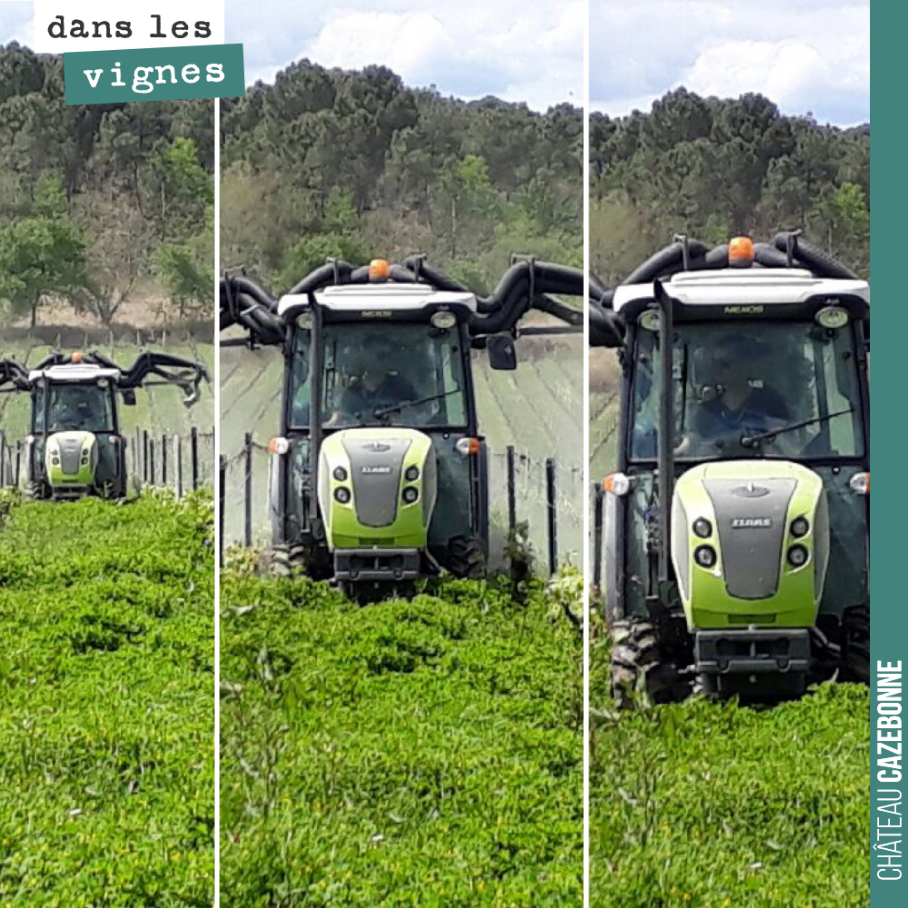
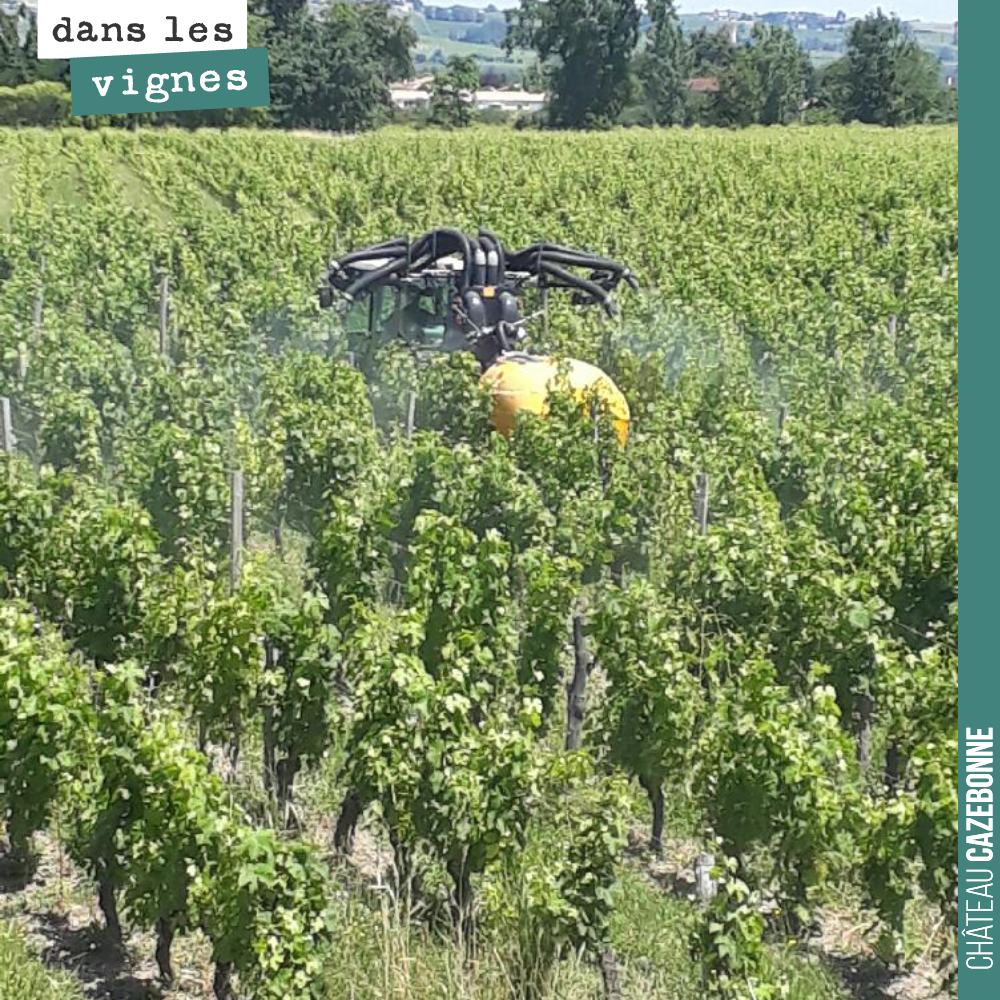
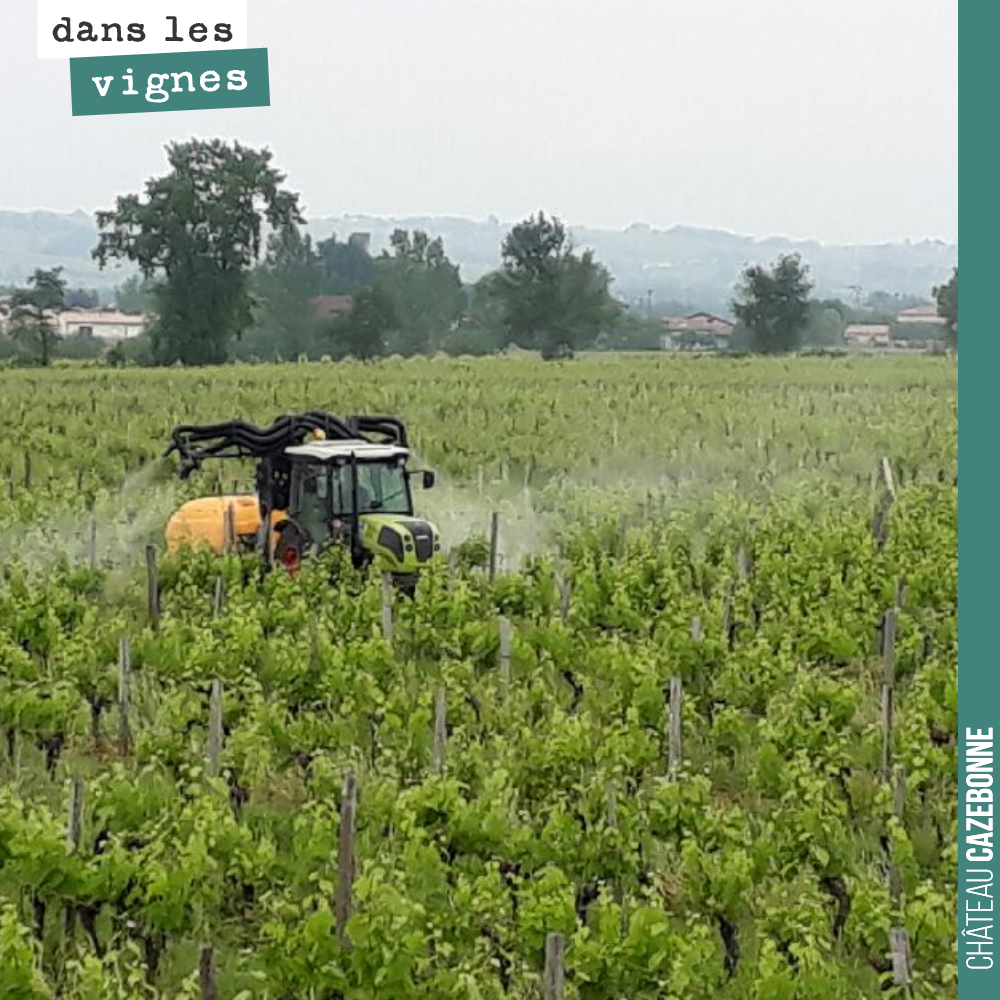
At Château Cazebonne, our commitment to sustainable and organic viticulture is our first line of defence against downy mildew. Rather than passively suffering its assaults, we favour a preventive and holistic approach. The reasoned use of copper, a natural fungicide authorised in organic farming, is essential, but its effectiveness is maximised by very early and repeated application as soon as the first favourable conditions appear. The challenge lies in precision and timing: once downy mildew is well established, curative solutions are limited, or even non-existent, hence the adage "once settled, there is no salvation".
Beyond treatments, our work focuses on the natural strengthening of the vine. Meticulous observation of each plot, careful canopy management to optimise aeration and sunlight, as well as particular attention to the vitality of our living soils, are all practices that contribute to making our vines more resistant. It is in this context that the diversity of grape varieties takes on its full meaning. As Jean-Baptiste Duquesne points out in his book "Bordeaux, une histoire de cépages", many ancient grape varieties offer invaluable natural resistance. This is why Château Cazebonne is actively committed to replanting these forgotten grape varieties, which, through their resilience and adaptation to the terroir, enrich our biodiversity and offer better protection against vine diseases, including black rot.
This long-term undertaking, aimed at rediscovering the historical richness of our vineyard, is made possible by the support of the many wine lovers who have embraced our cuvées. By tasting our wines made from these rare grape varieties, you actively participate in the rebirth of these viticultural treasures and the preservation of an entire facet of Bordeaux's history. To deepen your knowledge of the fascinating history of Bordeaux grape varieties and the role of figures such as Pierre-Marie-Alexis Millardet, saviour of the French vineyards, we invite you to receive the digital version of "Bordeaux, une histoire de cépages" or to test your knowledge with our oenological quizzes, before discovering all of our exceptional wines on our online shop.
Sources
Our suggestions
-5%on your 1st order with code BIENVENUE
The essential6 bottles — Graves red 2022
The best price of the cellar: €12 per bottle delivered.
The everyday red: generous and straight to the point.
I want it Our recommendation92/100 RVF
6 bottles — Graves red 2022, 92/100 RVF
Rated 92/100 by La Revue du vin de France: a solid 10-year ageing potential.
Our Graves for ageing, the finest gateway to the estate.
I want it Go further
12 bottles — the whole range
12 bottles, the whole range tasted: the best discovery-to-price ratio.
The complete tour of the estate, in a single case.
I want it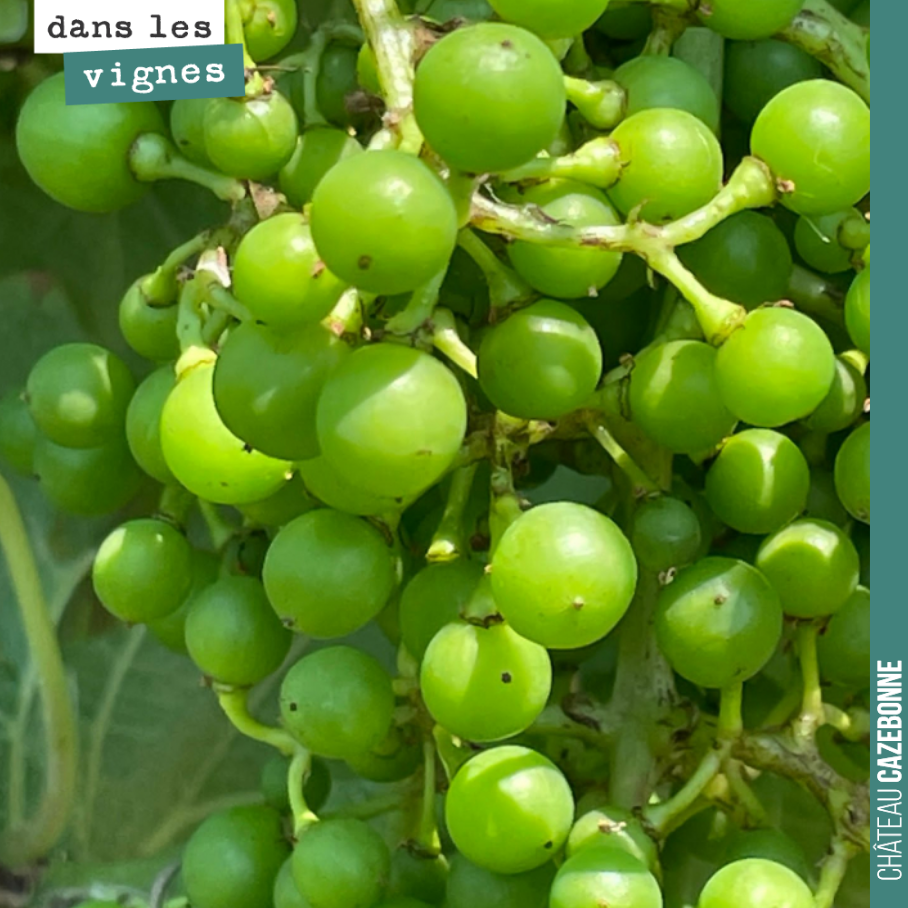
14 June 2023
10 May 2023
01 July 2021
24 June 2021
17 June 2021
28 June 2020
15 June 2020
08 June 2020
06 June 2020
25 May 2020
24 May 2020

23 May 2020
23 May 2020
11 May 2020
09 May 2020
27 April 2020
16 December 2019
20 August 2019
18 August 2019
06 August 2019

20 June 2019
16 June 2019

01 May 2019
30 April 2019
19 April 2019
19 April 2019
11 April 2019
16 July 2018
06 July 2018
03 July 2018
29 June 2018
21 June 2018
21 June 2018
14 June 2018
07 June 2018
The cellar, forgotten grape varieties and our cuvées, twice a month. 5% off your first order with the code BIENVENUE.