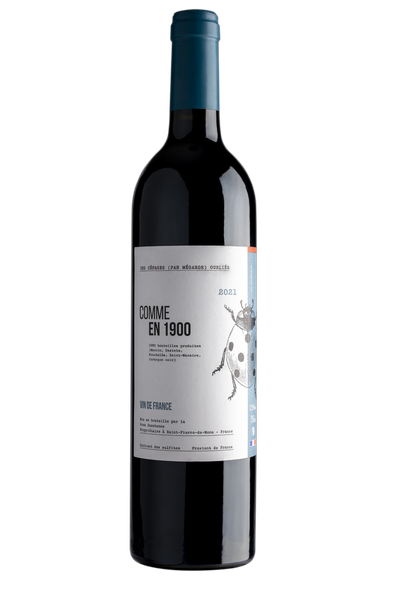
 The essential92/100 RVF
Comme en 1900 red 2022
Vin de France — heritage grapes, 92/100 RVF
The pre-phylloxera Bordeaux blend, revived at the estate.
Castets, Mancin, Pardotte: the Bordeaux before Bordeaux.
I want it
1782 survey
Between 1782 and 1784, a vast administrative survey recorded the grape varieties grown in Guyenne. Ordered by Intendant Nicolas Dupré de Saint-Maur, it offers a rare snapshot of the diversity of Bordeaux vines before the great crises of the 19th century. At Château Cazebonne, where we are replanting forgotten Bordeaux grape varieties, this document is a first-hand source, presented in one of the estate's posts.
Nicolas Dupré de Saint-Maur was intendant of the province of Guyenne, based in Bordeaux, from 1776 to 1785. Under his authority, the survey set out to inventory the varieties in the vineyards in order to fix a nomenclature and better understand the many synonyms. The same vine could bear several names from one village to the next, and two different vines could share the same name. Without a common list, nobody could be sure what they were talking about.
The answers to the survey long remained in the Bordeaux and Gironde archives, neither digitised nor published. A team of volunteers led by the historian Henri Galinié took on the task of transcribing them. Henri Galinié also runs, with Samuel Leturcq and Jeanne Galinié-Yerre, the CepHistoire research programme on the history of grape varieties in France. All the documents can now be consulted online in the HAL open archive.
Specialists had not overlooked this material: in his 1932 Essai, Georges Bord already listed the intendant's correspondence among his sources. We discuss this in our section on Georges Bord and the Bordeaux grape varieties.
Among the transcribed lists, the one for Bazas is of particular interest to us: the town lies 16 kilometres from Château Cazebonne. We recognise the names of varieties we have replanted. Many others remain unidentified today or have disappeared. Among the names we cannot wait to taste:
It is also likely that Petit Péjac or Béquignol, which we have replanted, appear on this list under another name. That is the whole difficulty: linking an old name to a living variety means cross-checking descriptions, synonyms and, today, genetic analyses. These lists also make us want to replant chaussé.
The survey confirms that at the end of the 18th century, the vineyards of southern Gironde relied on a great diversity of vines, far beyond the handful of varieties that make up the Bordeaux appellations today. It also shows the limits of our knowledge: historians and ampelographers are far from finished with their research. For a winegrower, these lists are both an inventory of the past and a lead for the future, when deciding which vines to bring back into the vineyard.
The Dupré de Saint-Maur survey reveals the diversity of forgotten grape varieties in Guyenne, such as Béquignol found in La Dame Noire.
Our suggestions
-5%on your 1st order with code BIENVENUE
The essential92/100 RVFVin de France — heritage grapes, 92/100 RVF
The pre-phylloxera Bordeaux blend, revived at the estate.
Castets, Mancin, Pardotte: the Bordeaux before Bordeaux.
I want it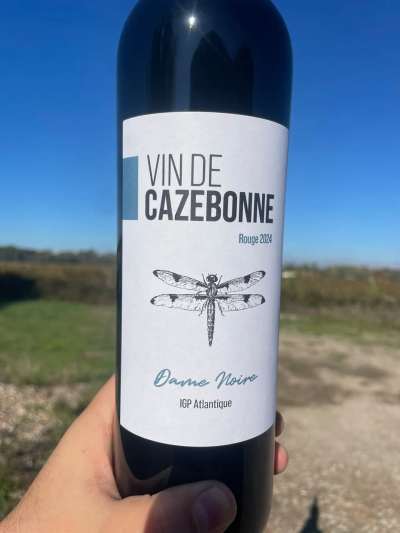 Our recommendation
 Go further
12 bottles — the whole range
12 bottles, the whole range tasted: the best discovery-to-price ratio.
The complete tour of the estate, in a single case.
I want itThe cellar, forgotten grape varieties and our cuvées, twice a month. 5% off your first order with the code BIENVENUE.