
 The essential
6 × Entre Amis red
6 bottles — Graves red 2022
The best price of the cellar: €12 per bottle delivered.
The everyday red: generous and straight to the point.
I want itWeather
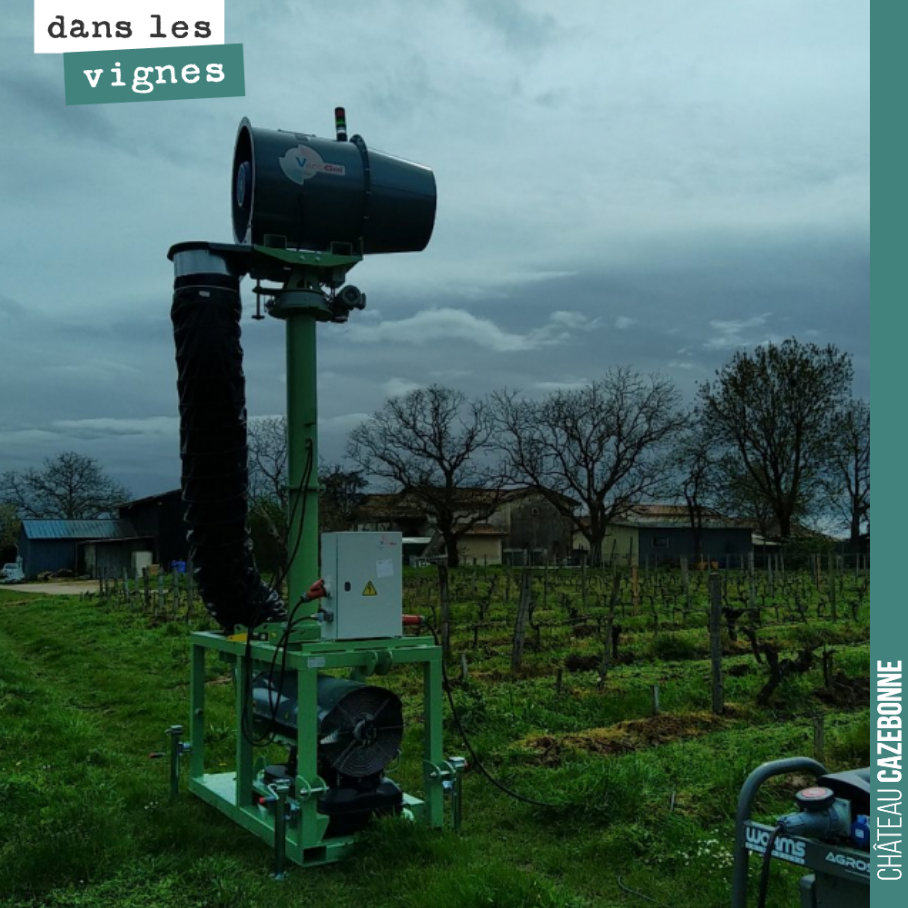
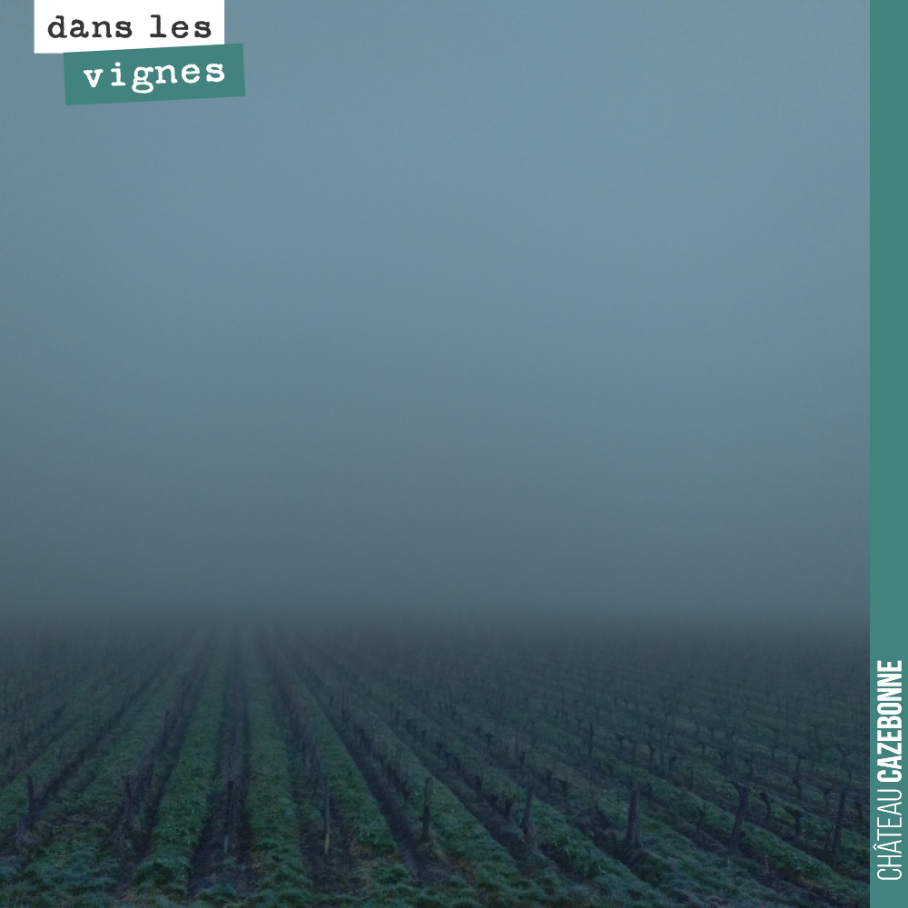
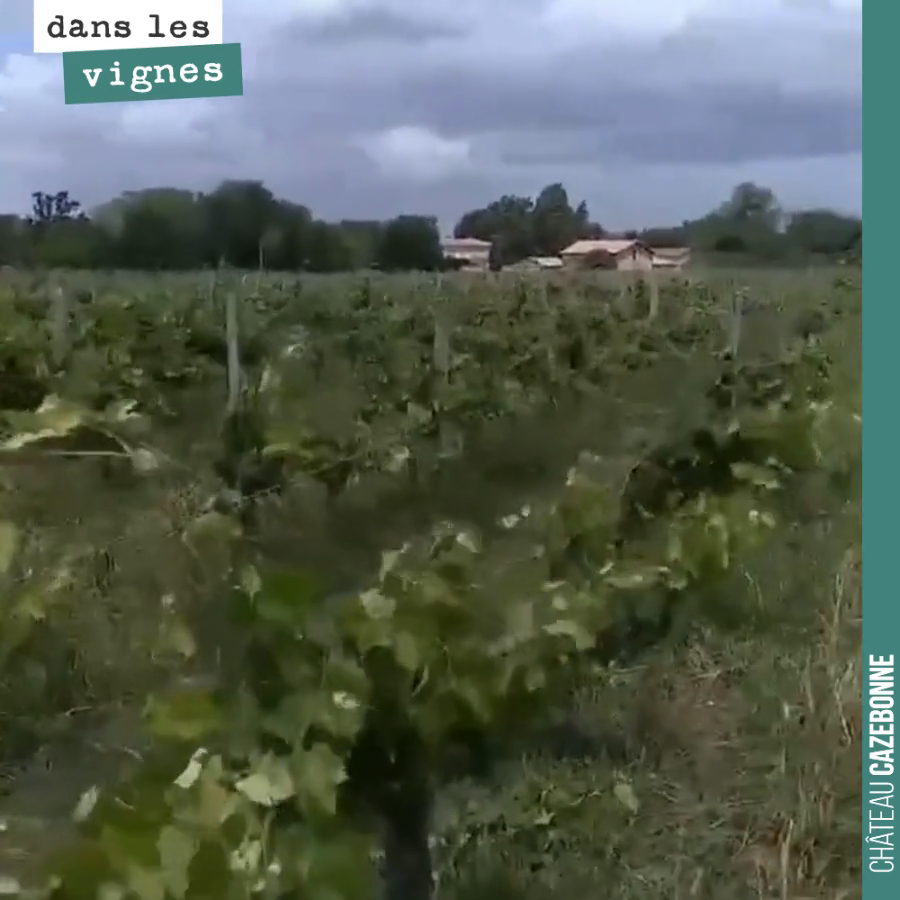
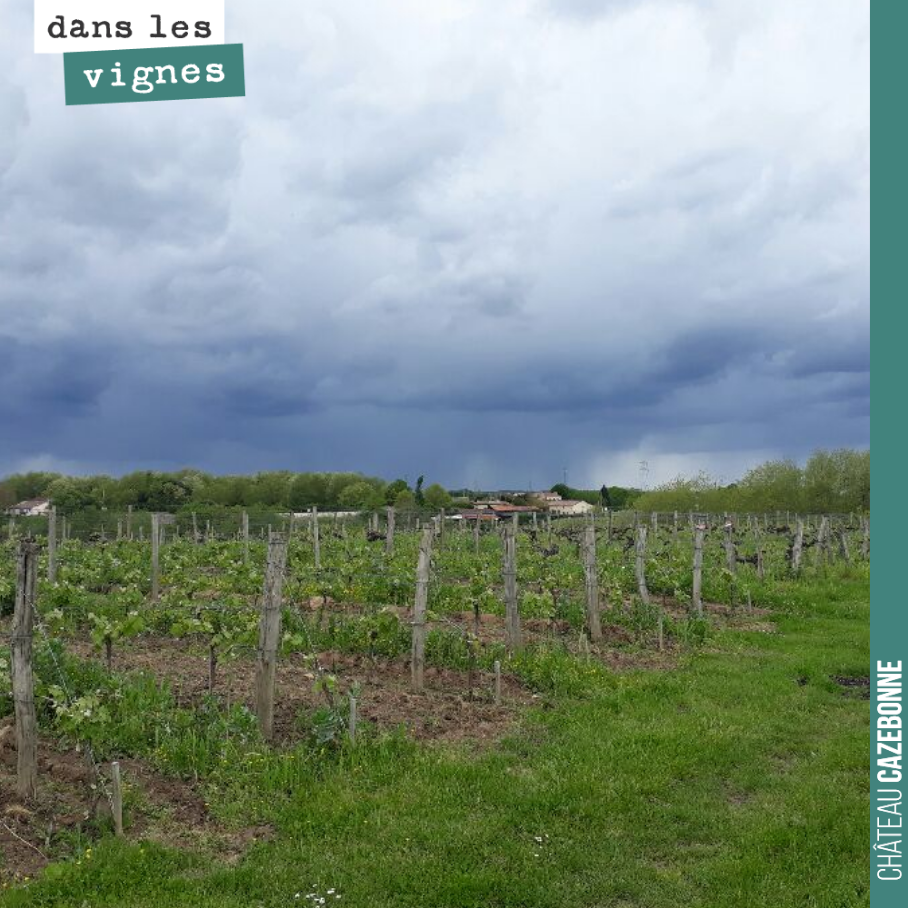
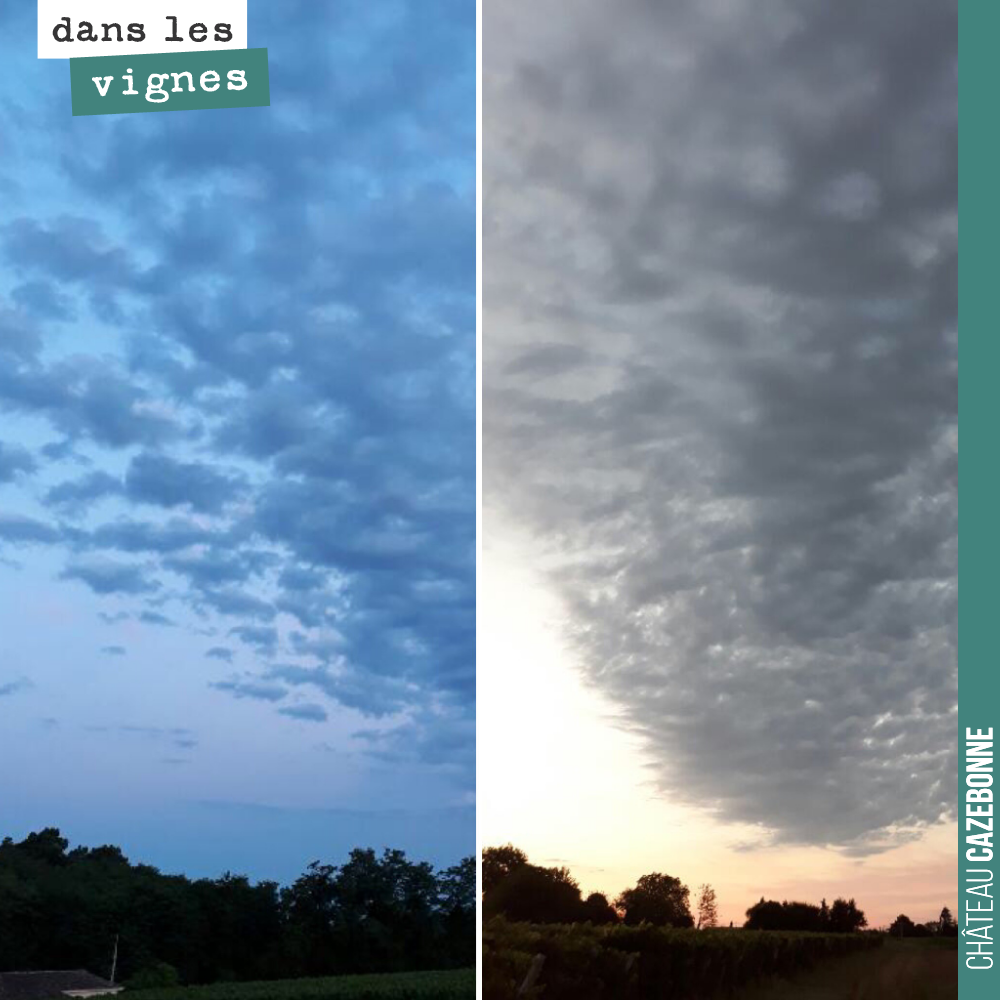
At Château Cazebonne, our profession as winegrowers is intrinsically linked to the vagaries of the weather. The weather is not always mild, and far from being a mere backdrop, it sculpts the destiny of our plots every single day. This constant adaptation, sometimes demanding, often fascinating, makes our work so unique. Every vintage is a new story, written largely by the sun, the rain, the wind, and the cold.
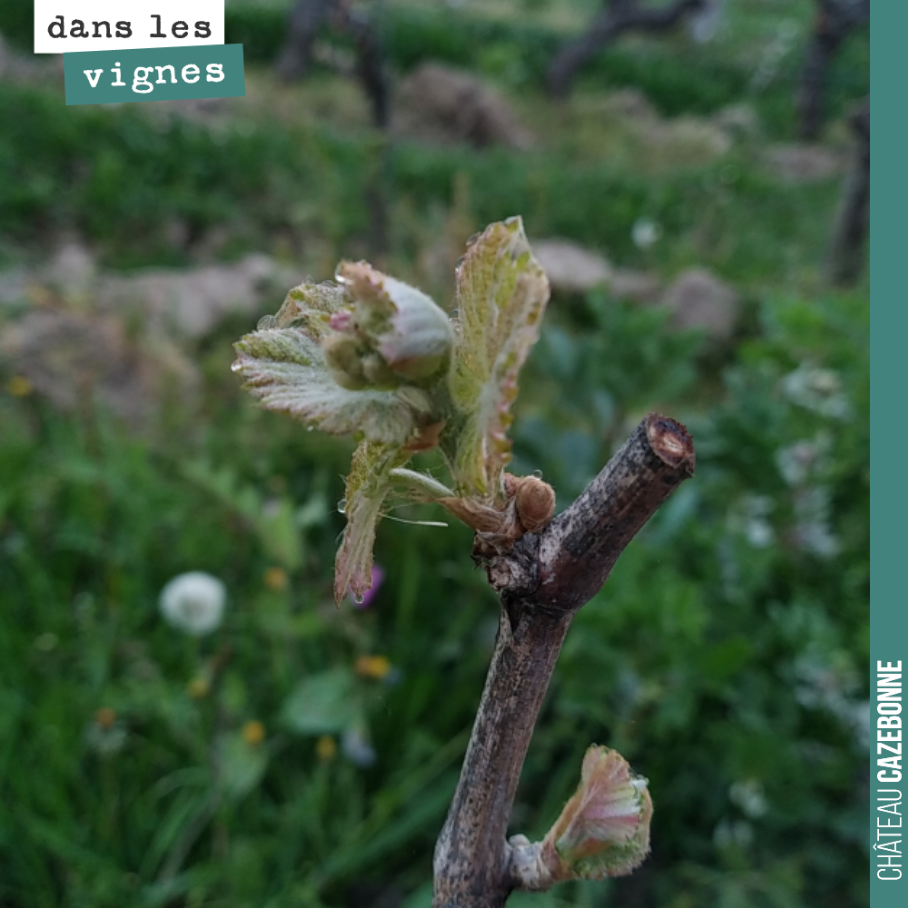
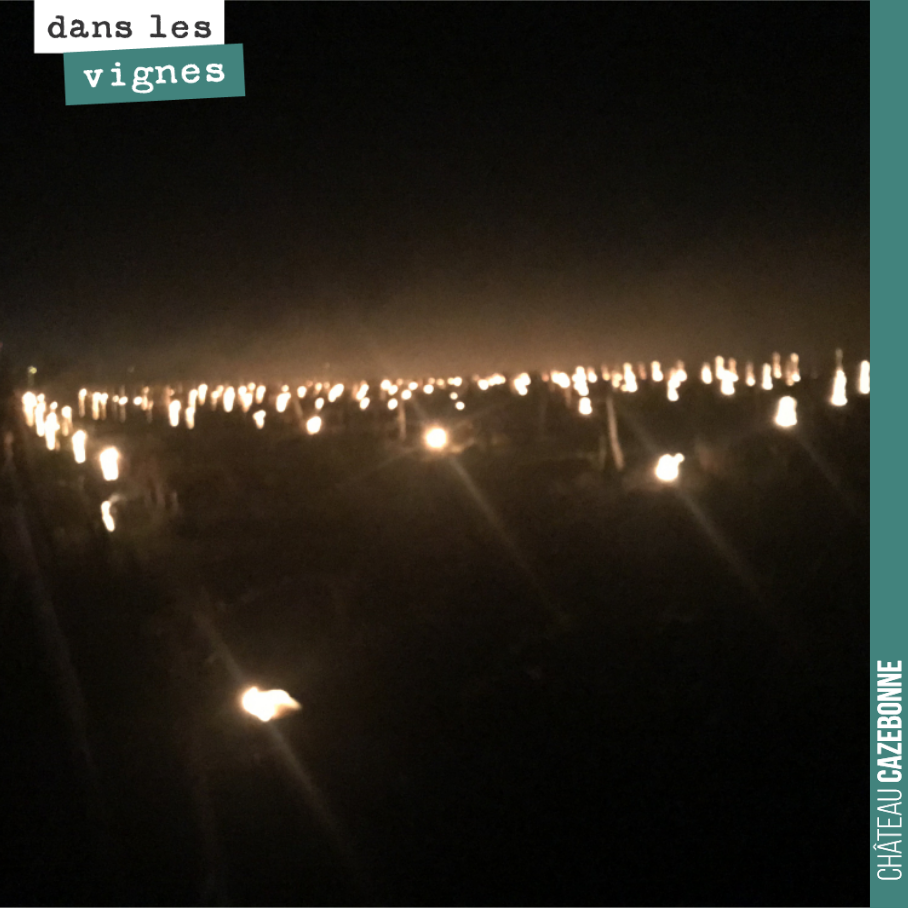
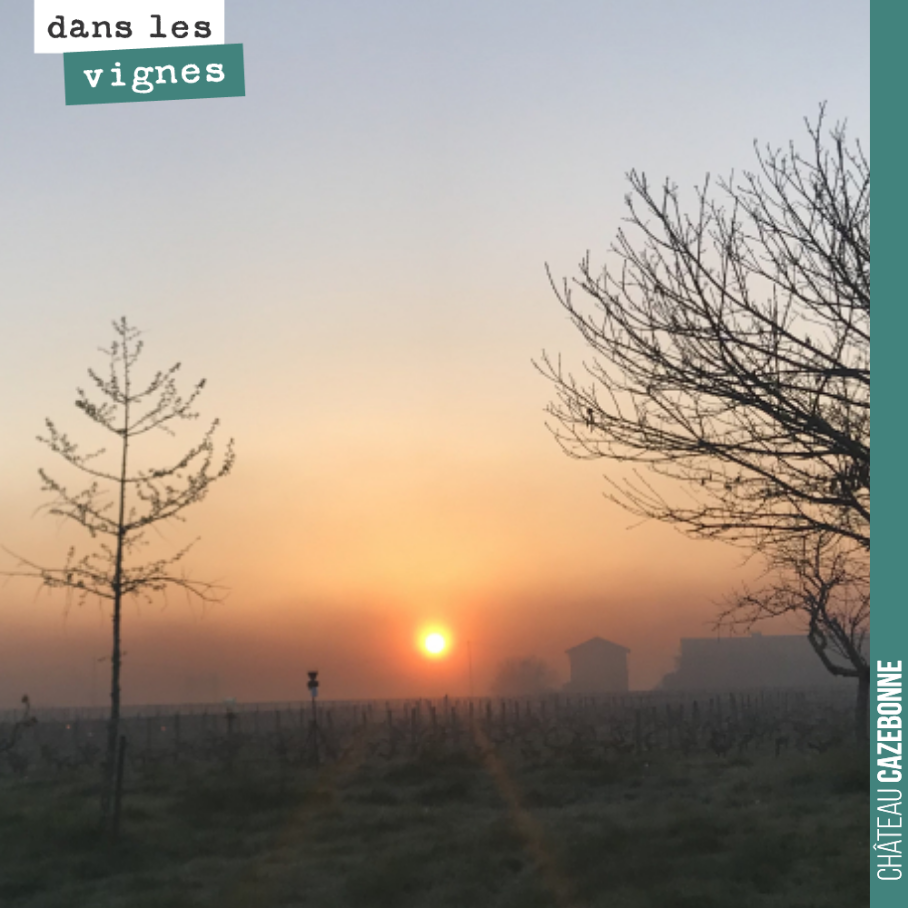
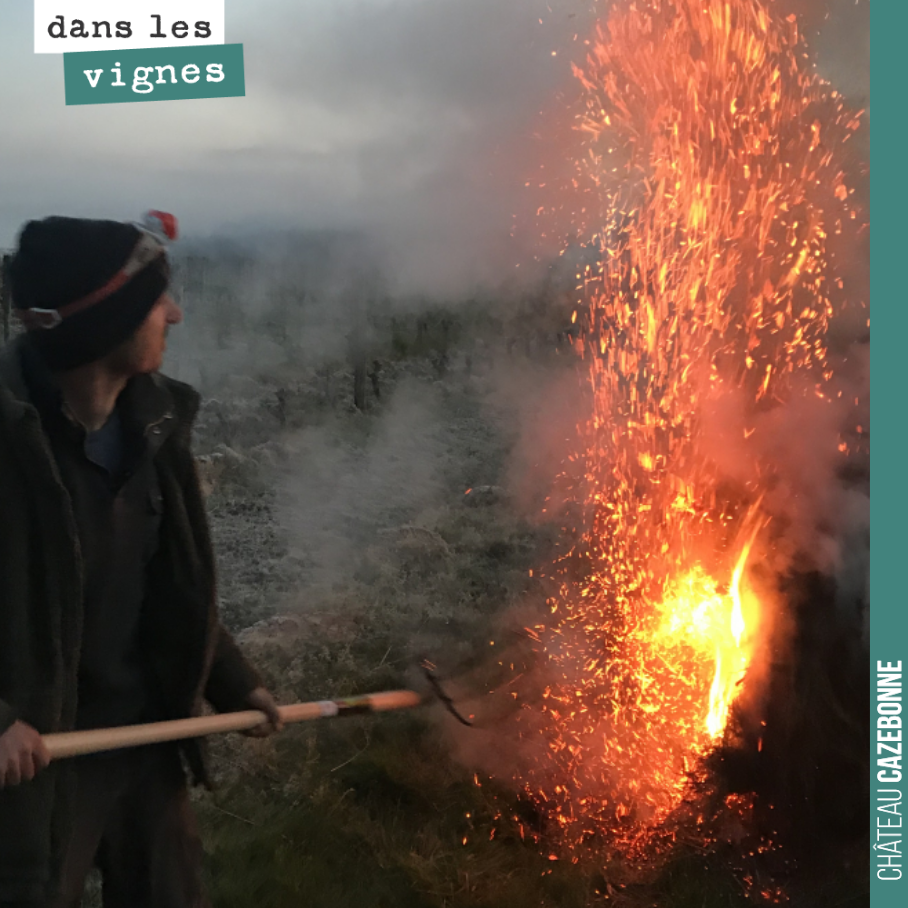
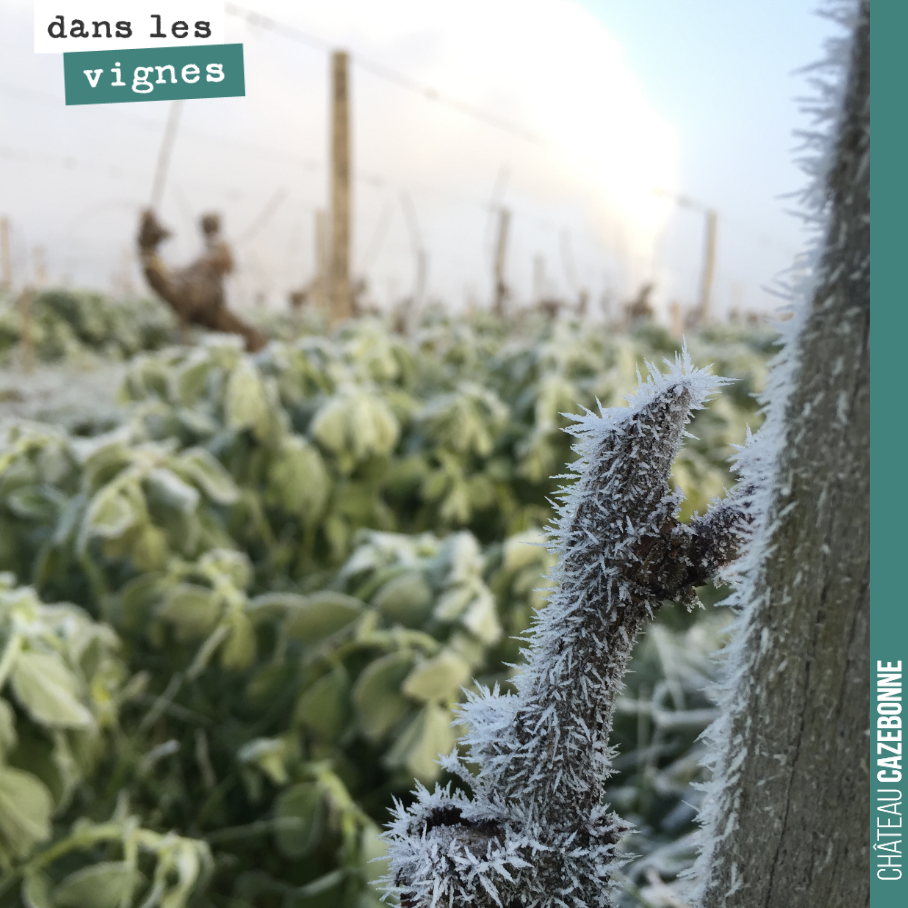
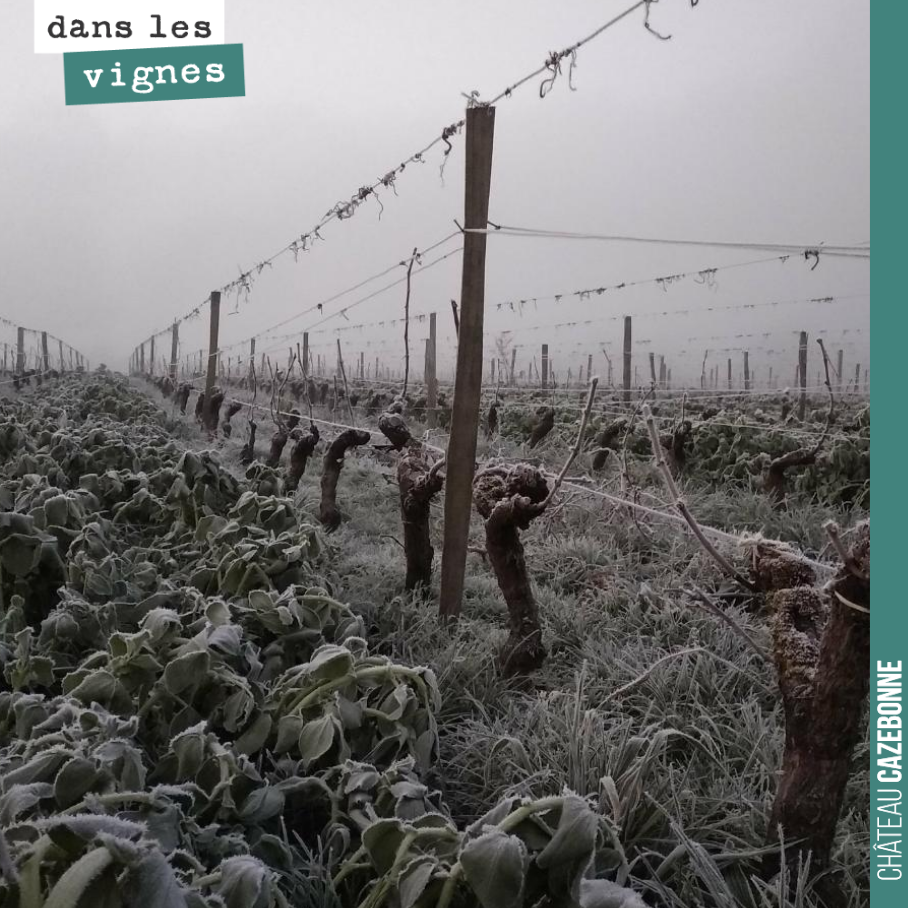
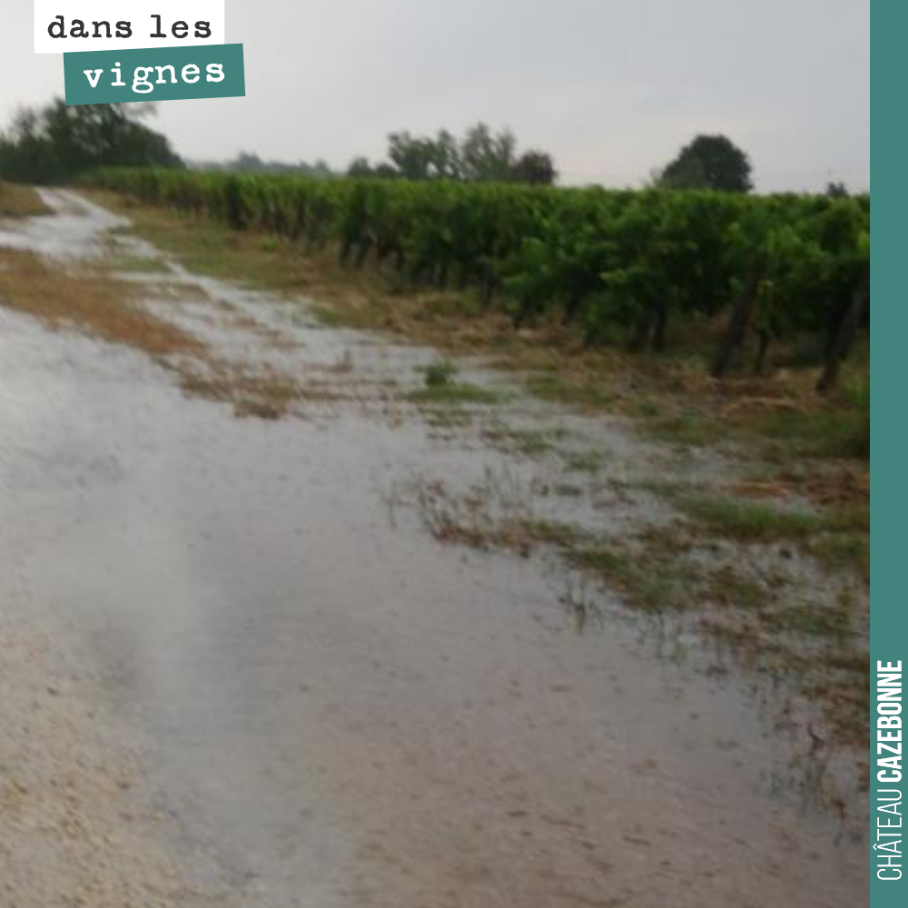
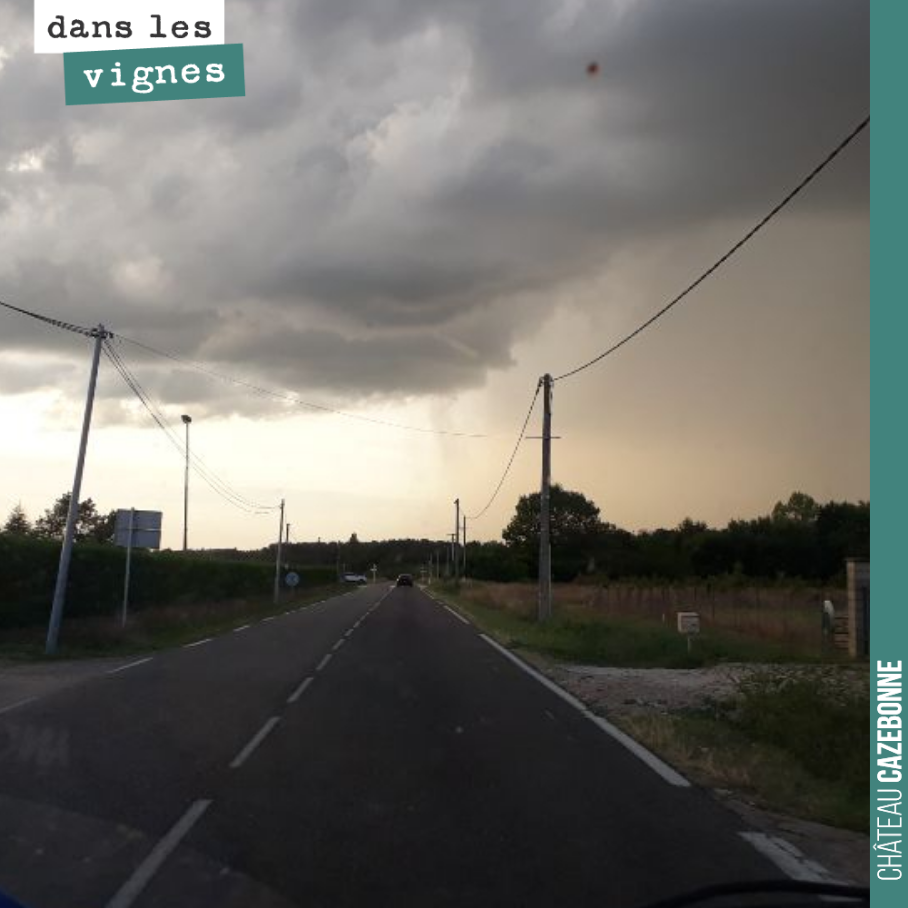
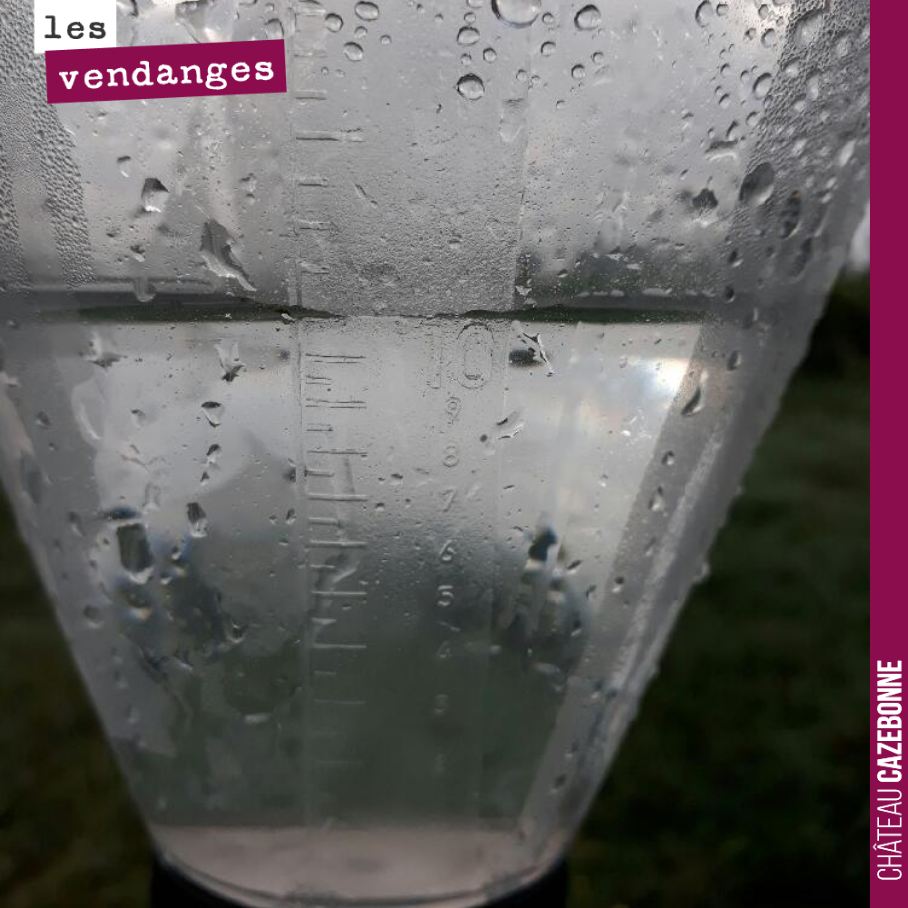
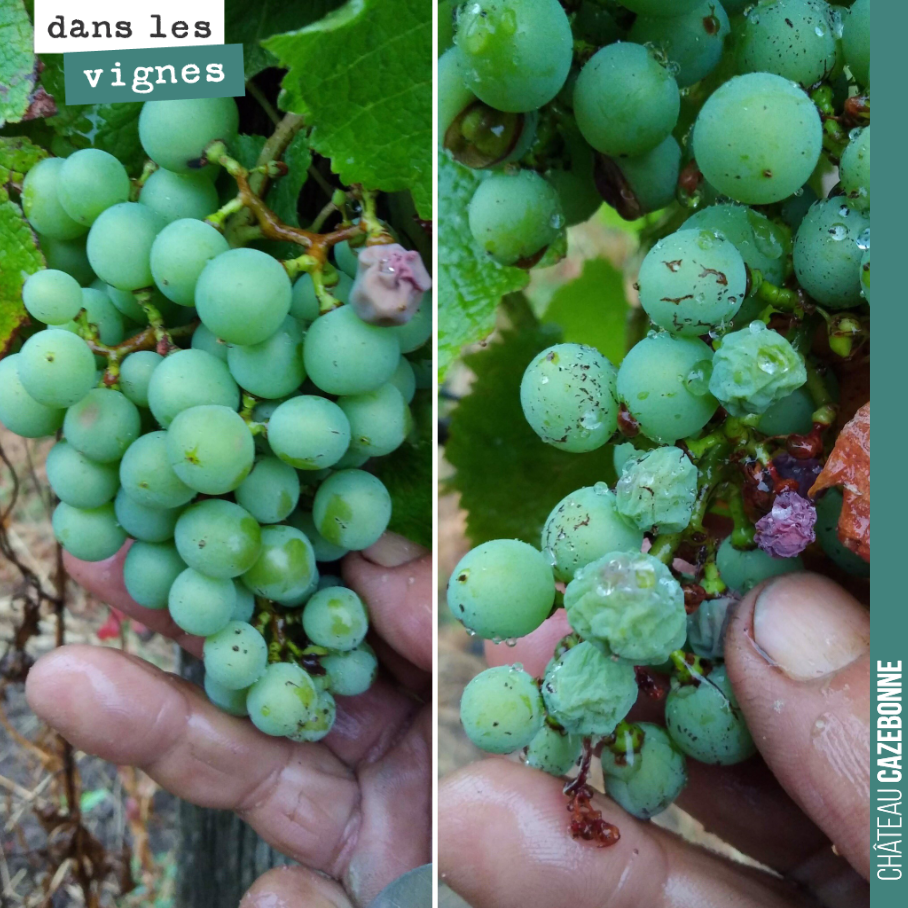
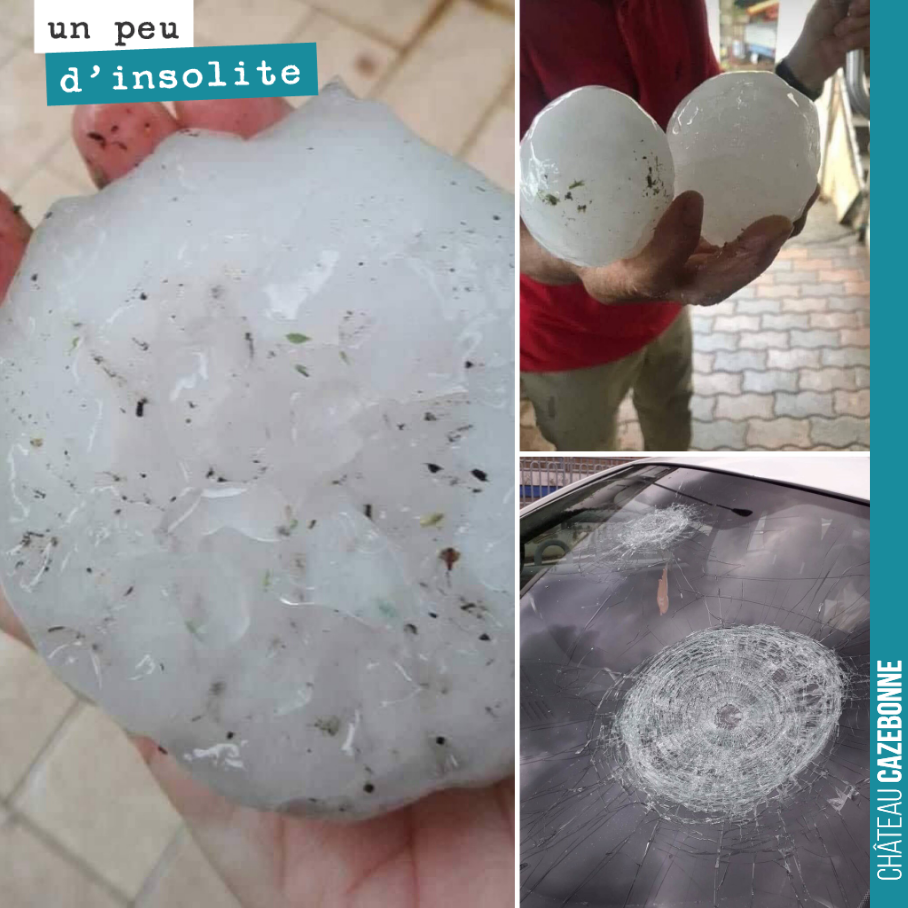
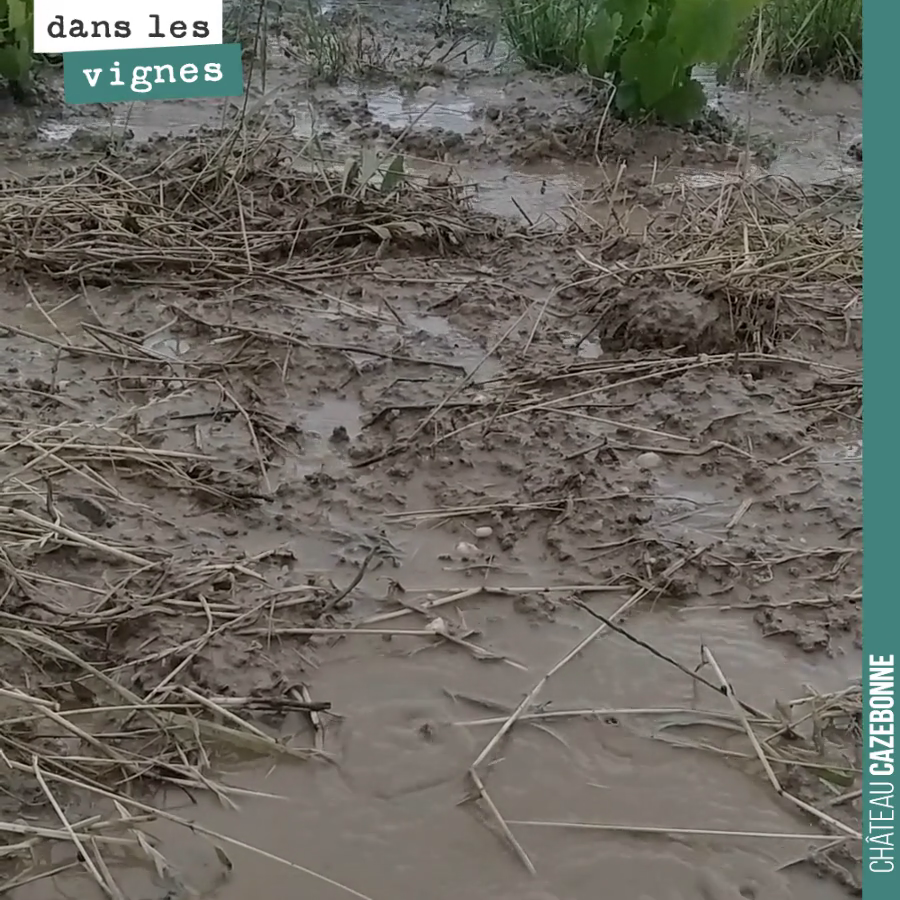
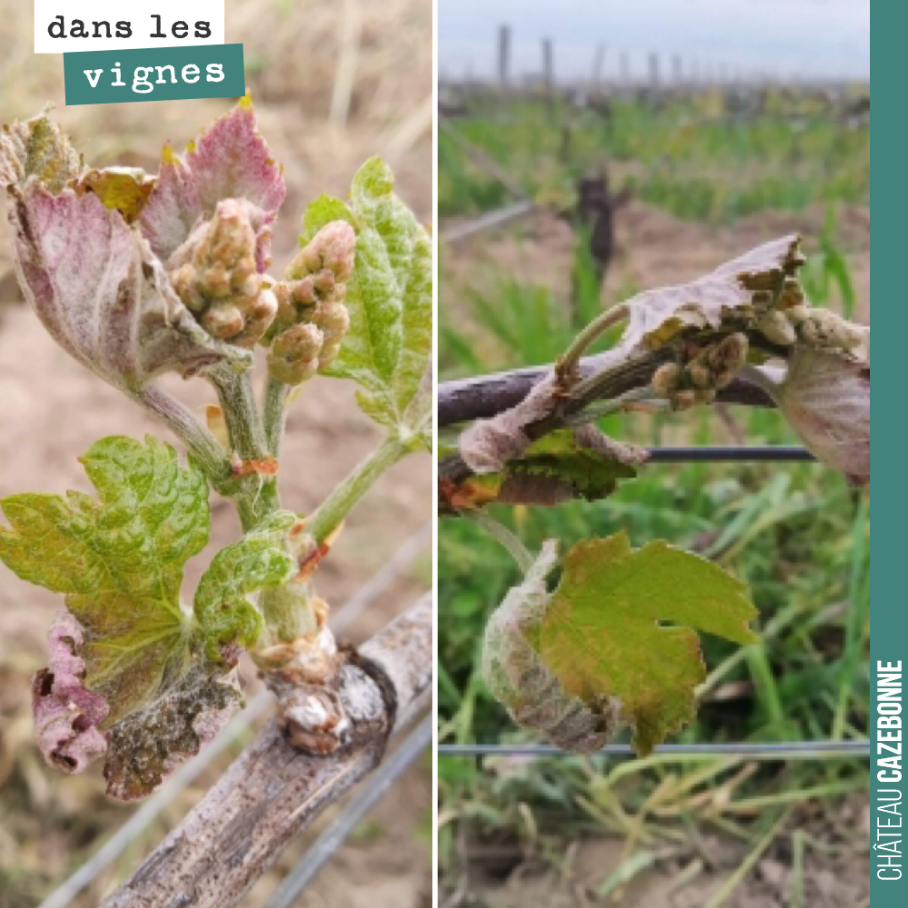
As the vine begins its annual cycle, from spring budburst to winter dormancy, each stage is a dance with the elements. A late frost can destroy young buds, summer hail can mark the berries, a heatwave can accelerate their ripening, while heavy rain in the vineyards can dilute aromas or encourage the development of diseases. It is up to us, the winegrowers, to read these signals, to understand the moods of the sky and to act accordingly, as closely as possible to the needs of the vine. These challenges, far from discouraging us, are the source of a perpetual quest for balance and excellence.
But this relationship with the weather is not solely made up of constraints. Great vintages are often the result of an almost perfect alignment of climatic conditions. A hot, dry summer, followed by a mild, sunny autumn, can lead to optimal grape ripening, producing wines of exceptional richness and complexity. As so aptly highlighted in the book "Bordeaux, une histoire de cépages" by Jean-Baptiste Duquesne, Bordeaux's winemaking history is punctuated by these moments when nature has offered its finest gifts.
Bordeaux's unique climate, with its temperate oceanic influence, has shaped over the centuries a diversity of grape varieties perfectly adapted to its conditions. However, as Jean-Baptiste Duquesne explains in his book, climatic variations can also put this adaptation to the test. Grape varieties such as Malbec, although resilient, can be sensitive to spring frosts, while Petit Verdot, which takes a long time to ripen, requires a mild autumn to express its full potential. Understanding these interactions is fundamental to crafting quality wines, requiring constant observation and an in-depth knowledge of every plot.
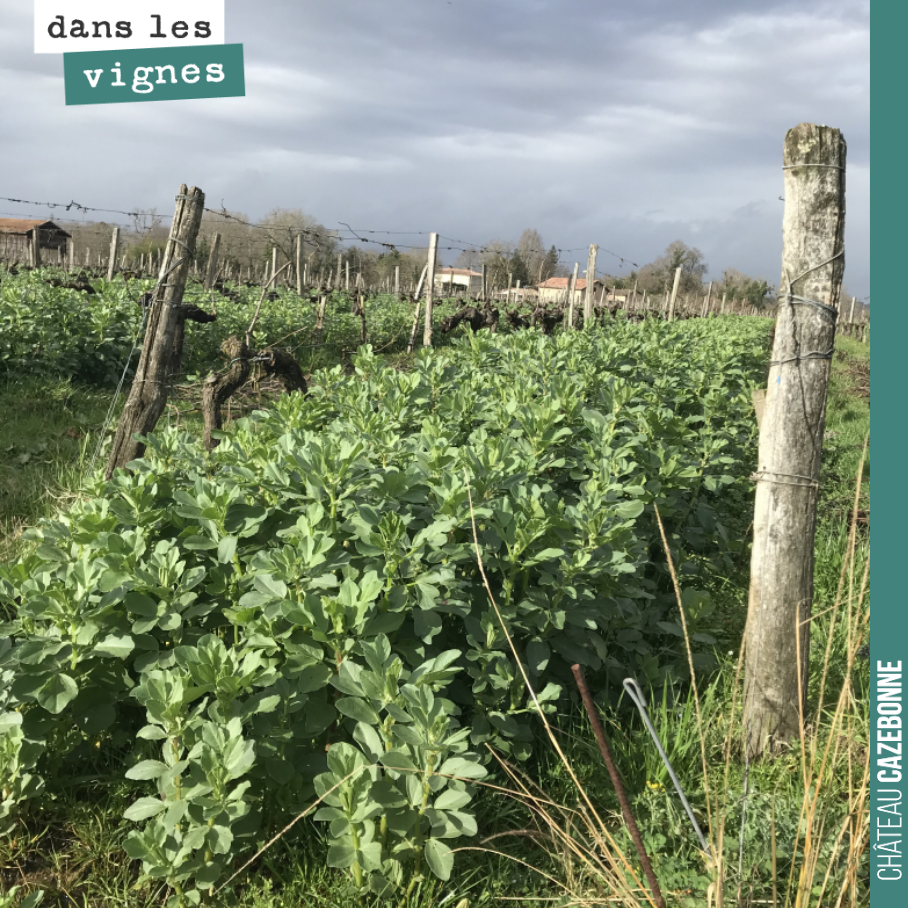
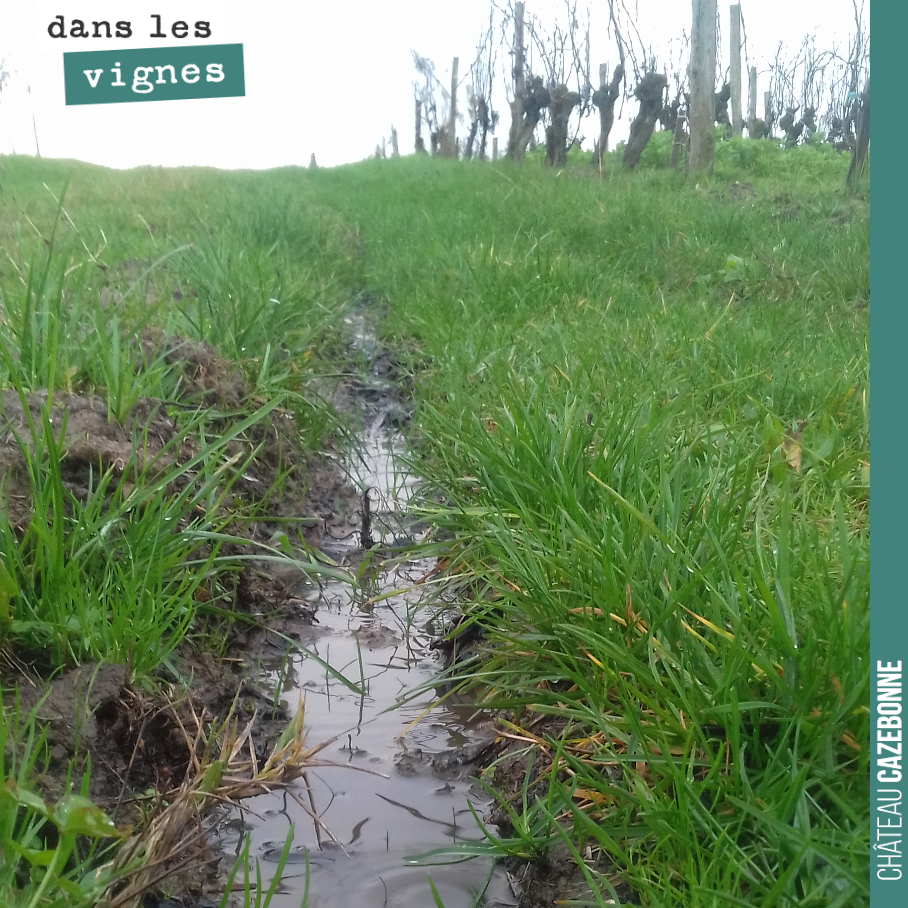
Faced with current climate upheavals, the art of the winegrower lies more than ever in their capacity to adapt. At Château Cazebonne, we explore innovative viticultural practices to preserve the health of our soils, promote biodiversity, and optimise natural irrigation. These concrete actions enable us to mitigate the effects of weather hazards and ensure the longevity of our vineyard, whilst respecting our surrounding environment.
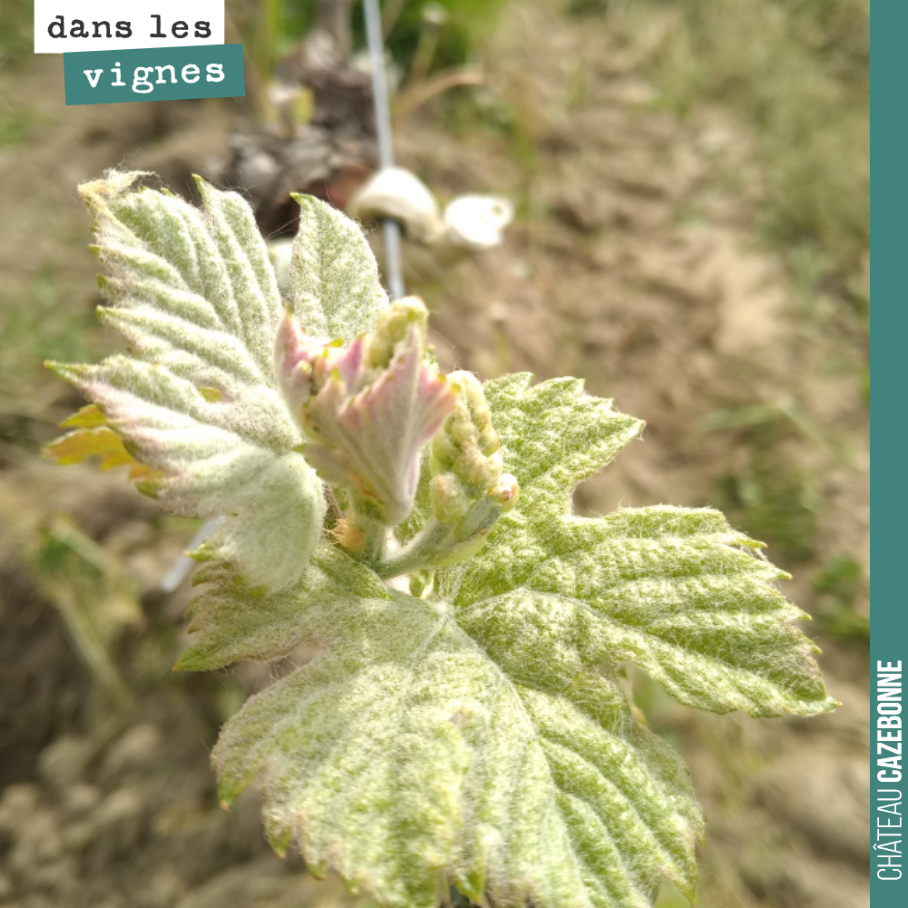
The weather dictates the rhythm of the seasons in the vineyards, influencing every stage of the vegetative cycle. In spring, budburst and flowering are crucial moments when late frost or excessive rain can have disastrous consequences. Summer is the period of veraison and ripening, when the sun is a precious ally, but heatwaves or hail can threaten the harvest. Autumn brings the harvest, a time when ideal weather conditions are sought for optimal ripening. Finally, winter is a period of rest for the vine, though severe cold can also leave its mark.
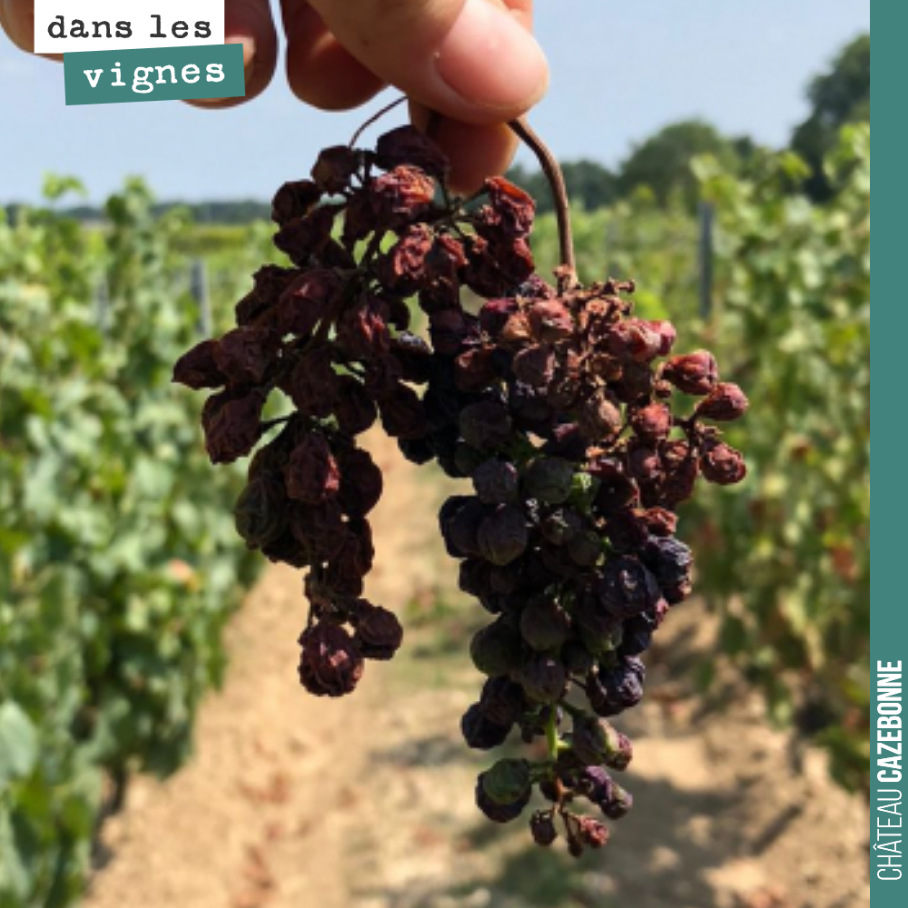
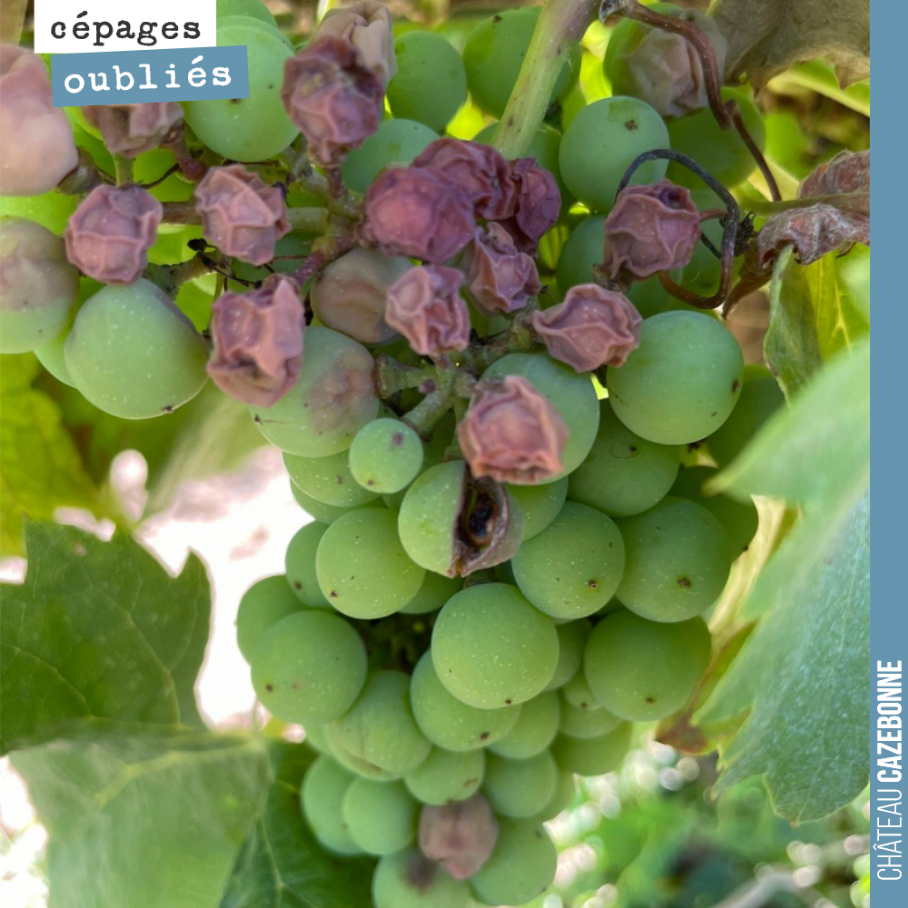
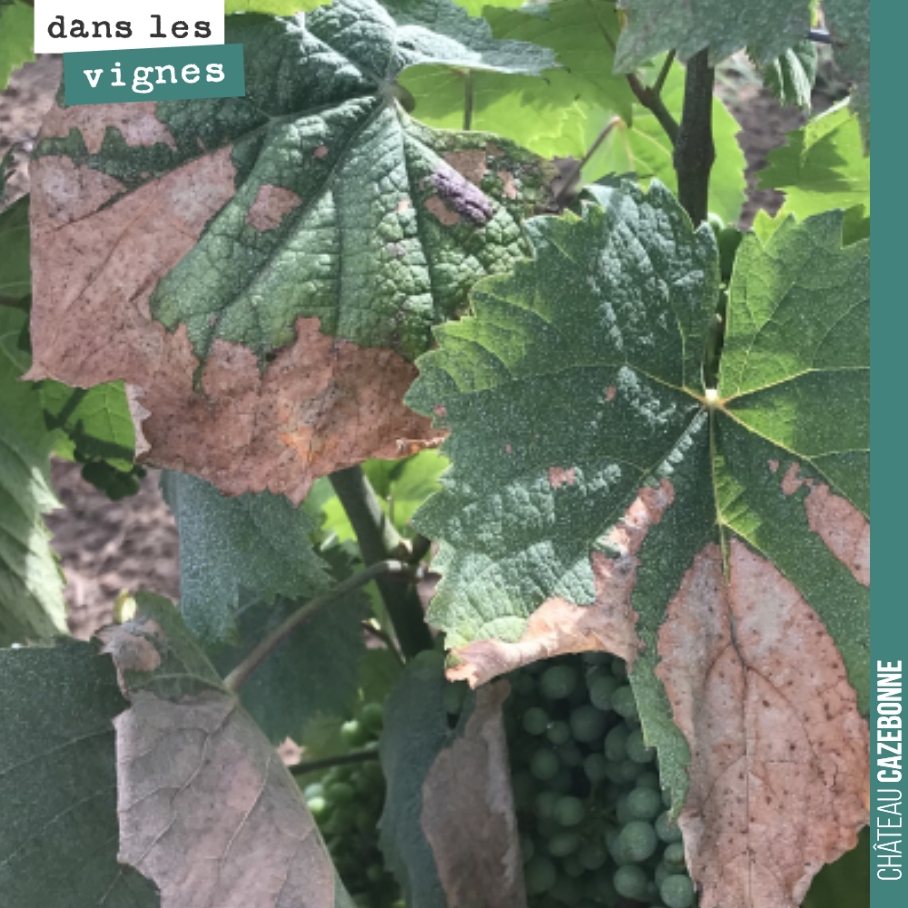
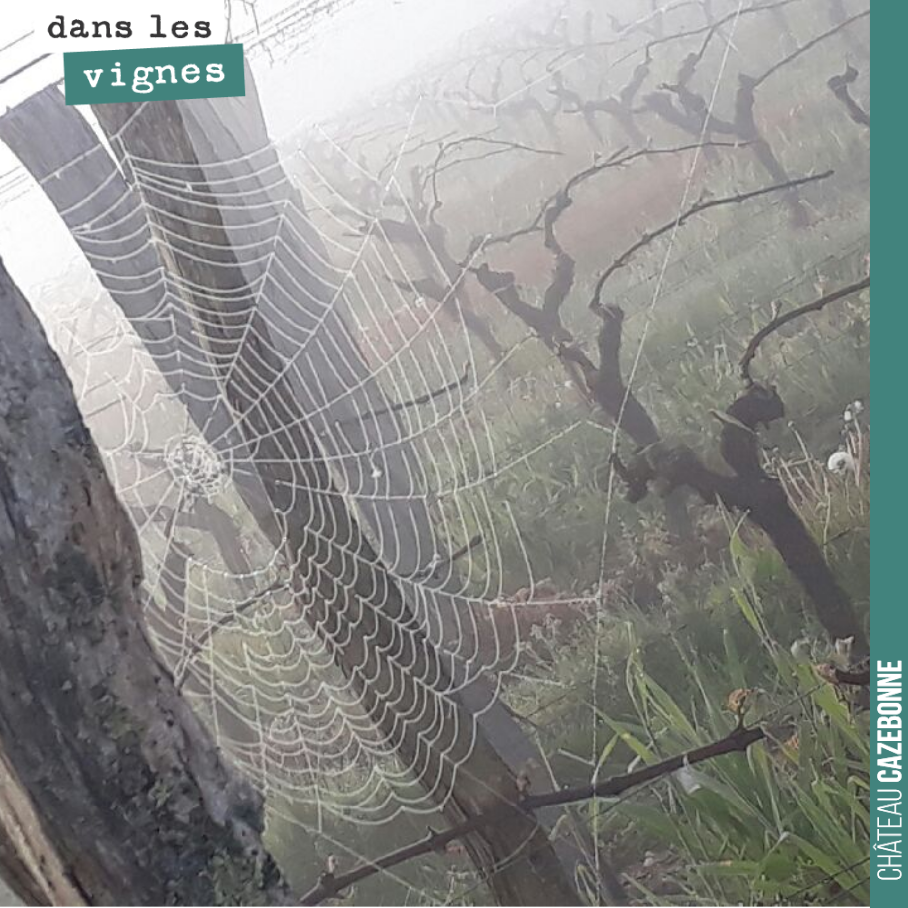
The vine is an attentive sentinel to weather changes, manifesting its state through a multitude of observable signs. Yellowing leaves can indicate water stress, whereas lush foliage may signal high humidity that encourages certain diseases. The appearance of the bunches and plants, the speed of veraison, or even the presence of persistent dew are all indicators that the winegrower observes and interprets to adapt their practices. Meticulous observation makes it possible to detect the challenges and opportunities presented by the weather, as described by Pierre Galet in his fundamental work on ampelography.
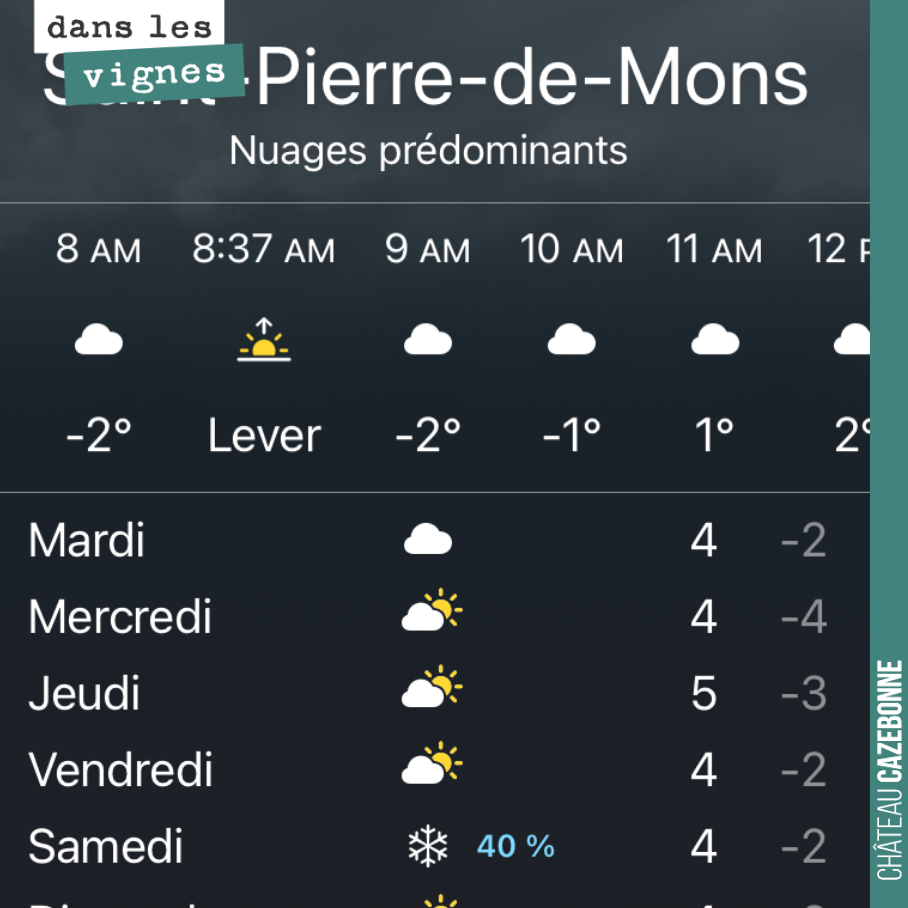
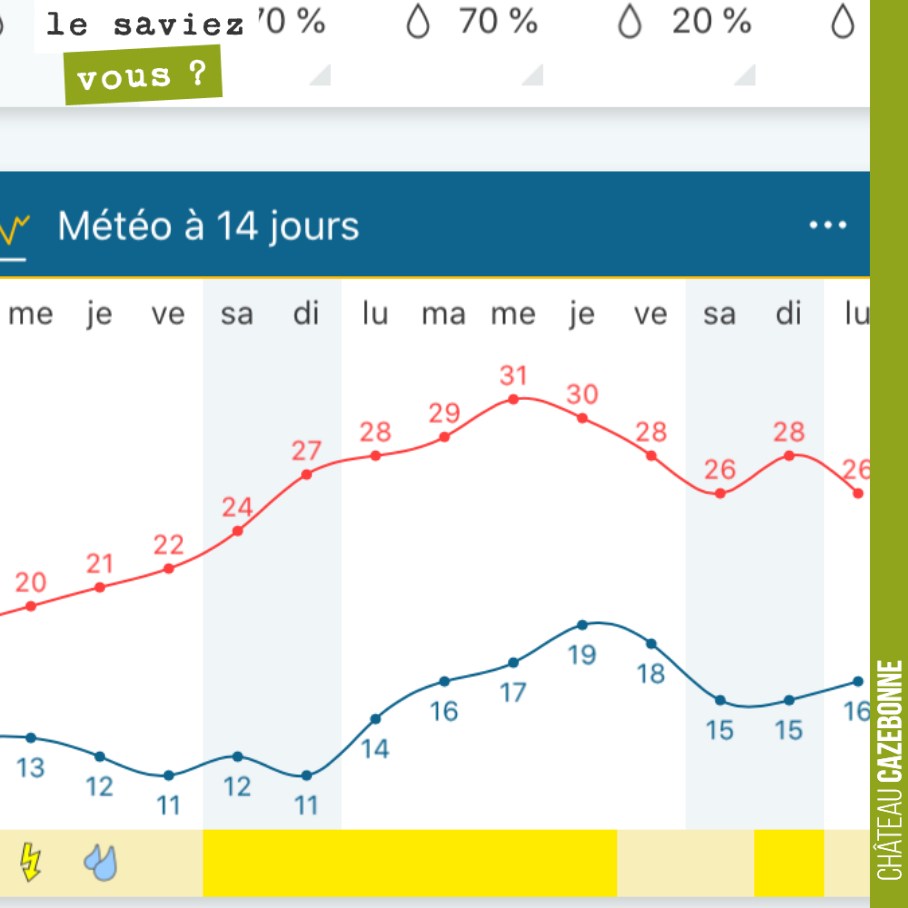
At Château Cazebonne, the weather is not merely endured; it is anticipated and integrated into every decision. We consult the forecasts daily to optimise our interventions, whether that be vine pruning, cover crop management, or the scheduling of natural treatments. This proactive approach, based on observing nature's signals and using precise data, helps us minimise the risks associated with climatic hazards and prioritise vine health and wine quality. It is also with this in mind that we chose to reintroduce forgotten grape varieties that could better withstand future climate variations.
At Château Cazebonne, our philosophy is rooted in this approach of humility towards the elements and respect for our terroir. It is by embracing this complexity that we have been able to undertake a unique project: the reintroduction to Bordeaux of forgotten grape varieties, those varieties that once created the richness and diversity of our vineyard, but which had disappeared over time. This pioneering work, this quest for a more resilient and diverse Bordeaux, is made possible by the unwavering support of the many enthusiasts who have embraced our wines and our approach. To deepen your knowledge of our region's winemaking history and the grape varieties that shape it, we invite you to receive the digital version of the book "Bordeaux, une histoire de cépages" published by Éditions BBD, written by Jean-Baptiste Duquesne, available by clicking here. Do not hesitate to test your knowledge with our oenological quizzes, and of course, discover and support our vintages by visiting the Cazebonne boutique.
Sources
Our suggestions
-5%on your 1st order with code BIENVENUE
The essential6 bottles — Graves red 2022
The best price of the cellar: €12 per bottle delivered.
The everyday red: generous and straight to the point.
I want it Our recommendation92/100 RVF
6 bottles — Graves red 2022, 92/100 RVF
Rated 92/100 by La Revue du vin de France: a solid 10-year ageing potential.
Our Graves for ageing, the finest gateway to the estate.
I want it Go further
12 bottles — the whole range
12 bottles, the whole range tasted: the best discovery-to-price ratio.
The complete tour of the estate, in a single case.
I want it
27 April 2023
05 April 2023
28 March 2023
18 January 2023
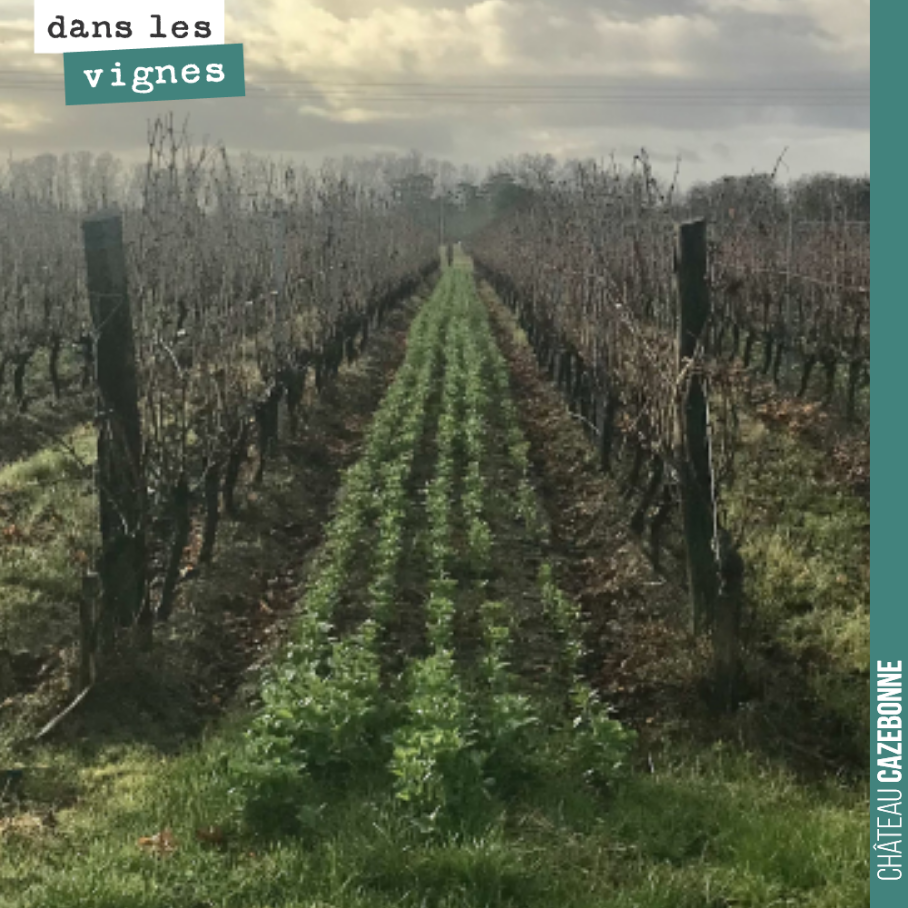
17 December 2022
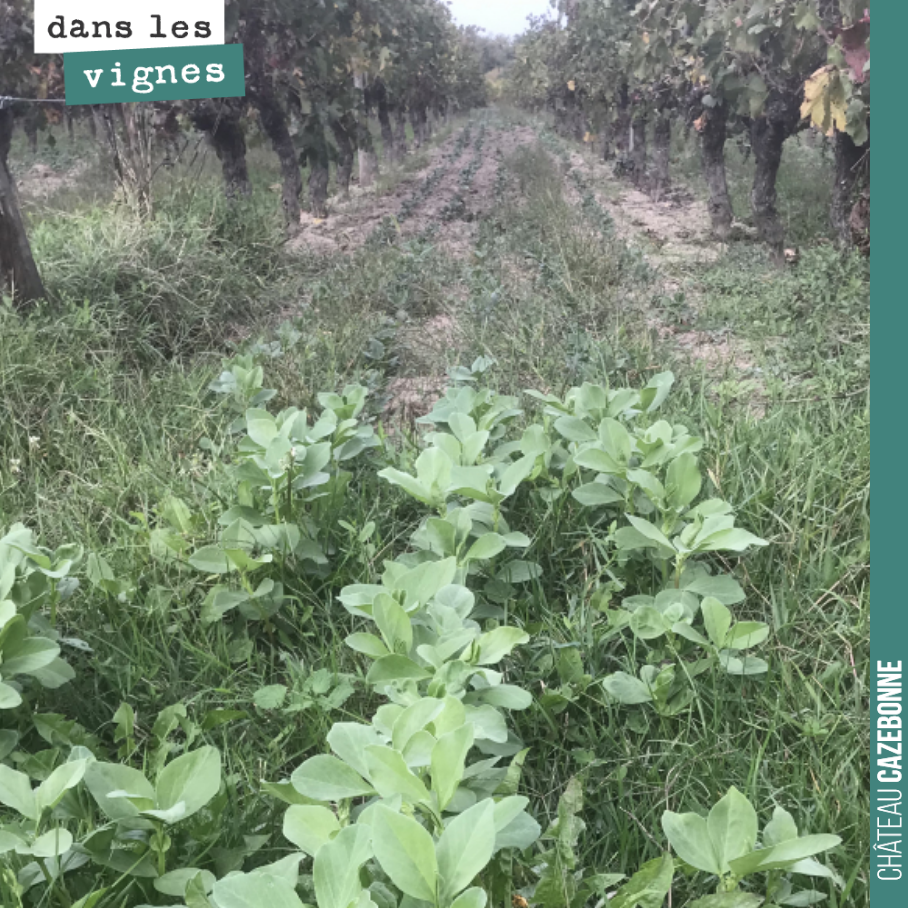
29 October 2022
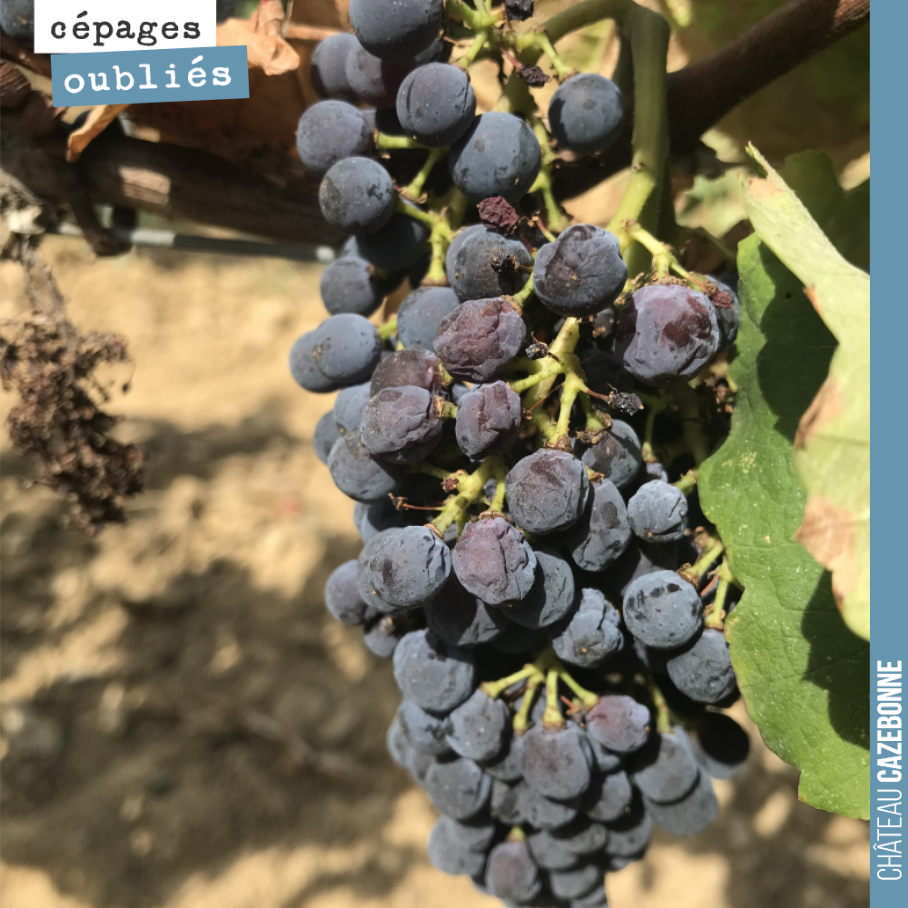
12 August 2022
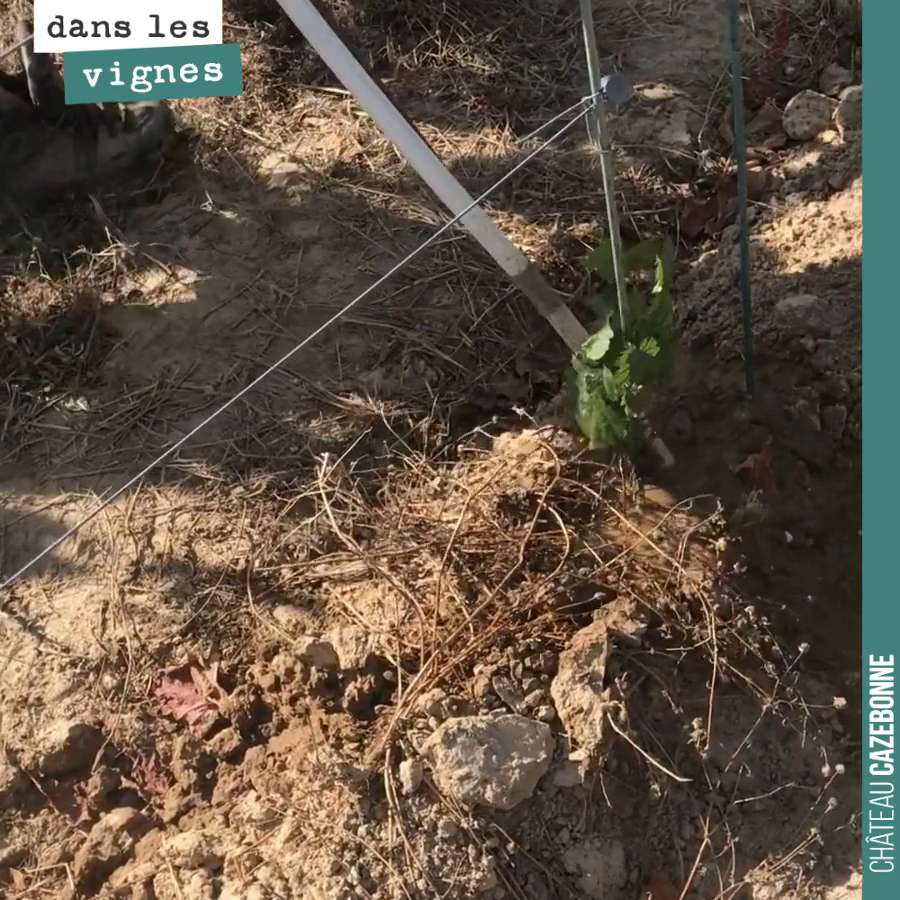
11 August 2022

03 August 2022
24 July 2022
16 July 2022
27 June 2022
25 June 2022
14 June 2022
12 May 2022
08 May 2022
21 April 2022
08 April 2022

04 April 2022

03 April 2022
29 March 2022
28 January 2022
26 January 2022
18 January 2022
12 January 2022
30 September 2021
08 July 2021
02 July 2021
25 June 2021
07 June 2021
16 May 2021
13 May 2021
07 May 2021
13 April 2021
12 April 2021
08 April 2021
07 April 2021
07 April 2021
06 April 2021
05 April 2021
25 February 2021
08 February 2021
13 January 2021
08 January 2021
05 January 2021
10 October 2020
28 September 2020
22 September 2020
13 August 2020
30 June 2020
17 June 2020
02 June 2020
29 April 2020
18 April 2020
08 March 2020
29 February 2020
25 December 2019
15 December 2019
11 December 2019
03 December 2019
24 November 2019
05 November 2019
15 October 2019
23 September 2019
28 August 2019
13 August 2019
01 August 2019
29 July 2019
27 July 2019
13 July 2019
14 June 2019
08 June 2019

04 May 2019
30 April 2019
18 April 2019
15 April 2019
12 April 2019
07 April 2019
05 February 2019
04 February 2019
02 February 2019
01 February 2019
26 December 2018
09 August 2018
12 July 2018
The cellar, forgotten grape varieties and our cuvées, twice a month. 5% off your first order with the code BIENVENUE.