← All topics

The 2026 Vintage in Bordeaux : Challenges and Lessons

The 2026 Vintage: Full Speed Ahead

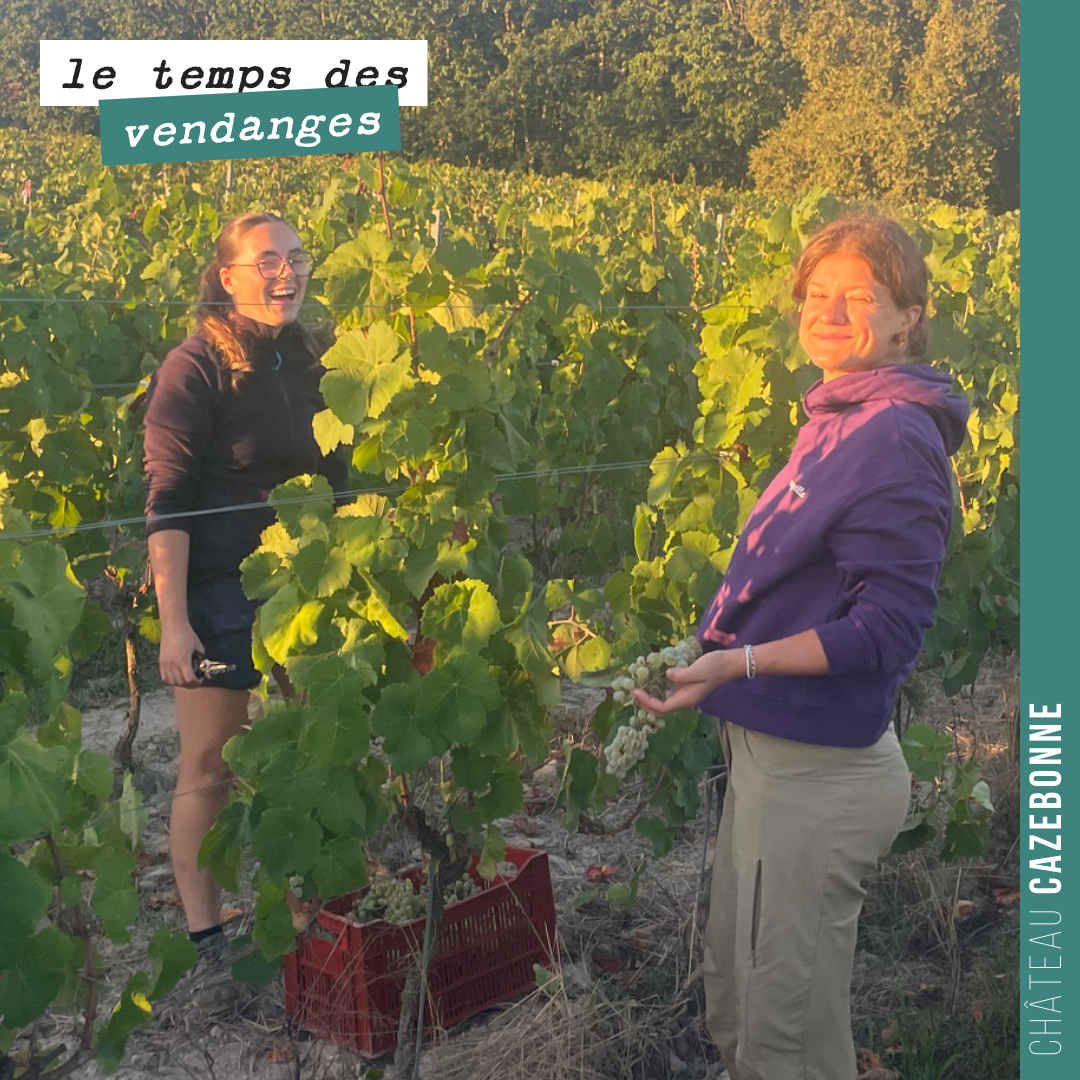
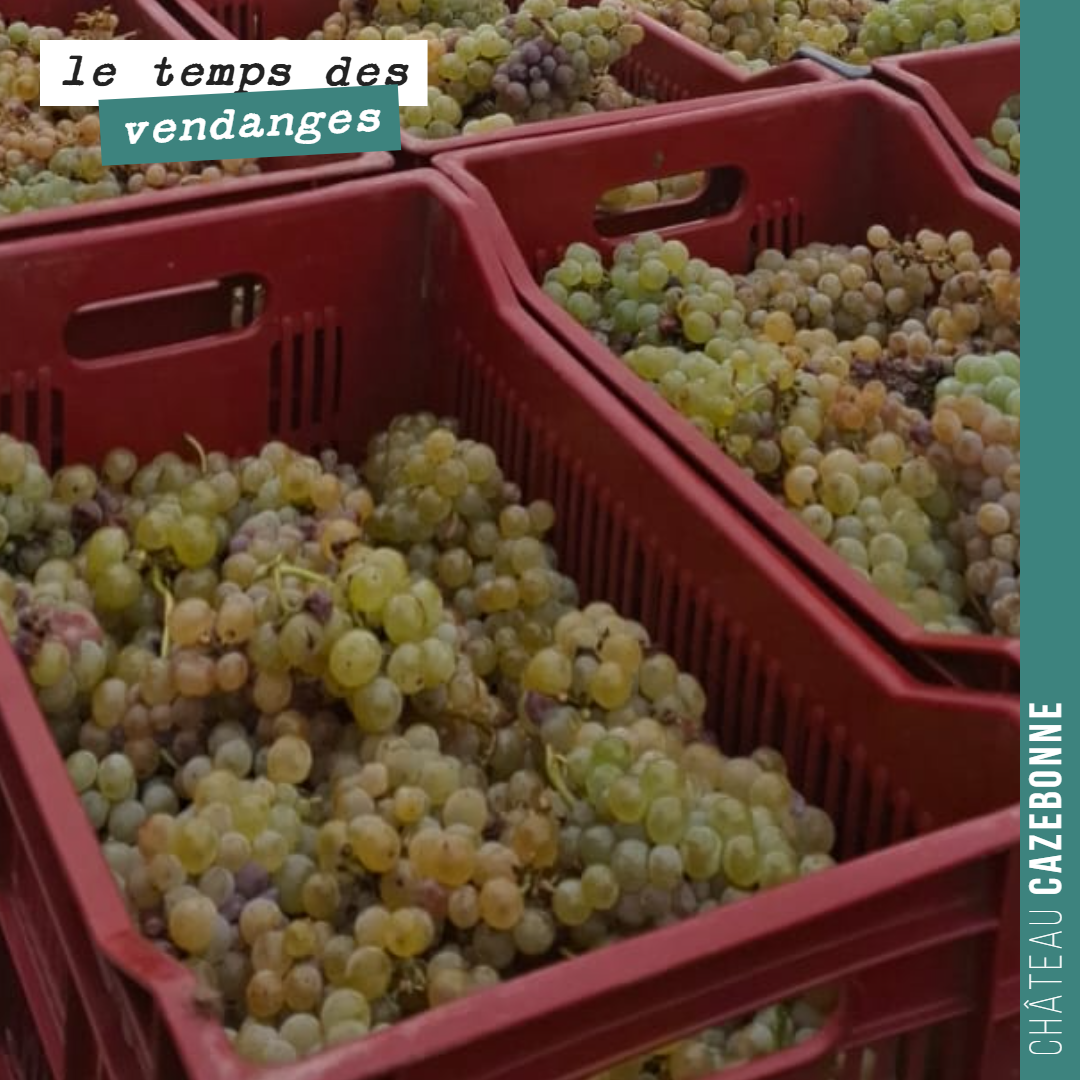
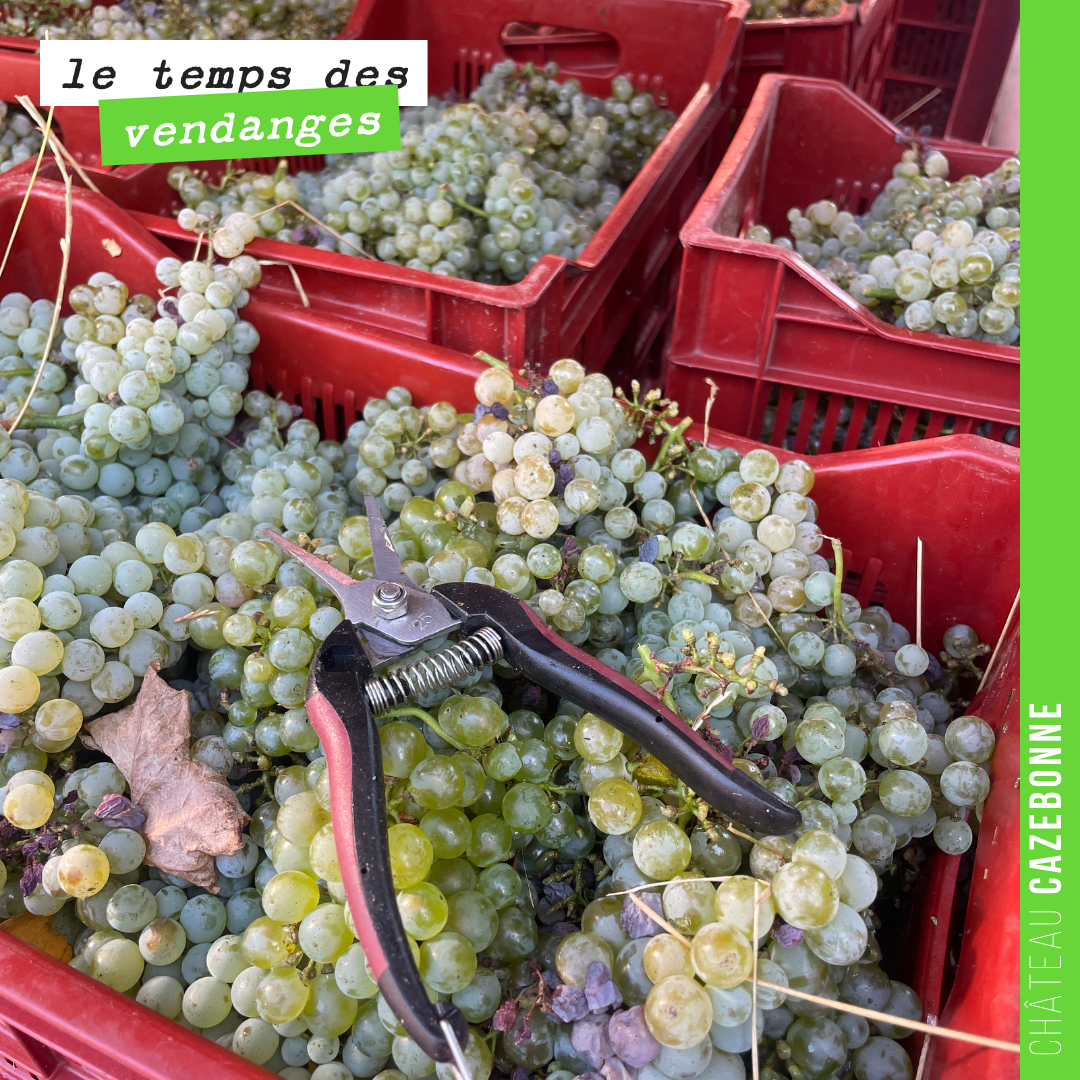
The 2026 vintage in Bordeaux was characterised by a particularly rapid climatic and vegetative chronology. After a mild and humid winter that encouraged a good awakening of the vines, spring marked an early start to the cycle. Successive heatwaves in spring and summer accelerated berry ripening, leading to exceptionally early harvests at Château Cazebonne. Indeed, we began harvesting the whites on 18 August, against a previous record of 25 August in 2022.
Analyses revealed a rapid increase in sugar levels, often accompanied by an equally rapid decrease in acidity. We had to act earlier than usual.

The Quest for Ripeness : Beyond Potential Alcohol

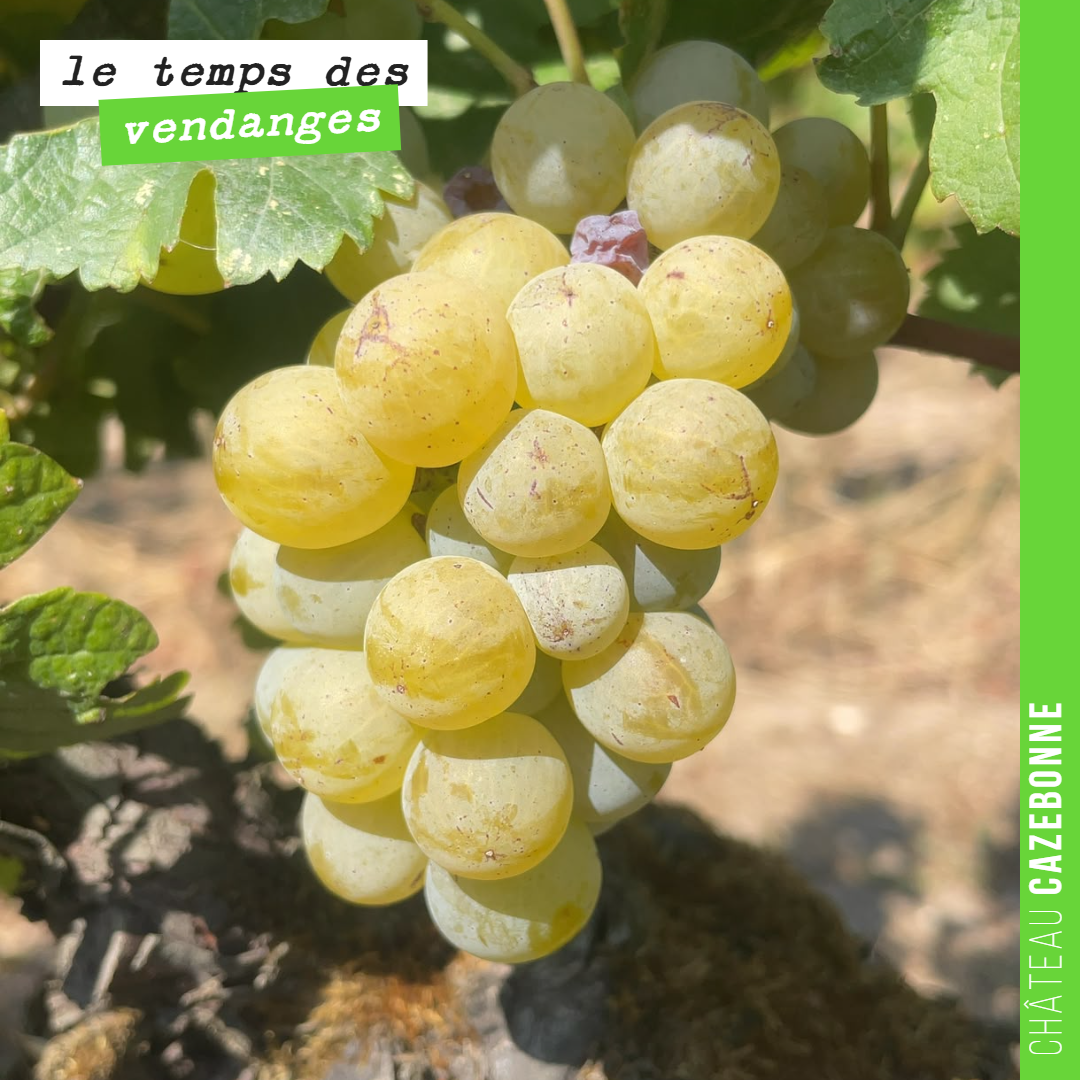
Given this early ripening, a crucial question arose for 2026 : how not to confuse a good sugar concentration with full phenolic ripeness ? This vintage demonstrated that it was sometimes necessary to accept high potential alcohol levels, particularly for Merlots, in order to harvest truly ripe grapes. The decision-making criteria, beyond simple Brix degrees, included berry tasting, skin texture, seed ripeness, evaluation of tannin quality, and the disappearance of green characters. Harvesting too early would certainly have preserved more acidity, but at the risk of producing wines without aromatic complexity.

Embracing the Singular Expression of the 2026 Vintage

The choice was clear : prioritise physiological and phenolic ripeness. This means accepting that some Merlots might exceed 14 potential degrees, rather than aiming for a 12.5 or 13-degree profile this year. The 2026 vintage does not "condemn" the Merlot grape variety, but its ability to rapidly accumulate sugars in contexts of high heat and early ripening raises questions about its future adaptation and the evolution of the typicality of Bordeaux wines.

The Bordeaux Challenge : Balancing Ripeness and Freshness

The 2026 vintage highlights the evolving viticultural challenge in Bordeaux. Previously, achieving full ripeness was a victory in itself. Today, with climate change, the question is how to achieve it without accumulating too much sugar and without losing excessive acidity. This new paradigm directly impacts harvest date choices and vineyard management strategies, guiding reflections towards the balance of future vintages, similar to the 2025 vintage in Bordeaux.

2026, a Vintage Revealing Terroir Diversity

The year 2026 accentuated the heterogeneity of results depending on plots and terroirs. Soil depth, its water retention capacity, the rootstock used, the age of the vines, and localised rainfall had a considerable impact. Highly draining gravel ridges, once guarantors of quality, sometimes suffered from early water stress, while deeper or clayey soils, with better water reserves, better supported the vines during hot and dry periods. This vintage raises the question of whether the great terroirs of yesterday will necessarily be those of tomorrow, and highlights the need for reflection on the choice of new grape varieties and rootstocks.

Ancient Grape Varieties : A Path for Tomorrow's Bordeaux ?

The experience of the 2026 vintage reinforces Cazebonne's work on replanting ancient Bordeaux grape varieties. This approach, initially heritage-focused, is also becoming a valuable climatic experimentation. We harvested magnificent Jurançon noir and Bouchalès, below 13 degrees. Mancin and Saint-Macaire exceeded 14 degrees but retained interesting total acidity levels. The tasting of the vats we carried out at the end of fermentations clearly reveals very interesting profiles for Jurançon noir and Castets-Bouchalès (blended during harvest).
This will, of course, need confirmation after ageing. The Merlots are rich, powerful, and will offer us a magnificent ageing profile. The Cabernet-Franc and Malbec are seductive. As I write these lines, fermentations are not yet finished for Cabernet-Sauvignon, Mancin, and Saint-Macaire, and thus have not been tasted.
Regarding the whites, Blanc Vert and Blanc Auba have not yet been harvested. We will certainly wait to try and produce a sweet wine this year. The Sauvignonasse were magnificent with exceptional aromatics. The Prueras was generous and offered low alcohol levels (around 11°).
The Gironde Chamber of Agriculture came this year to harvest 80 kilos of Blanc Auba to carry out a micro-vinification and work towards registering the grape variety in the official catalogue. Eager to taste!

A Vinification Respectful of the Vintage's Richness

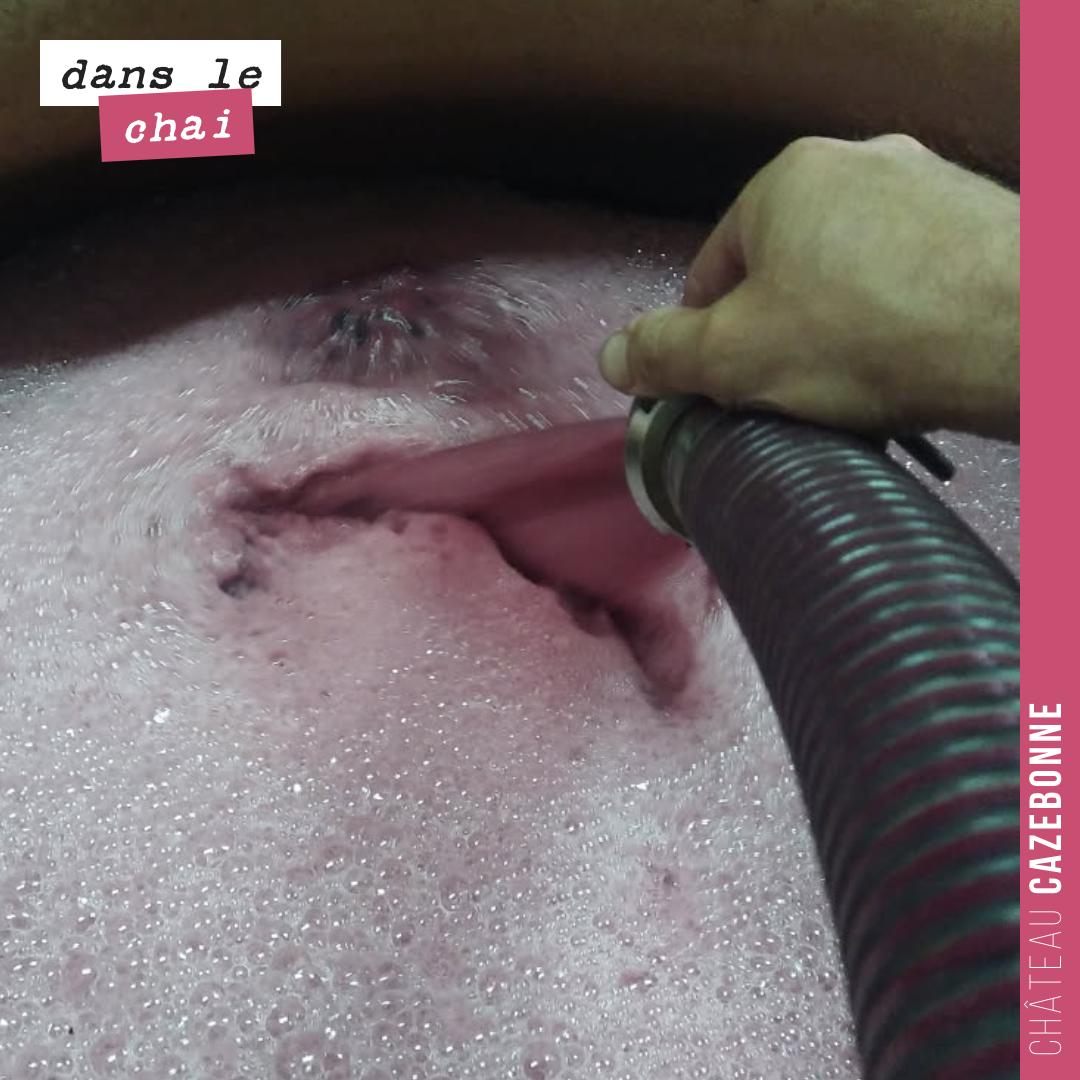
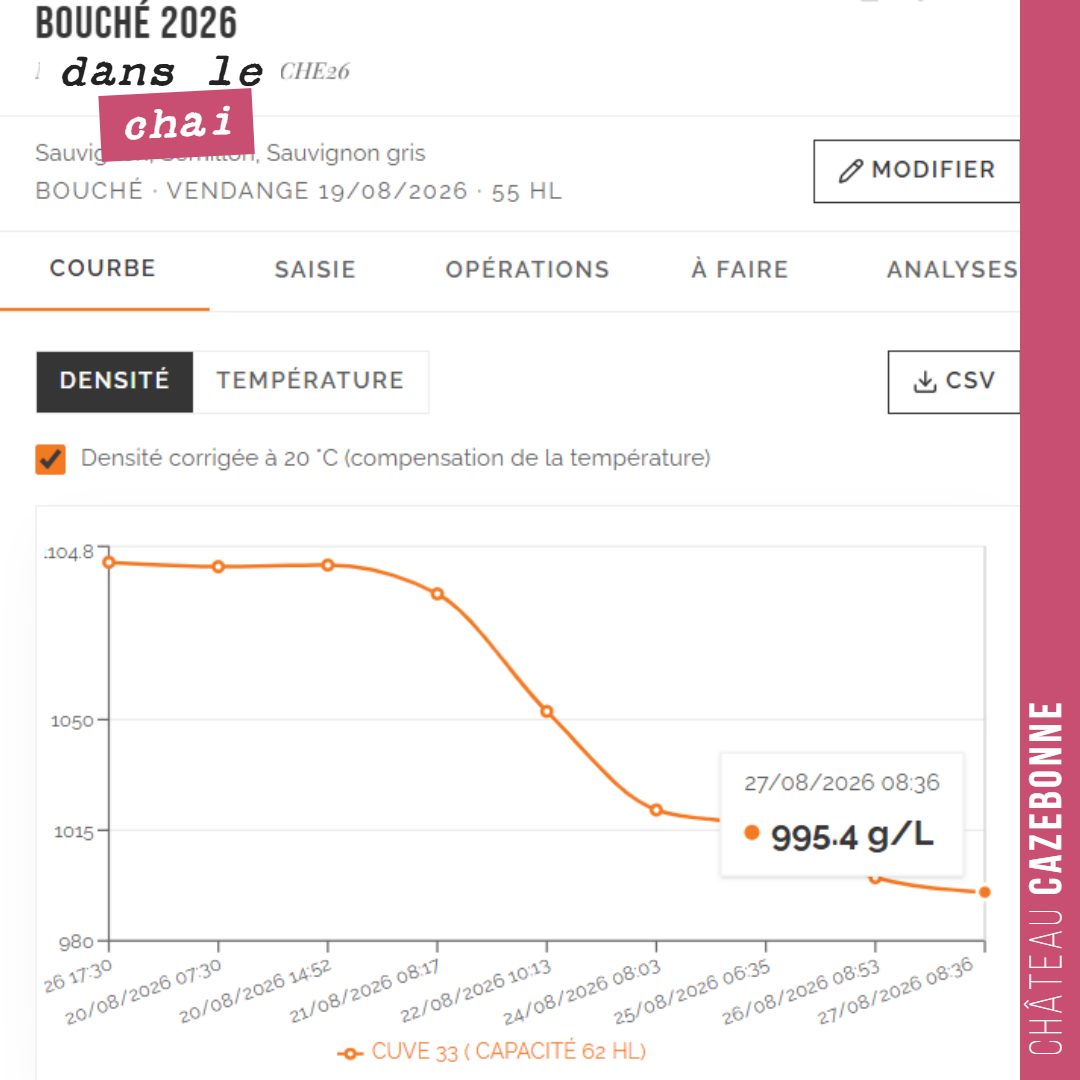
For the rich and ripe reds of 2026, the vinification choice was guided by the pursuit of finesse rather than power. This resulted in limited pump-overs, concentrated at the beginning of fermentation, low temperatures (maximum 25° for reds and 20° for whites), and daily tasting of the vats. The decision to run off the wine was dictated by the delicacy of the tannins, the objective being not to extract beyond what was necessary. For the whites, the quest for freshness and aromatic expression was prioritised, with low-temperature fermentations and ageing on fine lees. The vintage is solar, but we managed to harvest at reasonable alcohol levels (less than 13 degrees for most lots).

Blending Vintages : A Path for the Future of Bordeaux Wine ?

2026 Vintage: exceptional vintage, full ripeness, high alcohol, low acidity
2025 Vintage: balanced, solar vintage
2024 Vintage: fresh vintage, under-ripe

What if we blended? A paradigm shift for Bordeaux, which is very attached to the notion of vintage. In any case, this vintage very clearly raises this question. We will have to provide an answer to this standard deviation in vintage profiles.

Legislation already allows us to blend vintages. I can thus put 15% of other vintages into my 2026. And reciprocally, my 2024 in tank can receive 15% of the 2026 vintage.
The vintage displayed on the label is the one that accounts for 85% of the bottle's contents.

Will we need to go further? Perhaps, that's the logic adopted by Champagne with its non-vintage Brut.

2026 : A Vintage That Also Calls for a Rethink of Viticultural Practices

2026 also challenges our vineyard practices.
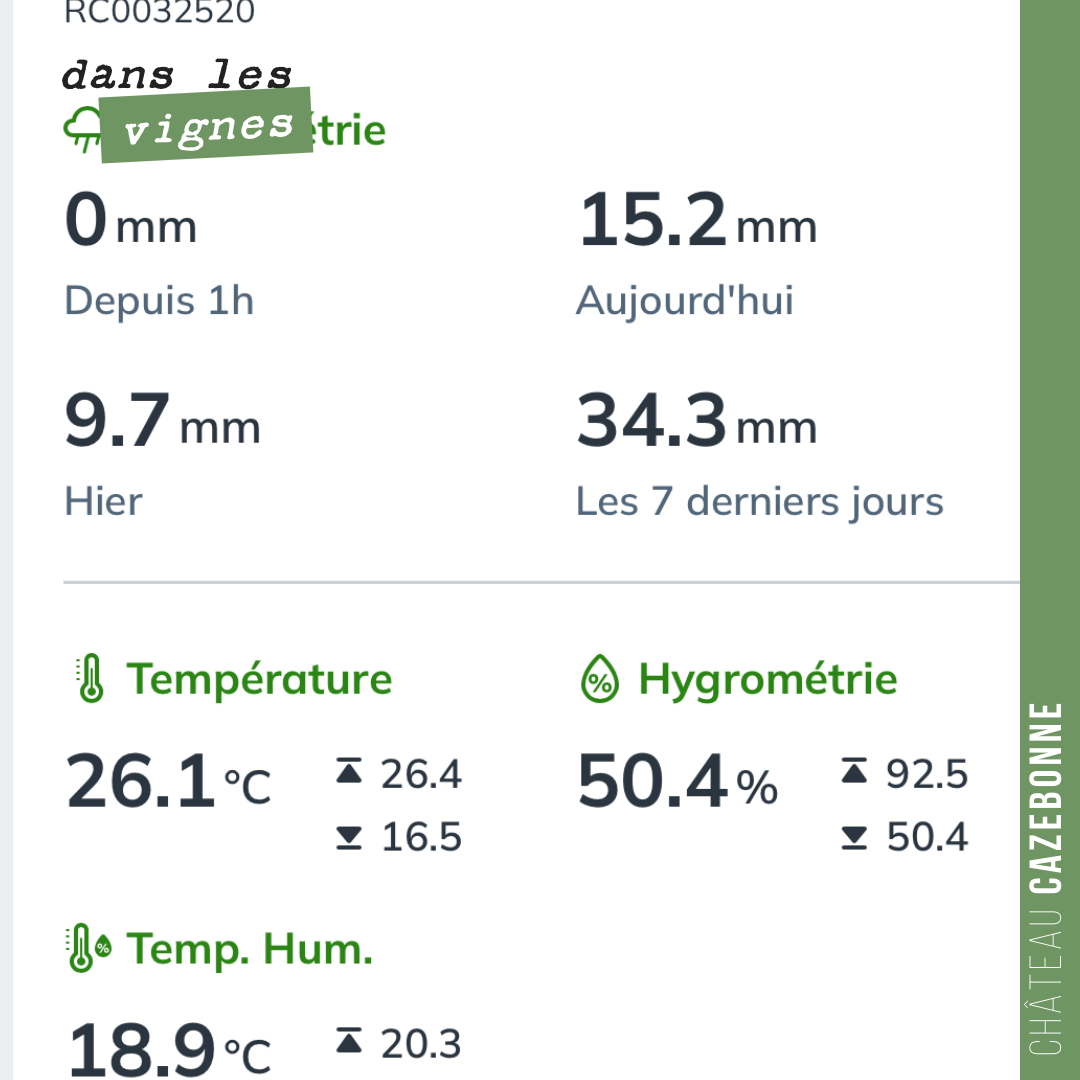
At Cazebonne, we achieved very good yields (50hl/ha for whites, 40hl/ha for reds). This is unprecedented on the estate for 10 years. We certainly benefited from our work on reconstituting the organic matter in our soils over the past decade. But not only that, we had rain at the right time: 20mm at the end of June, 20mm at the end of July, 35mm at the end of August.
These rains were a blessing and allowed the berries to swell and ripen perfectly.
This, therefore, raises the question of irrigation. Will we need to be able to provide the missing 20mm tomorrow to avoid compromising a vintage? Ultimately, this is a small input, but it raises the question of the priority use of water in the coming years.


Sources

  • Bordeaux, une histoire de cépages — Jean-Baptiste Duquesne, Éditions BBD

Related news

26 August 2026 · wein-sammeln.de

CIVB confirme : les vendanges 2026 à Bordeaux ...

Le Conseil Interprofessionnel du Vin de Bordeaux (CIVB) a officiellement confirmé la précocité exceptionnelle des vendanges 2026, qualifiée de "jamais vue" par son président, Bernard Farges. Cette déclaration, provenant directement du président du CIVB et du CNIV (interprofession nationale du vin), revêt un poids considérable pour le secteur. Bernard Farges a souligné que le début de la récolte, amorcé dès le 6 août pour les raisins de Crémant, s'est produit près de 15 jours avant celui de l'année précédente (2025), déjà considérée comme précoce. Il a également mis en évidence une tendance de long terme depuis les années 1990, où les parcelles autrefois vendangées fin septembre le sont désormais fin août, marquant un décalage d'environ un mois. Bien que le millésime 2026 ne batte pas formellement le record historique de 1893 (où les vendanges avaient commencé le 15 août), il figure parmi les plus précoces de l'histoire connue et est sans précédent pour la carrière de Bernard Farges. Pour les collectionneurs et investisseurs, cette précocité officielle est un signal fort, indiquant généralement un volume de récolte plus compact et potentiellement plus faible, ce qui pourrait soutenir les prix des millésimes plus anciens. L'évaluation complète du millésime 2026, y compris des facteurs comme le "Smoke Taint", aura lieu lors de la campagne En Primeur 2027. L'article mentionne des châteaux dans une section "vins des millésimes 1960 - 1969" qui présente des produits à vendre (Château Calon-Ségur, Château Clerc Milon, Château Cos d'Estournel, Château d'Arche, Château de Camensac, Château du Tertre), mais ceux-ci ne sont pas concernés par l'actualité des vendanges 2026.

Read the source

06 August 2026 · insidertasting.com

Forests, Fires and the Future - Insider Tasting

L'article, daté du 6 août 2026, explore l'importance de la forêt des Landes pour le vignoble bordelais, en particulier après les incendies dévastateurs récents. Il souligne que la forêt des Landes, la plus grande forêt plantée d'Europe, protège les vignobles de la rive gauche des intempéries océaniques et contribue à un microclimat plus frais, essentiel dans le contexte du changement climatique. Après les tempêtes de 1999 et 2009, les vignerons du Médoc avaient déjà noté l'impact de la destruction de grandes étendues de forêt sur les vents. Les feux récents, qui ont détruit environ 42 000 hectares d'arbres, ont mis en lumière la symbiose entre la forêt et la vigne. Fort heureusement, les vignobles, y compris ceux du Médoc, des Graves, du Sauternes (avec une mention de Château d'Yquem), n'ont pas été affectés par les flammes, ni par la "flaveur de fumée" tant redoutée par les journalistes. L'article aborde l'histoire de la forêt, plantée par Napoléon III pour stabiliser la côte atlantique, et son rôle économique majeur, au-delà du bois, dans des secteurs comme la résine (avec des initiatives comme BioGemme à Biscarrosse et Océopin pour les cosmétiques). L'auteur questionne la monoculture de pins maritimes inflammable et appelle à une réflexion sur la gestion forestière, citant l'exemple du Portugal et proposant que les efforts d'adaptation des vignobles bordelais face au changement climatique, tels que l'agroforesterie, la diversification des cépages et les certifications écologiques (75% des vignobles bordelais), puissent servir de modèle. Enfin, l'article insiste sur le fait que Bordeaux est ouvert au tourisme, malgré les annulations d'événements, et que des châteaux comme Château Bauduc sont mentionnés pour leurs informations précises sur les feux, encourageant les visites et l'achat de vin pour soutenir la région.

Read the source

06 August 2026 · sudouest.fr

Vin de Bordeaux : avec la sécheresse historique en Gironde, « la vigne s’est bloquée, elle fonctionne au ralenti »

Le vignoble bordelais est confronté à une sécheresse historique en Gironde, qui a entraîné un "blocage" de la vigne, fonctionnant désormais au ralenti. Le mois de juillet 2026 a été le plus chaud jamais enregistré en France depuis 1900, faisant de 2026 une année de référence en matière de grande sécheresse, selon Nicolas Ilbert de l'Agence de l'eau Adour-Garonne. Les raisins sont en retard de croissance et peinent à mûrir, ce qui laisse présager de très faibles rendements pour le millésime 2026, potentiellement inférieurs à la récolte déjà très basse de 2025. Le début de saison avait pourtant été prometteur, avec une bonne floraison et l'absence de gelées, comme le décrit Philibert Perrin, président du Syndicat viticole de Pessac-Léognan. Cependant, la véraison, processus essentiel de maturation du raisin, a été perturbée en juillet par le manque de pluie, rendant les baies petites et hétérogènes. La vigne, en mode auto-protection, limite l'envoi d'eau vers les raisins, risquant un taux d'alcool trop élevé. Julien Grill, vigneron du domaine Mas Cristine à Argelès (Pyrénées-Orientales), témoigne également de conditions catastrophiques avec un rendement attendu de seulement 20 hl/ha. Au Château Bardins, à Villenave-d’Ornon, Stella Puel a dû retirer les grappes de jeunes vignes pour les protéger. Les dates de vendanges sont incertaines, bien que pour le crémant de Bordeaux, elles aient déjà débuté. Malgré l'absence de mildiou due au temps sec, l'inquiétude domine, d'autant que même l'année de sécheresse 1976 avait connu des précipitations estivales en Gironde, ce qui n'est pas le cas en 2026. Ce millésime marque un "point de bascule" face au dérèglement climatique, selon Philibert Perrin.

Read the source

Our suggestions

Treat yourself

-5%on your 1st order with code BIENVENUE

6 × Le Grand Vin redThe essential92/100 RVF

6 × Le Grand Vin red

6 bottles — Graves red 2022, 92/100 RVF

Rated 92/100 by La Revue du vin de France: a solid 10-year ageing potential.

Our Graves for ageing, the finest gateway to the estate.

I want it
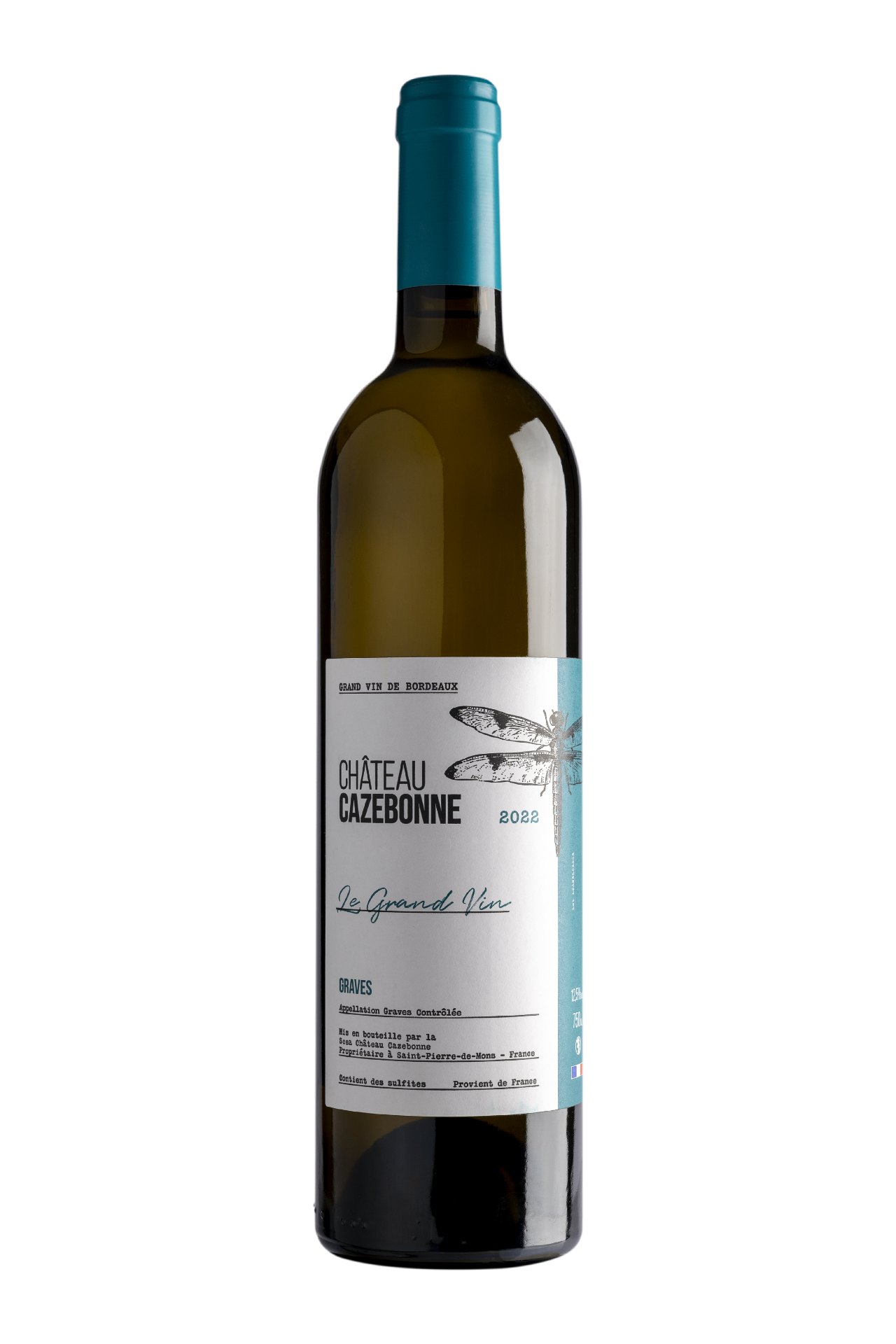
Le Grand Vin white 2022Our recommendation92/100 RVF

Le Grand Vin white 2022

Graves white 2022, 92/100 RVF

Rated 92/100 by La Revue du vin de France: old-vine Sémillon.

The great Graves white: taut and deep.

I want it
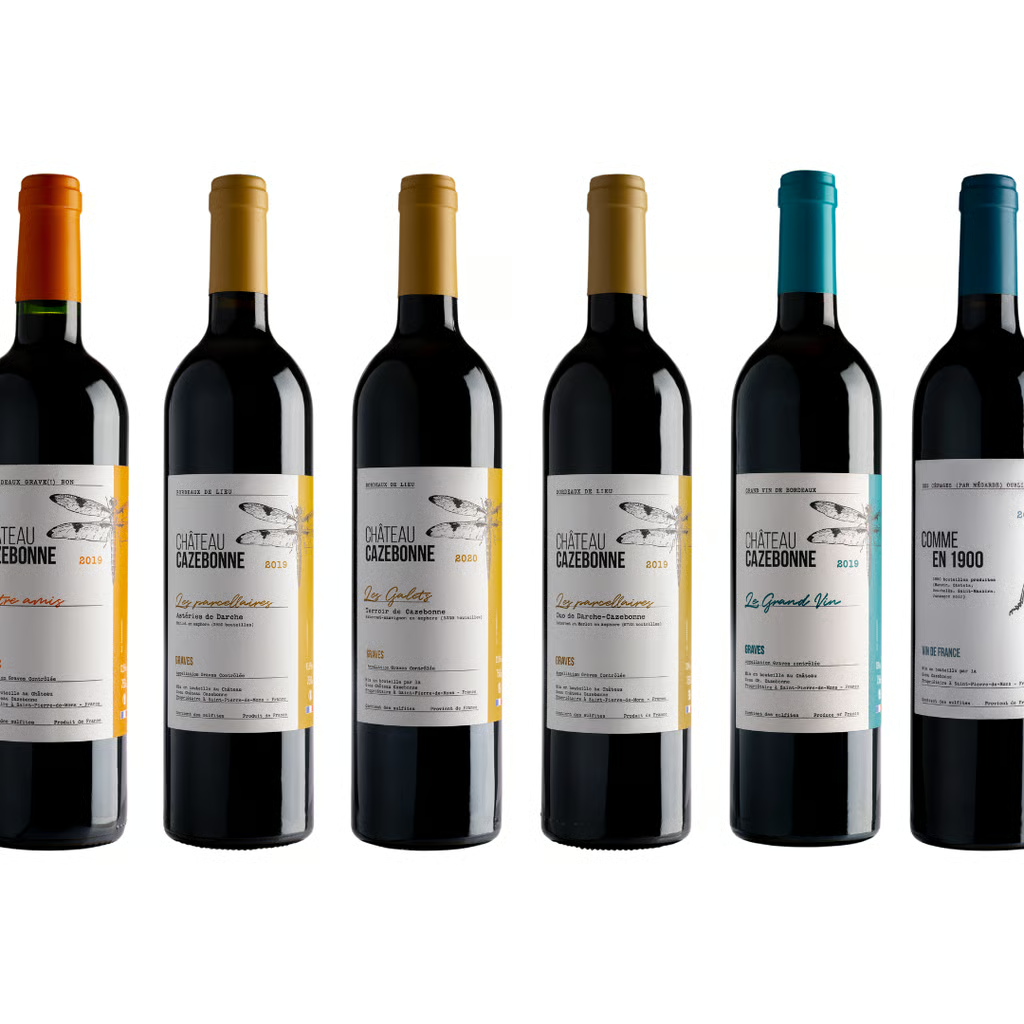
Case of 6 redsGo further

Case of 6 reds

6 bottles — Graves & Bordeaux

Six organic reds to compare the estate's plots.

The reds discovery, short format.

I want it

Related posts

Bringing in our last Semillon today

27 August 2026

Bringing in our last Semillon today

Today we are bringing in our last Semillon. For the whites, all that remains are our later-ripening forgotten grape varieties to harvest next Thursday and the following week. This year, we will not harvest Blanc Auba; it will be picked by the Chamber of Agriculture for micro-vinification...

By Jean-Baptiste

News from the estate

The cellar, forgotten grape varieties and our cuvées, twice a month. 5% off your first order with the code BIENVENUE.

I am:

Built by

... by Good Morning AI

Websites, marketing and automation for winegrowers.