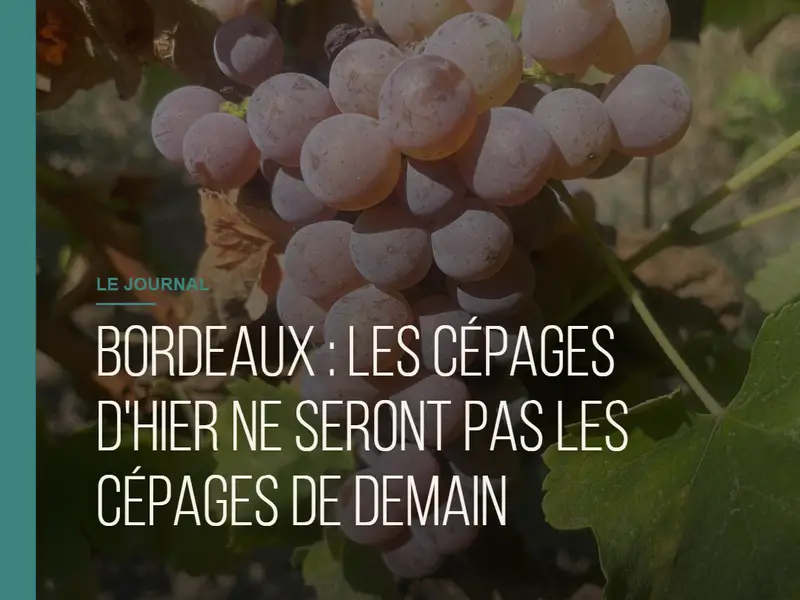
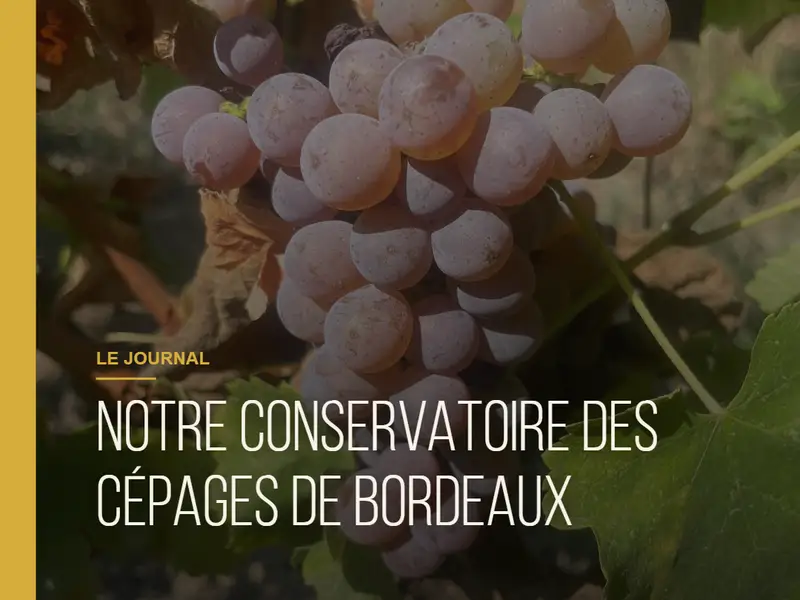
The "forgotten grape varieties of Bordeaux" or "grapes of yesteryear" refer to vine varieties that were once grown in the Bordeaux region, but whose presence has sharply declined, or even disappeared, in favour of more dominant grape varieties such as Merlot or Cabernet Sauvignon. These varieties, which contributed to the ampelographic and aromatic richness of the vineyard in the past, today represent a precious genetic heritage, particularly in the face of climate change challenges.
Reasons for their disappearance
Several major historical events explain the marginalisation of these grape varieties. The phylloxera epidemic in the 19th century forced a reconstitution of the vineyard, directing choices towards more resistant and productive varieties. The devastating frost of 1956 was another factor, prompting winegrowers to favour hardier or high-yielding grape varieties, leading to a progressive standardisation of plantings.
Despite this trend towards a loss of genetic diversity, conservation initiatives emerged early on in Bordeaux. As early as 1937, the Station de la Grande Ferrade already housed a collection of nearly 400 varieties, as well as local origins of iconic grape varieties like Cabernet Sauvignon. This pioneering work made it possible to safeguard part of this precious varietal diversity. Today, we also speak of "adaptation grape varieties" to designate the varieties recently authorised to cope with climatic changes, such as Arinarnoa, Marselan, or Liliorila.
The list of the main forgotten white grapes
Among the white grape varieties once more widespread in the Bordeaux vineyard and which are today considered "forgotten", we can mention Colombard, Folle Blanche, or Meslier Saint-François. You can learn more about the Ondenc grape variety, while others such as Blanc-Auba, Verdet, or Prueras were also mentioned in 19th-century ampelographic inventories, testifying to the varietal richness of yesteryear.
The list of the main forgotten red grapes
As for the red grape varieties, renewed interest surrounds varieties such as Bouchalès, Castets, Saint-Macaire, Manseng noir, or Prunelard. Fer Servadou, also called Fer, was very present in Gironde in the Entre-Deux-Mers and Graves regions, under a multitude of names. The Fer Servadou grape variety and Béquignol are often associated in viticultural literature. All these grape varieties, sometimes described as modest grape varieties, offer aromatic profiles and resistances that could prove invaluable for the future. To find out more about the Jurançon noir grape variety, also discover the Gros verdot grape variety.
Other names complete this list. Mancin, mentioned as early as the 18th century in the palus soils of the Gironde, and Mérille, first mentioned in 1785 by Jean-Baptiste de Secondat and not retained in the 1935 Bordeaux appellation decree, are among these forgotten reds. After phylloxera, hybrids also left their mark on the vineyard: Herbemont, a hybrid of American origin, and Baco Noir, bred by François Baco in 1902.
The Cazebonne grape variety conservatory
At Château Cazebonne, we are actively committed to rehabilitating this genetic heritage. We have replanted forgotten grape varieties such as Manseng noir, Bouchalès, Fer, or Béquignol. This approach is part of a desire to preserve biodiversity and bring original flavours and balances back to life. It also responds to the search for varieties adapted to new climatic conditions, offering natural resistance or interesting agronomic characteristics.
Preparing for the future at Cazebonne with these grape varieties
Exploring the potential of these traditional varieties is a path to the future for the Bordeaux vineyard. The Institute of Vine and Wine Sciences (ISVV) supports this research, allowing winegrowers to test "forgotten" grape varieties, but also new adaptation varieties, on a portion of their plantings. At Château Cazebonne, this rehabilitation process allows us to craft original and profound cuvées, contributing to the revival of Bordeaux and the resilience of our terroir.
This work of memory and perseverance at Château Cazebonne, replanting the grape varieties that had disappeared in Bordeaux, is made possible by the invaluable support of the wine lovers who have embraced our wines. To deepen your knowledge of this fascinating history, the book "Bordeaux, une histoire de cépages" by Jean-Baptiste Duquesne is an excellent resource that we invite you to download. You can also test your knowledge of grape varieties and wine with our oenological quizzes, and of course, discover our cuvées made from these rediscovered grapes on our online shop. To go further in identifying grape varieties, discover the work of Pierre Galet: the father of modern ampelography.